Q&A: Workforce Issues, Ridership, and More with HDR's Tucker
In a Q&A, Matthew Tucker, global transit director for HDR, discusses key challenges transit properties are facing, how agencies can take advantage of the recent surge in federal funding, and much more.
Matthew Tucker is global transit director at HDR — setting the vision and direction for the more than 600 employees who provide a diversified portfolio of services tailored to the needs of bus, streetcar, commuter rail, light rail, subway and inter-city passenger rail projects and programs worldwide.
Before joining HDR, Tucker served as CEO of Oceanside, Calif.’s North County Transit District from 2008 to 2023. During his tenure, NCTD constructed a downtown COASTER rail station; established a robust real estate development program; replaced its fleet with new locomotives; and advanced the agency’s transition to zero emissions bus fleets.
Ad Loading...
Tucker joined METRO Executive Editor Alex Roman to discuss key challenges transit properties are facing, how agencies can take advantage of the recent surge in federal funding, and much more.
What are the key challenges facing transit properties today and how can consultants help them overcome these issues?
The transit industry faces two major ongoing challenges: Ridership that hasn’t fully recovered from the pandemic and a tight labor market that has made it difficult to hire and retain personnel with needed knowledge, skills, and abilities.
Consultants help agencies address both of these, first by providing expertise in route and system planning as well as project design services, and also by filling gaps in agencies’ staffing.
Staffing challenges in particular are keeping many agency leaders up at night, coming at the same time that federal funding has significantly increased due to the IIJA and communities expect to see rapid improvements.
It’s notable that APTA is holding its first Workforce Summit this summer with a focus on recruitment, retention, and organizational culture. It’s in this environment that consultants can assist agencies through program management services tailored to their specific staffing needs.
Ad Loading...
These agreements often begin with a needs assessment and risk analysis to help the agency determine the scope of the support, staffing, and skills, including whether the services require dedicated and co-located staff.
Depending on the agency and its needs, consultants can help with developing scopes of work, cost estimates, and providing support to advance the successful and timely implementation of capital programs. If appropriately scoped, program management agreements can be flexible enough to support the full spectrum of known and unknown needs of an agency.
With an unprecedented amount of funding coming into the industry, what do you feel agencies must do to capitalize on this infusion of cash?
Funding agencies, communities, and riders are expecting improved and new services based on the unprecedented funding provided by the IIJA. They are also expecting timely implementation of the improvements in a cost-effective manner.
Agencies can capitalize by engaging early and often with consultants and contractors about their project needs and incorporating that feedback into project plans and procurements.
Early industry involvement and collaboration provides the best opportunity for successful and efficient implementation, mitigation of project risks, and improved competition during procurement.
Ad Loading...
For example, coordination and collaboration between agencies, consultants, and contractors can mitigate the impacts of inflation, labor shortages, and supply chain issues. Early industry involvement can help agencies be cognizant of specific project risks, like the cost of commodities and materials, make sure the risks are fairly allocated, and that commercial terms related to liquidated damages and liability need to be fully considered to avoid potentially higher costs and reduced competition.
Ultimately, transit agencies, consultants and contractors need to enhance coordination and collaboration to meet the expectations of our key stakeholders so that the infusion of funds is sustained and grows from the levels established by the IIJA.
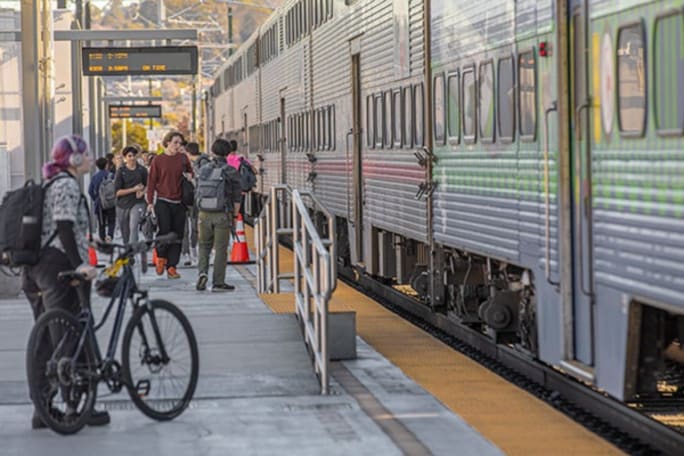
Agencies can capitalize by engaging early and often with consultants and contractors about their project needs and incorporating that feedback into project plans and procurements.
Photo: HDR
Looking at the larger picture, what do you think the industry can do to increase usage in the communities they serve?
Increasing usage begins with understanding users and their needs. Consultants like HDR assist by examining mobility pattern changes, land use trends and plans, transit user and non-user attitudes, and mobility needs and, if required, by designing new services that boost ridership and customer revenue. Advanced data modeling and the latest technologies help ensure that resources are used efficiently based on each community’s priorities.
Agencies that understand whether they are operating the service types and frequencies that their communities want are much better positioned to continue ridership growth.
A continued emphasis on the safety and security of public transit will also bolster ridership and customer revenue. Transit agencies are open to everyone in the public and are easy targets of focus by the media in highlighting safety and security challenges. Agencies can help shape this narrative through a strategic communication plan that develops and shares relevant data, as well as actions the agency is taking to support safety.
Ad Loading...
Physical improvements such as fare gates or enhanced lighting can also reinforce the security of users and lead to increased usage as riders remain comfortable.
Contract Four is the largest in the Second Avenue Subway Phase 2 project and includes construction of station infrastructure, tracks, and signals for the subway expansion, MTA officials said. Work on Contract Four will begin in 2027.
The new regional transit authority appointed its first board chair and interim executive director while extending reduced fares across CTA, Metra, and Pace for eligible riders.
Reliability-Centered Maintenance helps transit agencies move beyond routine checklists to focus limited resources on the assets and failures that have the greatest impact on safety, reliability, and service.
The 90-day demonstration will deploy coordinated security teams at five light rail stations while testing controlled access and gathering data to guide future investments.
Learn about delivering 1300 gates at 91 stations while managing fare evasion. Explore the large scale deployment, solution customization and real-world results that affect the region. Prepare for deployment in your region now.
Between packed transit stations and team motorcoaches, see how agencies and operators across North America tackled the transportation demands of the 2026 FIFA World Cup.
The stopgap keeps federal transportation programs moving, but missing advance funding could complicate the transit and rail projects agencies are planning next.