



Raising the Bar for Diesel Emission Standards
The EPA has set tough bus emissions standards for 2004 and 2007, requiring engine manufacturers to add new technologies that will impact bus manufacturers and increase the complexity of maintenance programs for transit agencies.
Reducing diesel emissions by up to 95% is no easy feat, but engine manufacturers are expected to meet that number by 2007. Under the Environmental Protection Agency’s (EPA) emissions standards for heavy-duty diesel engines model year 2007, manufacturers must reduce particulate matter (PM) by 80% and nitrogen oxides (NOx) by 95% from current levels. The 2007 standards require PM levels of 0.01 grams per brake-horsepower-hour (g/bhp-hr), NOx levels of 0.20 g/bhp-hr and non-methane hydrocarbons (NMHC) of 0.14 g/bhp-hr. Those numbers are down from current levels of 0.10 PM and 4.0 NOx. The use of ultra-low-sulfur fuel is mandated in conjunction with the standards. Refiners will be required to produce fuel with a sulfur content of 15 parts per million (ppm) by 2006. The EPA expects an annual emissions reduction equivalent to removing 90% of pollution from today’s buses and trucks. The stringent 2007 standards (see chart on pg. 83) will force engine manufacturers to find new ways to curtail emissions, but the focus now is on meeting 2004 regulations. (The January 2004 standards actually go into effect in October 2002 for diesel manufacturers that signed a consent decree with the EPA.) EGR plays key role To meet 2004 NOx standards, engine manufacturers are turning to exhaust gas recirculation (EGR) technology. The EGR system takes some of the exhaust gas and cools it before putting it back into the intake. That process cools the combustion temperature and reduces the NOx emissions. These lower emission levels are not without a price — increased levels of engine heat rejection to the cooling system. “Engines are going to get hotter, which means we will have to provide additional cooling,” says Brian Macleod, senior vice president of Gillig Corp. “We’d have to have bigger radiators and better cooling systems to deal with that.” Lyle Howard, manager of product development at the Bi-State Development Agency in St. Louis, says preliminary numbers from engine manufacturers show 25% to 50% more heat going to the cooling system as a result of EGR. Howard is concerned with the negative impact EGR cooling strategies will have on bus fleets. Some strategies being considered by bus manufacturers are fan blades with larger diameters and a more aggressive pitch. Although that option will bolster engine cooling, it will also hurt fuel economy. Another option would be to increase the number of cooling fins on the radiator, but that makes cleaning more difficult. “You could make the radiator bigger,” Howard says, adding that an enlarged radiator could come at the expense of passenger seating, reducing capacity. Bus manufacturers may have to cut louvers or put screens in the engine door for cooling purposes, but the engine door is a source of revenue from ad signs, says Howard. “We will lose about 25% of our ad space,” he says. Certification announced In April, Cummins Inc. became the first diesel engine manufacturer to receive EPA certification for production in October. The certified engine, the ISX model, uses EGR to meet the 2.5 gram NOx/hydrocarbon emissions standards. Cummins began field testing the ISX engine in December 1999 and expects to have accumulated 6 million miles of field testing and 115,000 hours of lab testing by October. “With the certification of the ISX completed six months early, we will continue to refine and look further for improvements in fuel economy and reliability,” says John Wall, vice president at Cummins. “The NOx reduction is the major focus of the industry right now,” says Tim Tindall, director of emission programs at Detroit Diesel. At press time, Detroit Diesel had not had an engine certified to meet the looming 2004 standards, but company officials say they will have their Series 50 engines ready for October. EGR and the continued use of catalytic convertors will allow the engines to meet the standards, according to Don Keski-Hynnila, an emissions manager at Detroit Diesel. To meet California’s more rigorous air-quality standards (PM 0.01), Detroit Diesel will also be applying particulate filters to engines. “We will effectively be meeting the [2007 PM standards] with bus engines for California this October,” says Tindall. The EPA’s report recommends these filters, catalyzed diesel particulate filters (CDPF), because they can achieve very low PM emissions. CDPFs use precious metals to reduce the temperature at which regeneration occurs, allowing passive regeneration under normal operating conditions of a diesel engine. Because these filters regenerate continuously, no extra burners or heaters are required, making it a more cost-efficient application. In order for the particulate filters to function properly, ultra-low-sulfur diesel fuel will be required. Diesel fuel with higher levels of sulfur increases sulfate emissions, which would exceed the standards, states the EPA’s report. The EPA also allows auxiliary emissions control devices when limited engine protection is needed under certain operating conditions. In addition to controlling PM emissions to meet the 2007 standards, engine manufacturers will be required to curtail NOx levels with the use of NOx aftertreatment. The technologies being looked at presently are the NOx adsorber, which involves injecting diesel fuel into the exhaust, and selective catalytic reduction systems (SCR), involving the injection of ammonia or urea into the exhaust. Both technologies would need to be used with ultra-low-sulfur diesel fuel to meet 2007 standards. “We think the standards are very aggressive,” Tindall says. Although no engine manufacturer has announced a strategy to meet the 2007 standards, conforming engines will certainly exhibit greater electronic complexity that will require uniformly greater understanding of engine electronics. Maintenance concerns Bus manufacturers are not sure what devices will ultimately be used to reduce emissions in diesel engines, but they anticipate the introduction of new technology, says Gillig’s Macleod. Future engines may have additional electronic systems that will require the understanding of an electronic technician. “Transit agencies may need to employ more people with different educational backgrounds, and train electricians and technicians rather than diesel mechanics,” Macleod says. Dana Lowell, assistant chief maintenance officer for MTA New York City Transit (NYCT), says he expects maintenance challenges related to the requirements, but that those challenges are certainly manageable and worth the cost. “[The standards] will contribute to the continued viability of diesel and all of the advantages that it brings into your bus fleet,” he says. John Walsh, chief maintenance officer for NYCT, also sees the 2007 regulations as a challenge, but touts the importance of end-users getting involved with the approach engine and bus manufacturers may take to meet the standards. “That way we don’t get saddled with a set of technologies that are unreliable or we are unable to maintain,” he says. Some maintenance issues have already surfaced for NYCT regarding particulate filters, which it has installed on 900 buses. One of the things a filter does is mask underlying engine problems by filtering out telltale signs such as smoke, Lowell says. Tommy Edwards, maintenance trainer with SunLine Transit in Thousand Palms, Calif., sees major problems with particulate traps and catalysts when applied to diesel. “One is a source for potential fires and the other a major maintenance item, as it can clog up and restrict exhaust flow, resulting in loss of engine performance and increased emissions,” he says. Diesel alternatives Although some transit agencies are turning to compressed natural gas (CNG) buses as a way to meet cleaner air standards, they are faced with higher costs. The Birmingham-Jefferson County Transit Authority (BJCTA) in Alabama, which runs 53 CNG buses out of its 110-vehicle fleet, has experienced this first-hand. “Diesel engines are much easier to maintain than CNG, and CNG costs you twice as much to maintain,” says Wren Murphy, maintenance director for BJCTA. Murphy says the 2007 diesel standards are a positive step because diesel technology has been around longer and has been perfected, whereas CNG technology still requires tweaking, and the need for high dollar items, such as compressor stations, make it a less attractive alternative. Bi-State’s Howard agrees that CNG is not a good alternative to diesel. “It’s just wildly expensive. The maintenance and the infrastructure for the fueling system are very expensive, and the fuel economy is horrible,” he says. The purchase of hybrid electric vehicles (HEV) may be accelerated by the 2007 regulations as a way of meeting the standards, Macleod says. “They are much more expensive than a diesel bus,” he says. Capstone Turbine Corp. of Chatsworth, Calif., manufactures a microturbine engine that is based on jet-engine technology. “It’s a system that is used on hybrid electric buses as the prime power,” says Mark Aramli, director of business development at Capstone. “We are already getting extremely low emissions,” he says. Today, Capstone is achieving emission levels that are between 40% and 50% below the 2004 regulations, says Aramli. “While everyone is talking about particulate traps and catalytic convertors, we will be able to achieve emissions standards by modifying basic engine operation.” The microturbine system uses a constant low-temperature combustion process to attain low NOx levels. Aramli believes Capstone has the fundamental technology in place to meet the 2007 standards.
More Management

People Movement: Connectpoint Expands Leadership Team, Stadler Names New Group CEO, and More
In this edition, we also spotlight recent personnel moves at Burns, UZURV, and more, highlighting the people taking on new roles across the transportation industry.
Read More →
More Than a Summer Job: Building the Next Generation of Transit Talent
The Delaware River Port Authority and PATCO have transformed their internship program into a hands-on professional development experience that introduces students to the breadth of transportation careers — and creates a pipeline for future employees.
Read More →
LA Metro Board Awards 220 Battery-Electric Bus Contract to ENC
The contract, which is the largest base award of battery-electric buses by a U.S. transit agency, will be built in Southern California, sustaining good jobs as LA prepares to welcome the world in 2028
Read More →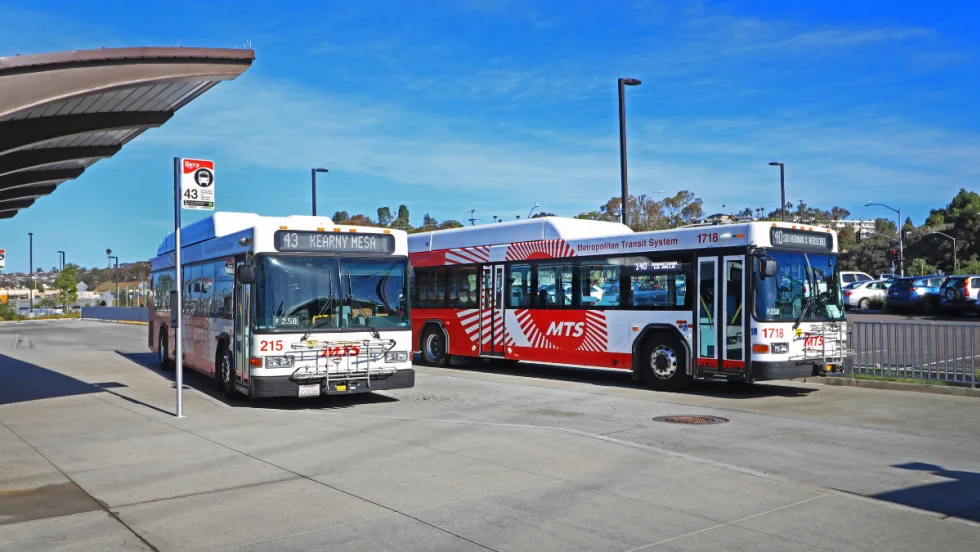
What’s Behind San Diego MTS’s Award-Winning Transit Strategy
Named one of APTA’s 2026 Outstanding Public Transportation Systems with 50 million or more annual passenger trips, California’s San Diego Metropolitan Transit System points to gains in ridership, safety, technology, and reliability as foundations of its success.
Read More →
Public Transit Conference Returning to GFX in 2027, Call for Papers Now Open
The Call for Papers is now open, allowing transit agency professionals and industry experts to help shape the PTC educational program by submitting session ideas for consideration.
Read More →
Indian River Transit’s Community-Focused Approach Earns National Recognition
Named APTA’s 2026 Outstanding Public Transportation System in its size category, Florida’s Indian River County transit system continues to grow ridership through fare-free service and a focus on evolving community needs.
Read More →
ENC Lands MATA Contract and More in Biz Briefs
In this edition of Biz Briefs, we spotlight the latest developments shaping the future of mobility.
Read More →
From Surviving to Thriving: Building Stronger Transportation Organizations
Bus Business Consultants founder Brian Dickson shares lessons on leadership, organizational health, and creating options for long-term success in a changing transportation industry.
Read More →
Everett Transit, Community Transit Outline Consolidation Agreement
The proposed agreement calls for a 50% increase in bus service in Everett, a new microtransit zone, continued paratransit service, and the transfer of Everett Transit operations to Community Transit.
Read More →
Strada360’s Steve Lassey on Turning Transit Data Into Better Decisions
From breaking down data silos to preparing for AI, Strada360 CEO Steve Lassey discusses how transit agencies can use technology to improve operations, customer information, and long-term decision-making.
Read More →