



Reauthorization talks omnipresent at APTA legislative conference
APTA held its annual legislative conference in Washington D.C. last March. Keynote speakers included Thomas J. Donahue, president of the U.S. Chamber of Commerce and Pennsylvania Governor Edward G. Rendell.

Talk of the upcoming reauthorization dominated the American Public Transportation Authority’s (APTA) annual legislative conference, which took place March 9 to 11 in Washington, D.C. APTA President Bill Millar announced the latest record-breaking ridership statistics to the general session audience, saying that Americans took 10.3 billion trips on public transportation in 2007, the highest level in 50 years, representing a 2.1 percent increase over the previous year. “In light of high gas prices, increased road congestion and expanded public transit services, this continued growth in ridership demonstrates how important public transportation is for America,” said Millar. “Now with gas prices predicted to rise to $4 a gallon, there is a greater urgency for higher federal funding to expand U.S. public transportation systems so Americans have an affordable transportation choice.”
Millar also promoted the key role transportation plays in decreasing greenhouse gases and meeting the national goal of energy independence. “When more people ride public transportation, there are more reductions in carbon emissions and our country is less dependent on foreign oil.”
Thomas J. Donahue, president of the U.S. Chamber of Commerce, was a keynote speaker during the event. “We need to change the mindset of the people in this country,” he said. “We need smart transportation and infrastructure. The systems in this country are getting a D-plus rating from civil engineers.”
Pennsylvania Governor Edward G. Rendell, who is also the incoming chair for the National Governor’s Association, discussed the importance of transportation funding and the experiences with transportation projects in his state. “If you improve it, they will ride it,” he said. He also emphasized the importance of public participation with regard to projects.
APTA Chair Mike Townes, and president and CEO for Hampton Roads Transit, discussed the Transit Vision 2050 program and gave an overview of past Webinars before showing a promotional video presentation. Townes also reported on the availability of a new vision report online. “We want input from everyone on how to refine it,” he said. “It will frame our future in many ways.”
Other highlights during the general session portion of the conference included an insider’s look at the political scene in Washington provided by Mara Liasson, national political correspondent for National Public Radio, and Tony Blakely, panelist with The McLaughlin Group and editorial page editor for The Washington Times. Both gave their opinions on the three remaining presidential candidates and their predictions for the election.
During the second annual presentation of the FTA Ridership awards, Administrator James S. Simpson recognized agencies for their innovative ways of increasing ridership. Winners of the fewer than 50,000 population category included Go West Transit, Macomb, Ill. and Pulaski Area Transit, Pulaski, Va. In the 50,000 to 200,000 category, River Valley Metro Mass Transit District, Bourbonnais, Ill.; Wildcat Transit, Durham, N.H.; and City of Monroe Transit System, Monroe, La.
For the 200,000 to one million category, Spokane Transit, Spokane, Wash.; Denton County Transportation Authority, Lewisville, Texas; Sun Tran, Tucson, Ariz.; and Fort Worth Transportation Authority, Fort Worth, Texas. Delaware Transit Corp. in Dover, Del., won the more than one million population category.
More Management
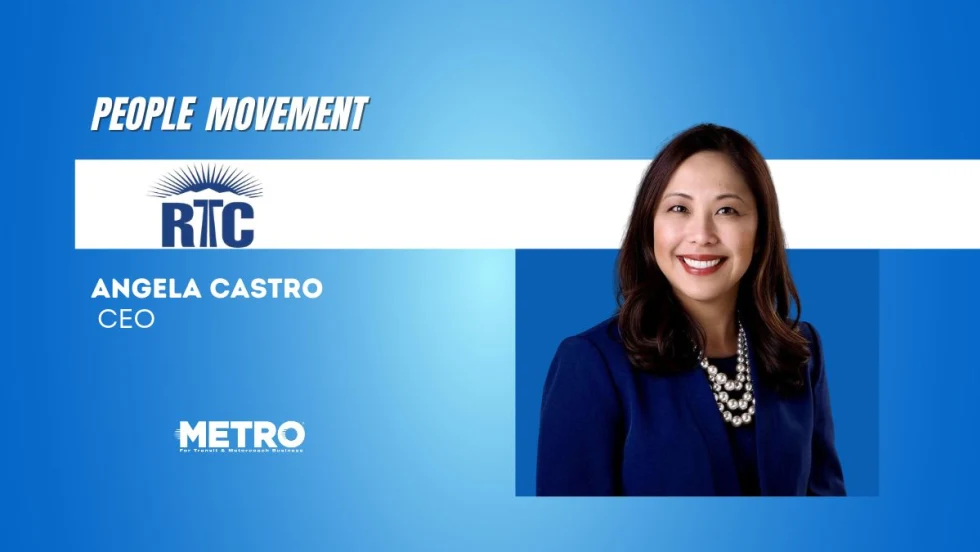
Castro to Lead RTC of Southern Nevada and More in People Movement
In this edition, we also cover recent appointments and announcements at the STV, MCI, and more, showcasing the individuals helping to shape the future of transportation.
Read More →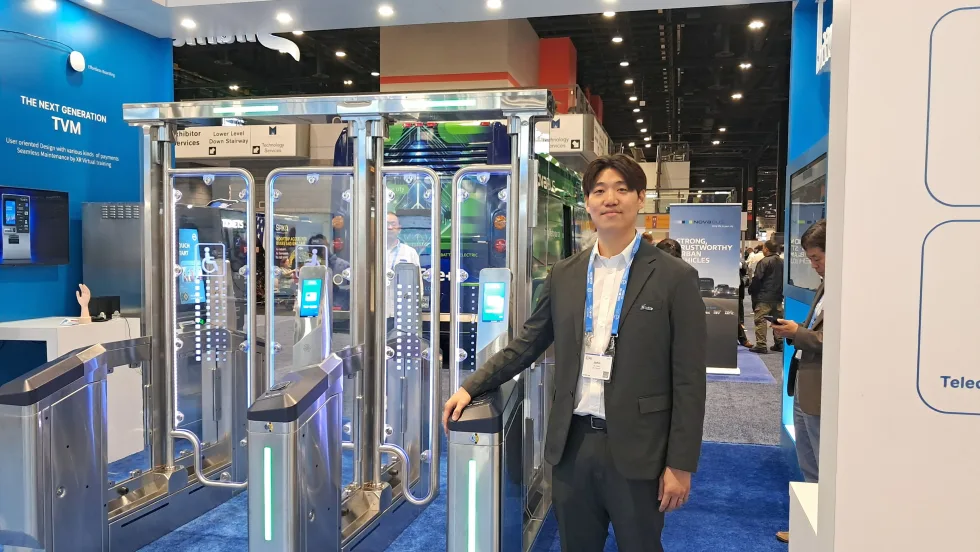
STraffic Expands North American Presence with Fare Collection Technology
John Moon, Associate Director, Product Strategy at STraffic, discusses the company's growth in North America, its efforts to reduce fare evasion, and more.
Read More →
Study: Denver RTD Generates $2.1 Billion in Annual Economic Activity
An economic impact study finds the agency supports approximately 17,500 jobs, delivers $1.6 billion in annual community and mobility benefits, and generates $2.42 in economic value for every dollar invested.
Read More →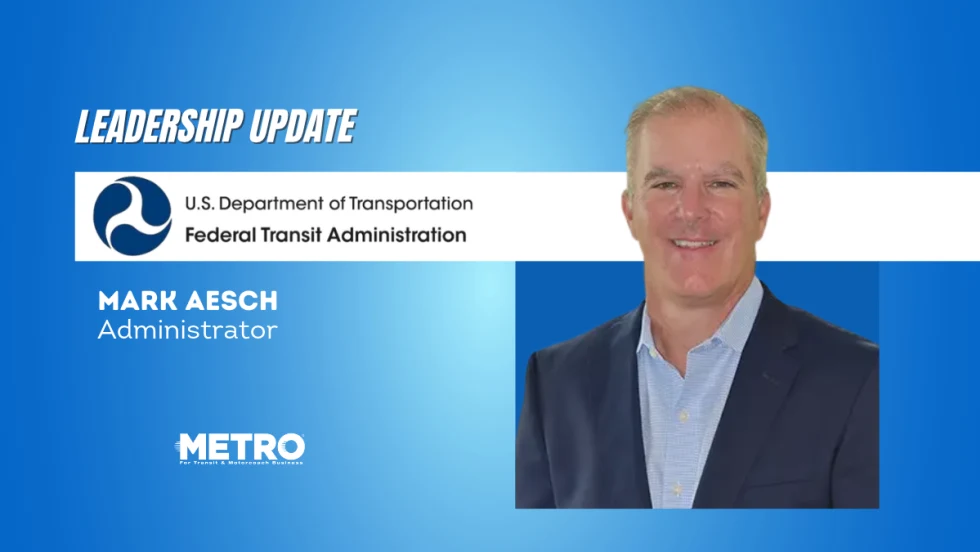
Mark Aesch Nominated to Lead Federal Transit Administration
The former Rochester transit chief and TransPro founder, who has also contributed to METRO Magazine, brings decades of industry experience and a focus on performance, accountability, and financial sustainability to the nomination.
Read More →
Best and Worst U.S. Cities for Public Transportation in 2026
A new analysis of 50 major U.S. urban areas ranks public transit systems based on accessibility, affordability, usefulness, and safety, highlighting where transit performs best and where challenges remain.
Read More →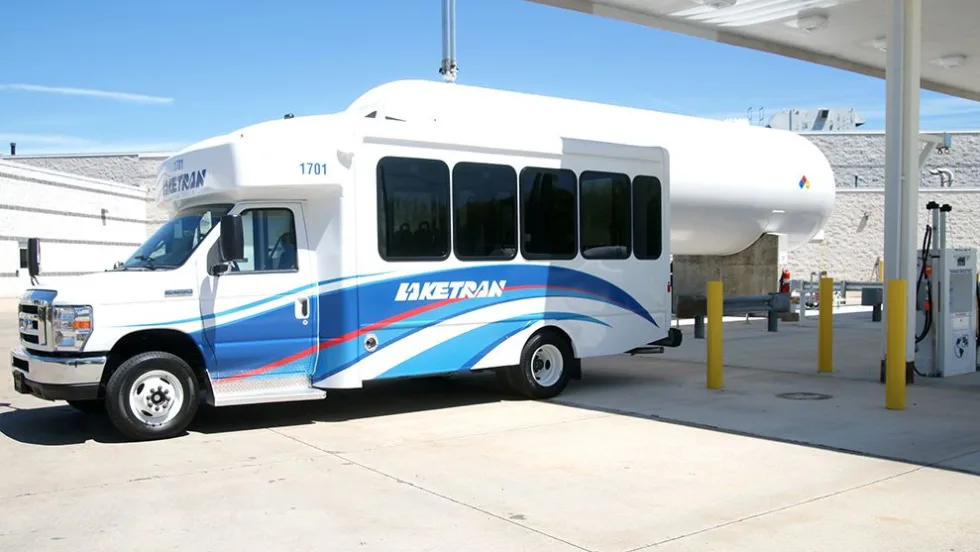
Laketran Cuts Fuel Costs, Boosts Efficiency with Propane-Powered Fleet
The Ohio transit agency is using propane-powered vehicles and on-site fueling infrastructure to cut fuel and maintenance costs while meeting growing demand for paratransit services.
Read More →
Canada’s Public Transit Supports $65.6 Billion in Annual GDP
New research from the Canadian Chamber of Commerce examines transit's economic contributions, including job creation and the financial implications of transportation investment.
Read More →
Pierce Transit Moves to Expand Fleet Following Proposition 1 Approval
The agency authorized the purchase or refurbishment of up to 60 buses to support a 47% service expansion, as voters nationwide approved billions in new transit funding.
Read More →
Right-Sizing Rural Transit: Lessons from North Grenville’s On-Demand Model
A small municipality shows how flexible service, rider needs, and public accountability can expand mobility with limited resources.
Read More →
Transit Ballot Victories Signal Strong Voter Support: What Comes Next?
Voters approved billions in public transportation investments in 2026, giving agencies opportunities to preserve service, expand operations, and strengthen regional connections amid a changing political landscape.
Read More →