




Want More? The Expanding Role of Advisory in Transit Delivery
Steve Lassey on Data, Delivery, and the Future of Projects
From breaking down data silos to preparing for AI-driven operations, strada360's CEO shares insights on how transit agencies can deliver more efficient, connected, and resilient systems in a rapidly evolving landscape.
May 20, 2026

Steve Lassey discusses the growing challenges around data integration, the role of digital tools and analytics in improving performance, and how emerging technologies are shaping the future of transit planning and operations.
Credit:
strada360
7 min to read
- Steve Lassey discusses strategies for breaking down data silos in transit agencies.
- Lassey emphasizes the importance of preparing for AI-driven operations in future transit projects.
- He shares insights on delivering more efficient and resilient transit systems in a rapidly changing environment.
*Summarized by AI
As transit agencies balance aging infrastructure with ambitious expansion goals, expectations for project delivery are shifting. Increasingly, agencies are seeking integrated, end-to-end solutions that can connect fragmented systems, improve data visibility, and support more proactive decision-making.
In this Consultant Roundtable Q&A, strada360 CEO Steve Lassey discusses the growing challenges around data integration, the role of digital tools and analytics in improving performance, and how emerging technologies are shaping the future of transit planning and operations.
On Program Delivery and Expansion
Q: strada360 focuses on integrated infrastructure and program delivery — how are transit agencies’ expectations shifting for end-to-end project support?
Lassey: While many transit agencies continue to prefer specialized, best-of-breed solutions from multiple vendors, each excelling in areas such as service planning and scheduling, operations, fleet maintenance, or customer information systems, this approach creates a persistent and growing challenge: seamless, reliable data movement between these disparate systems.
Off-the-shelf enterprise integration platforms can help with basic connectivity, but they often fall short in the transit domain. They typically require data to be converted into standardized formats, struggle with the nuances of transit-specific business rules, and lack the deep operational context needed to interpret what the data means in real-world transit operations.
Meanwhile, most transit technology vendors deliver closed systems with proprietary data formats and interfaces, making true interoperability difficult, time-consuming, and expensive to achieve.
The result is delayed or inconsistent information across departments, manual workarounds, reduced operational visibility, slower decision-making, and missed opportunities for efficiency gains and improved rider experiences.
Real-time, or near real-time, data sharing is essential for modern transit, but it is particularly hard to deliver without significant custom effort. This is where consultants like strada360 deliver unique value.
Q: With many agencies balancing aging infrastructure and expansion goals, where do you see the biggest gaps in planning and execution today?
Lassey: Transit agencies today face a difficult balancing act: maintaining and extending the life of aging infrastructure while pursuing ambitious service expansion and modernization goals. This creates several critical gaps in planning and execution, often undermining operational performance and rider trust.
The biggest gaps we see today include:
First, fragmented data and limited visibility across the enterprise. Agencies are collecting vast amounts of information — from vehicles, operators, scheduling systems, maintenance logs, and customer channels — but much of it remains siloed within individual vendor platforms. Most transit-specific tools only analyze their own data, making it difficult to create a true “single source of truth.” Without the ability to connect data across planning, operations, fleet, and customer systems, agencies often remain stuck in reactive mode rather than making fully data-driven decisions.
Second, a lack of proactive and predictive capabilities. Resource constraints — whether related to staffing, vehicles, or maintenance — frequently lead to service disruptions. Yet many agencies still rely heavily on historical reporting instead of forward-looking insights. Even with reliable metrics and forecasts a few hours or a day in advance, this could significantly improve preparedness, scheduling, and resource allocation.
Third, inconsistent and delayed customer information during disruptions. Real-time accuracy is critical to maintaining rider trust, but unplanned outages or service changes often leave customers with outdated or conflicting information. Agencies need stronger tools to detect issues early, coordinate responses across departments, and deliver timely, consistent updates through apps, signage, and other channels.
Technology and Industry Trends
Q: Data and digital tools are becoming increasingly central to project delivery — how is strada360 helping agencies leverage technology to improve decision-making and performance?
Lassey: Data and digital tools have become essential to the successful delivery of transit projects. Yet, many agencies still struggle to turn the massive amounts of data they collect into actionable insights that drive better decisions and measurable performance improvements.
Our firm helps agencies bridge this gap by combining deep transit domain expertise with practical, integrated digital solutions. Rather than leaving agencies with fragmented data trapped in individual vendor systems, we deliver enterprise-level capabilities that unify information across planning, operations, fleet management, and customer channels.
Specifically, we support agencies in three critical areas:
Bringing data together through enterprise warehousing and analytics. We help agencies consolidate data from disparate — often proprietary — systems into a single, coherent view. By applying transit-specific business logic to clean, transform, and enrich that data, agencies can move beyond isolated vendor reports and gain a clearer, systemwide understanding of performance, supporting more informed and strategic decisions.
Enabling proactive operations through predictive analytics. Our cloud-based tools go beyond historical reporting by leveraging real-time GPS tracking, scheduling data, and other inputs to generate forward-looking insights. This allows operations, maintenance, and scheduling teams to anticipate potential issues — from staffing shortages to service disruptions — adjust plans in advance, and minimize service impacts.
Improving rider communication with real-time information and disruption management. Accurate, timely updates are essential during both planned and unplanned events. By ensuring consistent, real-time information flows across apps, digital signage, and other channels, agencies can respond faster, coordinate more effectively internally, and maintain rider trust even when challenges arise.
By taking a vendor-agnostic, end-to-end approach, we work alongside your existing technology providers to design and implement seamless integrations, custom solutions, and scalable SaaS tools tailored to your agency’s size and needs. Our team brings decades of hands-on experience in multi-vendor environments, ensuring technology investments deliver real operational value rather than adding complexity.
The result is improved decision-making at every level from daily operations to long-term planning — higher efficiency, better resource utilization, and stronger overall performance, all while supporting both maintenance of aging infrastructure and ambitious expansion goals.
Q: Looking ahead, what major trends will shape how transit projects are planned, funded, and delivered over the next decade?
Lassey: Looking ahead over the next decade, several interconnected trends will fundamentally reshape how transit projects are planned, funded, and delivered.
Agencies will face continued pressure from aging infrastructure, rising rider expectations, sustainability goals, and constrained budgets as they shift toward more intelligent, integrated, and resilient systems.
Key trends include:
A growing push toward sustainability and electrification. The transition to zero-emission fleets and greener operations will drive significant capital investment, often requiring new funding approaches such as public-private partnerships, land value capture, and performance-based financing.
Greater emphasis on Mobility-as-a-Service and multimodal integration. Future projects will increasingly focus on seamless connections across modes — from transit to micro-mobility and ridesharing — supported by unified digital platforms and subscription-style access.
A shift from capital-heavy investments to subscription and SaaS models. Instead of large upfront expenditures, agencies are moving toward scalable, cloud-based solutions that reduce barriers for mid-sized systems and accelerate deployment timelines.
More reliance on data-driven and predictive planning. Long-term planning will increasingly depend on real-time data, scenario modeling, and advanced analytics to make the most of limited resources and strengthen funding cases.
The most transformative force among these will be the rapid scaling of Artificial Intelligence (AI) in transit technology. AI is moving quickly from pilot projects to production systems, fundamentally changing project planning, funding justification, and operational delivery.
AI’s impact will be felt in several critical ways:
More informed planning and decision-making. AI can bring together large volumes of siloed data — from GPS, scheduling, maintenance, ridership, and external factors like weather — into unified analytics platforms. This enables more accurate demand forecasting, route optimization, and scenario modeling, helping agencies reduce risk and build stronger funding justifications.
Stronger predictive capabilities for managing resources. With ongoing challenges around staffing and vehicle availability, AI-driven tools can forecast disruptions in advance, supporting more proactive scheduling, maintenance, and resource allocation while improving reliability and cost efficiency.
Better real-time operations and customer experience. AI can help detect issues early, coordinate responses across departments, and deliver accurate, consistent updates to riders during disruptions — helping protect agency reputation and support ridership.
Improved efficiency and sustainability outcomes. From optimizing energy use to enabling predictive maintenance and supporting mode shifts, AI can help agencies extend asset life, reduce congestion impacts, and meet decarbonization goals while demonstrating measurable returns.
However, realizing AI’s full potential requires overcoming persistent challenges: fragmented data from multi-vendor systems, proprietary formats, and the need for deep transit domain knowledge to interpret and act on insights meaningfully. Generic AI or enterprise tools often fall short here.
Quick Answers
Breaking down data silos allows for more integrated and efficient operations by enabling different departments to access and share information. This can lead to better decision-making and improved service delivery.
*Summarized by AI
Subscribe to Our Newsletter
More Management

LA Metro Board Awards 220 Battery-Electric Bus Contract to ENC
The contract, which is the largest base award of battery-electric buses by a U.S. transit agency, will be built in Southern California, sustaining good jobs as LA prepares to welcome the world in 2028
Read More →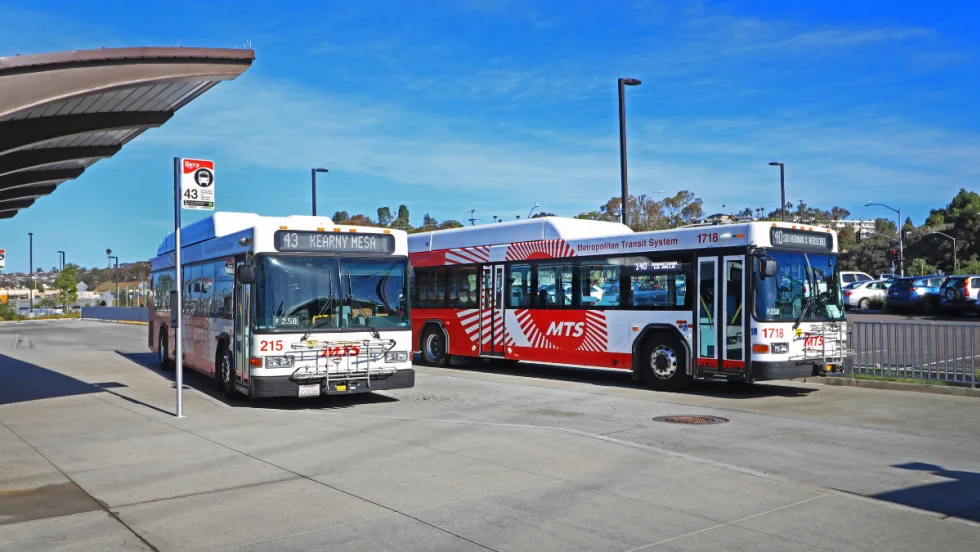
What’s Behind San Diego MTS’s Award-Winning Transit Strategy
Named one of APTA’s 2026 Outstanding Public Transportation Systems with 50 million or more annual passenger trips, California’s San Diego Metropolitan Transit System points to gains in ridership, safety, technology, and reliability as foundations of its success.
Read More →
Public Transit Conference Returning to GFX in 2027, Call for Papers Now Open
The Call for Papers is now open, allowing transit agency professionals and industry experts to help shape the PTC educational program by submitting session ideas for consideration.
Read More →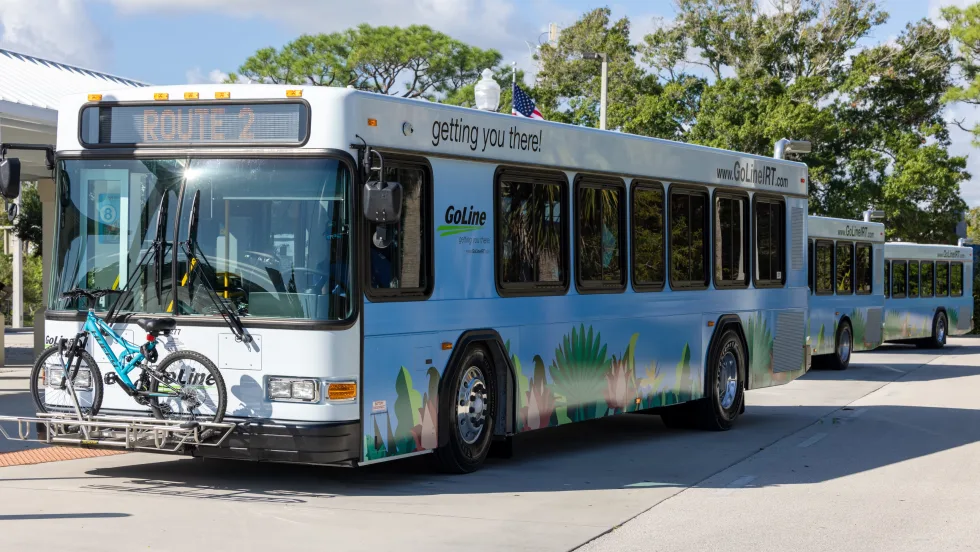
Indian River Transit’s Community-Focused Approach Earns National Recognition
Named APTA’s 2026 Outstanding Public Transportation System in its size category, Florida’s Indian River County transit system continues to grow ridership through fare-free service and a focus on evolving community needs.
Read More →
ENC Lands MATA Contract and More in Biz Briefs
In this edition of Biz Briefs, we spotlight the latest developments shaping the future of mobility.
Read More →
From Surviving to Thriving: Building Stronger Transportation Organizations
Bus Business Consultants founder Brian Dickson shares lessons on leadership, organizational health, and creating options for long-term success in a changing transportation industry.
Read More →
Everett Transit, Community Transit Outline Consolidation Agreement
The proposed agreement calls for a 50% increase in bus service in Everett, a new microtransit zone, continued paratransit service, and the transfer of Everett Transit operations to Community Transit.
Read More →
Strada360’s Steve Lassey on Turning Transit Data Into Better Decisions
From breaking down data silos to preparing for AI, Strada360 CEO Steve Lassey discusses how transit agencies can use technology to improve operations, customer information, and long-term decision-making.
Read More →
People Movement: Phil Washington Joins HNTB, Denver RTD Launches CEO Search, and More
In this edition, we also spotlight recent personnel moves at STV, the Eno Center for Transportation, and more, highlighting the people taking on new roles across the transportation industry.
Read More →
SEPTA Details Accelerate Vision for Transit System
The plan outlines investments in trolley modernization, new Metro and Regional Rail vehicles, accessible stations, and more frequent bus and rail service.
Read More →