



Referendums continue to find success, but it’s not an easy road
While 79% of state and local ballot measures to boost transportation passed in 2011, many are fighting an uphill battle. In Atlanta, a major ballot measure looks to fund a wide-ranging transportation plan, including $3.2 billion for public transit.
With the country still figuring out its course following the recession, a new transportation authorization bill is beginning to look further and further away. Despite the lack of clarity, however, state and local referendums continue to be highly successful.
In 2011 alone, 22 out of 28, or 79%, of the initiatives on state and local ballots passed, many of which involved levying new taxes, according to the Center for Transportation Excellence. Meanwhile in 2010, 44 out of 57, or 77%, of the initiatives passed. While many of these ballot measures have been passed overwhelmingly, some have also been voted down just as strongly.
Judging from the more than substantial support, it is clear that state and local transportation agencies and advocates know these ballot initiatives are key to both generating revenue for important projects and showing the feds they are serious partners worth considering.
Regional transit plan
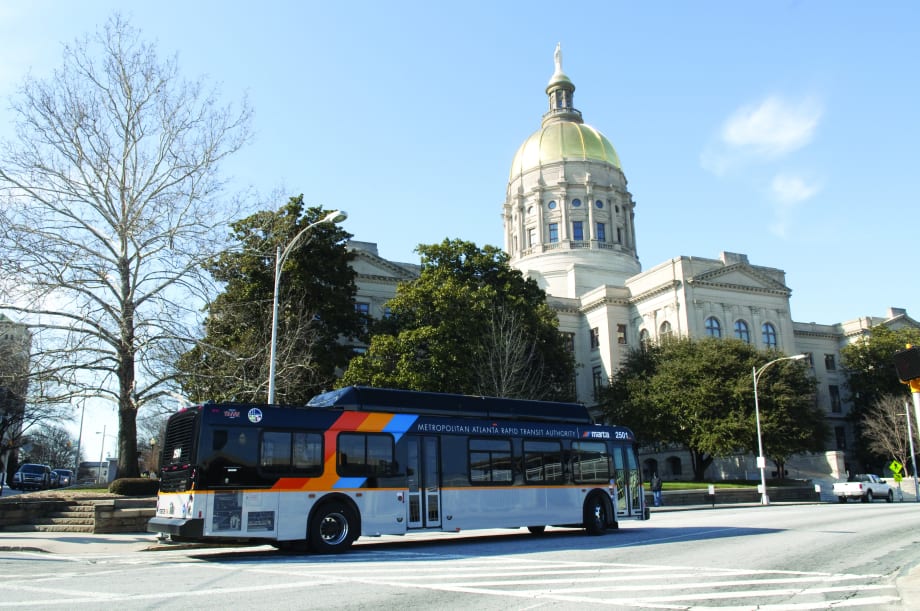
With the success of other regions in mind, the Metro Atlanta Transportation Referendum is a large-scale, transportation ballot measure that asks voters in 10 counties to vote for a 1% sales tax over a 10-year period per the area's Transportation Investment Act, to fund $6.1 billion in regional projects, including $3.2 billion for transit plus another $1.1 billion in local projects. The ballot measure, which includes the projects the funds will actually go toward, is slated for July.
"It's not just one transit route, one agency or road, it's a huge regional vote that is probably broader than most referendums in the nation," says Jim Stokes, interim executive director for the Livable Communities Coalition of Metro Atlanta. "A lot of transportation people around the country are watching this, and it's important to some national foundations for that reason."
The projects list was decided upon by a regional roundtable of 21 local elected officials who took into account several factors, including need, if the project was "shovel ready" and whether its cost fit into the projected dollar amount.
The $3.2 billion share for public transportation will go toward the Atlanta BeltLine rail system as well as several Metropolitan Atlanta Rapid Transit Authority (MARTA) heavy and light rail extensions and badly needed improvements, such as train control systems, track and electrical power rehabilitation, and airport station improvements. It will also significantly expand regional bus service in several counties, including DeKalb and Gwinnett.
"We have a lot of aging infrastructure, and like most other transit properties, we have had to defer some maintenance because we just didn't have the money," says Cheryl King, assistant GM, planning, at MARTA. "Although we had a long-term capital improvements plan to address some of these issues, this referendum will allow us to move those projects more quickly and free up funds for other things."
Both Stokes and King say the referendum is very important for a region that has historically not been proactive in addressing its transit and transportation issues.
"Atlanta as well as the state of Georgia have [been] behind in funding transportation, so it's an effort in taking the first step in catching up," says Stokes.
King adds that like most areas around the nation, Atlanta is also bracing for a huge population influx.
"We're anticipating a lot of growth coming into this area and have to accommodate those people," says King. "I'm not sure we can build enough roadways, so people need options."
For its part, MARTA is planning to educate the public on which of its products would be funded by the referendum and the benefits those projects will bring. Groups including the Metro Atlanta Voter Education Network and Citizens for Transportation Mobility will run the pro-referendum campaign by continuing to be a voice for transit, working with partners to promote the referendum and continuing a strong presence on social media outlets to reach young urban voters.
With the success of transit referendums nationwide, King and Stokes are optimistic the referendum will pass, however, both acknowledge advocates and stakeholders will have to overcome several factors, including the perception of public transit as well as the state of the economy.
"I've worked in this industry for many years, and transit is not very well respected by some people, because they don't understand what it takes to put service on the street every day," says King. "In addition, with these troubled economic times, it's going to be difficult for people to vote on an additional tax."
King adds an additional hurdle could come from some counties who have projects that weren't selected to be part of the referendum. On the positive side, though, she feels that the region is starting to understand the necessity of transit to help ease congestion by being part of a multimodal solution. King also points out the additional financial benefits the referendum will bring to the Atlanta region.
"There are a slew of secondary benefits that will help pump up the area's economy, including jobs," she explains.
Overall, though, King understands that this July's vote could be just the beginning of a long fight.
"With transportation referendums, it sometimes takes two bites of the apple before they pass," she says. "The last five years, we've been lucky to have a lot of them pass, but it's not unusual for it to take more than one try. I'm not trying to doom our referendum, but you do have to look at the trend."
[PAGEBREAK]
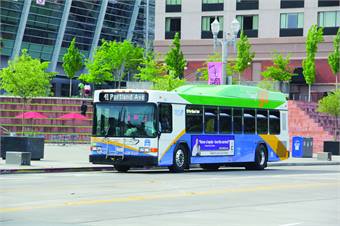
A referendum to help save the cutting of some Wash.-based Pierce Transit services was voted down by county voters in February 2011. The agency's board plans to go back to the drawing board with hopes of being successful in getting a future referendum passed.
Not always successful
The trend King speaks about is evident in Pierce County, Wash., when Pierce Transit's first crack at raising a local sales tax failed 46% to 54% in February 2011.
Facing a budget shortfall, the agency's board placed the 0.3% sales tax increase on the ballot to avoid up to 40% cuts in service. The measure was expected to raise approximately $30 million more a year in revenue for Pierce Transit's bus service. The agency's sales tax portion would have been increased from 0.6% to 0.9%, with the existing sales tax generating $60 million annually for the transit system. Through the state legislature, the agency is able to raise its sales tax to 0.9% to help replace a Motor Vehicle Excise Tax that was repealed years ago, but must ask voters for their approval.
"Pierce Transit took advantage of its ability to take a larger share a couple of years after the state legislature said it could," explains Lars Erickson, public relations officer at Pierce Transit. "We asked for voters to approve another 0.3%, because it was the only package that would maintain the same level of service hours we were at."
In preparation for the referendum, the agency's board engaged riders, stakeholder groups and the community to discuss the value Pierce Transit brings to the area. Following the defeat of the referendum, Pierce Transit was forced to lay off employees and cut service by 35%. Erickson feels the agency did its best to maintain service levels in key areas.
"When we started the whole march to the ballot, we opened the conversation with the public to see what was important to them," says Erickson. "In the end, we had close to 30,000 interactions to see what was most important. The two biggest areas, we learned the community needed was to maintain transportation to social services and jobs."
The result of the agency's groundwork prior to the referendum helped lessen the blow of its defeat, according to Erickson.
While the 70-plus pass percentage paints a picture that transportation referendums are overwhelmingly popular, the defeat of Pierce Transit's ballot measure points to the possibility that their success is subjective to public transportation's popularity in the area, as well as timing.
"We're probably more a purple county at the end of the day. It's pretty hotly contested in statewide elections, since there are three voices that are heard: progressive, moderate and conservative," says Erickson. "Part of it was just timing. The environment at the time was influenced by the Tea Party, and in some areas where the referendum was voted down, those numbers were as high as 70 percent."
Adding to the growing "frustration with the government" in the area, Erickson adds that the vote on the ballot measure also coincided with an incident that disabled Pierce Transit's capacity to use compressed natural gas, forcing the agency to cut services as well as drive 20-plus miles to fuel its vehicles.
The referendum's defeat hasn't taken the wind out of Pierce Transit's sails, as it plans to go back to the drawing board to figure out a way to get a possibly smaller sales tax increase passed by voters.
"We may ask for a different amount, depending on what our board decides is best," says Erickson. "There are several factors that it really depends on."
One of the factors includes redrawing its taxing lines to eliminate areas Pierce Transit no longer serves as a result of its service cuts. The process, which began last December at the request of those communities, is set to be completed in five or six months and may help the agency get a future referendum passed.
"The removal of these areas may impact us by $5.2 million a year, but while we'll experience a decline in our sales tax revenue, the district does become much more amenable to future ballot proposals," explains Erickson.
Another factor that will impact Pierce Transit's decision to devise a new referendum will also hinge on the state's plan to fill its own gaps in their funding structure, adds Erickson.
"Their decision will really have a domino effect on us," he says. "It would be a challenge for us to go back to voters and ask them to contribute a higher sales tax if the state has already decided to do the same."
Erickson says the passing of these types of referendums, though, ultimately hinges on the political will of the community.
"Our experience taught us to probably scan the horizon a little more in depth to make sure the timing is right," he says. "However, that may not be true in other parts of the country. We are all very unique."[PAGEBREAK]
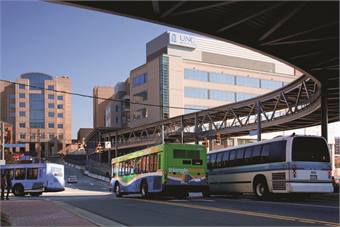
Durham, N.C., voters passed a referendum in November 2011 that will help increase bus services and help launch both commuter and light rail train services.
The right environment
Both the timing and environment were just right for Durham, N.C.-based Triangle Transit, which had a half-cent sales tax increase passed by voters in November 2011 by a 60% to 40% margin. The measure expects to generate an estimated $18.3 million, annually, to support a 25% boost in bus service within the first three years as well as help launch commuter trains by 2018 and a light rail system by 2025. The measure was passed using a grassroots campaign that began in late August.
"Durham is a unique community and is really one of the few places where you could get away with a grassroots campaign," said Damien Graham, director of communications and public affairs for Triangle Transit. "The people who live in the area are very civic minded, and I think that is the main reason we were able to be successful in such a short timeframe with a limited budget."
The referendum, however, wasn't a slam dunk, according to Graham. The agency held more than 50 presentations to different neighborhoods around the region in that compacted timeframe. It also saw opposition from more conservative members of the community and had to overcome the sour taste some had for the previous bus service in the area, prior to Triangle Transit taking over.
"To promise a new transit service, better bus service and potential rail connections, you have to overcome the stigma of the previous bus service, and that was sort of a challenge," says Graham. "Thankfully, our new management of this system has helped make that transition and help people buy into the fact that we can make a real difference."
Part of Triangle Transit's planned public transportation project also includes Durham's neighboring counties to the west and east, Wake and Orange, respectively. Graham says the choice to put the ballot measure in Durham was not a strategic choice; however, there was some desire to take the lead in the region on the project. While the referendum was favored strongly in Durham, Graham says there may be a tougher battle yet ahead of Triangle Transit in the other two counties.
"What may have been successful in Durham may not be as successful in Wake County, for example, because of the size and different makeup of the community," he says. "We plan to be as involved as we were in Durham in both Orange and Wake in trying to help find the core values and key messages that resonate with people in those counties."
One important note to the referendum, according to Graham, is that the Durham County Commissioners decided that if the referendum was successful, they would wait to see what their partnering counties did before enacting the tax. At any rate, he adds, that referendums such as the one passed in November are important for regions looking for answers to their transportation woes and in showing its federal partners they are serious.
"[The feds] want to see you put your own money on the table to even consider you, and we can speak to that from the experience of our neighbors in Charlotte, who had a similar victory a few years ago," says Graham. "The good thing is that, by and large, these referendums are very successful. People are hungry for some different options and willing to put their own money at stake to get it. We are just hopeful that the feds could recognize that and increase their role."
More Bus

New York MTA Plans Largest Bus Fleet Upgrade in More Than a Decade
The agency is seeking manufacturers for 650 new CNG buses to replace aging vehicles, improve reliability, and advance its broader fleet modernization strategy.
Read More →
Building a Flexible Path to Transit Electrification
John Hroncich discusses BAE Systems’ modular and scalable approach, lessons learned from decades of real-world operations, and how agencies can identify electrification strategies that fit their fleets.
Read More →
Bus Tech Talk: Keeping Transit Technicians Ahead of the Technology Curve
LA Metro’s Obed Mejia discusses technician training, evolving maintenance technology, fleet replacement, and strategies for getting the most out of today’s transit fleets.
Read More →
Biz Briefs: RIPTA Unveils New Frontrunners, Clevland RTA Adds New Siemens, and More
In METRO's latest installment, we take a look at recent news from Siemens, Prevost, Dodge, and more partnerships making headlines across the transportation sector.
Read More →
People Movement: Holly Arnold Joins Transdev and More
In this edition, we also cover recent appointments and announcements at Pace, CamTran, MCI, and more, showcasing the individuals helping to shape the future of transportation.
Read More →
The High Cost of Transit Buses: Industry Leaders Look to Procurement Reform
Transit leaders and policymakers examine how standardized bus designs, streamlined procurement, and predictable funding could help agencies stretch budgets and deliver better service.
Read More →
The Business Voice Behind Public Transportation
As chair of APTA’s Business Members Board of Governors, Ray Melleady explains how more than 850 business members are partnering with transit agencies to advance funding, innovation, and industry-wide collaboration.
Read More →
From Surviving to Thriving: Building Stronger Transportation Organizations
Bus Business Consultants founder Brian Dickson shares lessons on leadership, organizational health, and creating options for long-term success in a changing transportation industry.
Read More →
Finding the ‘Happy Medium’: Optimizing Maintenance Without Sacrificing Reliability
The key to maintenance optimization isn’t doing less work—it’s doing the right work at the right time on the right assets.
Read More →
LA Metro, City of West Hollywood, and Partners Advance Smarter Bus Lane Enforcement
The award-winning partnership combines AI-powered detection with human oversight to improve bus reliability, accessibility, and enforcement efficiency.
Read More →