



Senate panel approves $400 million for bus security
Security implementations that would be provided for include hiring security officers and installing video surveillance and communications equipment.

The U.S. Senate Committee on Commerce, Science and Transportation approved legislation that will provide $400 million in security grants to private bus companies. Under provisions of the bill, S. 1739, grant money would be administered by the U.S. Secretary of Transportation and applied for by operators to protect their drivers, implement passenger screening programs, construct or modify existing terminals and train employees in threat assessment. Other security implementations that would be provided for include hiring security officers and installing video surveillance and communications equipment. The legislation, authored by Senator Max Cleland (D-Ga.), would authorize $400 million in funding over two years, to be administered through a direct grant program to over-the-road bus operators. The bill, which does not include any attached fees for the operator, also directs $3 million to $5 million to conduct a study and develop recommendations for improved security of over-the-road bus operations. A six-month report to Congress by Transportation Secretary Norm Mineta evaluating the success of the grant program, potential changes that may be needed and the economic effects on the industry, was the only amendment passed with the bill. Action by the U.S. House of Representatives on a similar measure, HR 3429, was expected by mid-May. “We are thrilled that it passed the Senate committee, and that it went through without any fees being attached to it,” said Peter J. Pantuso, president of the American Bus Association. He expects that the 25-cent provision in the House bill will be removed when the legislation moves forward. “I know that [the bill] is good for the entire industry,” said Pantuso, referring to the perception that smaller carriers will not see any funding. Smedley W. Lynn, president of Atlantic Coast Charters in Hagerstown, Md., disagrees. Many of the security implementations that the grant provides for will be used by larger operators, such as Greyhound, Lynn said. “They want to offer money so we can put cameras in terminals — I have no terminals,” he said. Stephen W. Story, president of James River Bus Lines in Richmond, Va., said smaller companies may not receive grant money because they’re too intimidated to ask for it. “When we applied for grant money for the installation of wheelchair lifts, it was not a hard process,” said Story, who is pleased with the passage of the security bill. In another victory for the bus industry, a final rule issued in March allows motorcoaches to have bumpers exempted from total vehicle measurement. The Federal Highway Administration authorized the use of “resilient bumpers that do not extend more then six inches beyond the front or rear of the vehicle.” While a motorcoach may still not exceed 102 inches in width and 45 feet in length, the rule excludes bumpers, mirrors, turn-signal indicators and a small list of other equipment from those maximums.
More Management

People Movement: Connectpoint Expands Leadership Team, Stadler Names New Group CEO, and More
In this edition, we also spotlight recent personnel moves at Burns, UZURV, and more, highlighting the people taking on new roles across the transportation industry.
Read More →
More Than a Summer Job: Building the Next Generation of Transit Talent
The Delaware River Port Authority and PATCO have transformed their internship program into a hands-on professional development experience that introduces students to the breadth of transportation careers — and creates a pipeline for future employees.
Read More →
LA Metro Board Awards 220 Battery-Electric Bus Contract to ENC
The contract, which is the largest base award of battery-electric buses by a U.S. transit agency, will be built in Southern California, sustaining good jobs as LA prepares to welcome the world in 2028
Read More →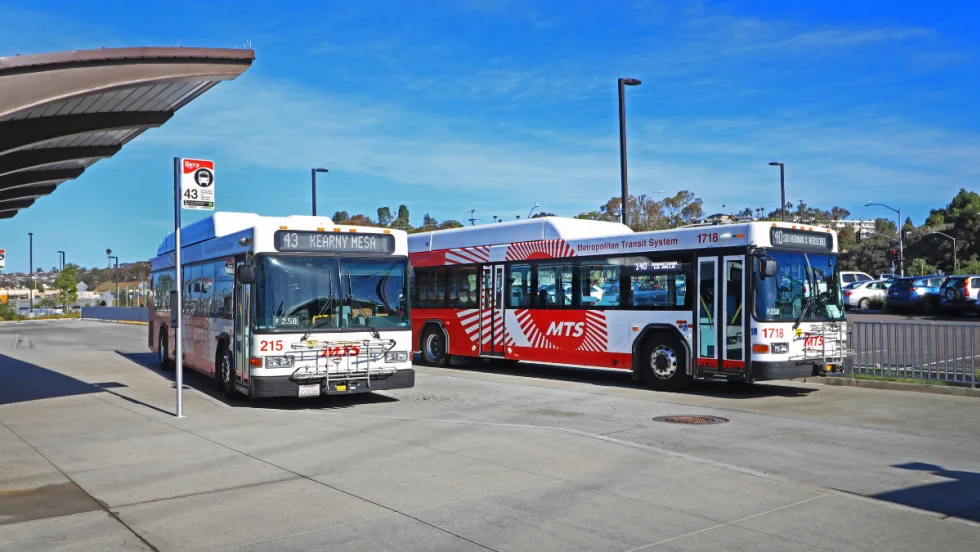
What’s Behind San Diego MTS’s Award-Winning Transit Strategy
Named one of APTA’s 2026 Outstanding Public Transportation Systems with 50 million or more annual passenger trips, California’s San Diego Metropolitan Transit System points to gains in ridership, safety, technology, and reliability as foundations of its success.
Read More →
Public Transit Conference Returning to GFX in 2027, Call for Papers Now Open
The Call for Papers is now open, allowing transit agency professionals and industry experts to help shape the PTC educational program by submitting session ideas for consideration.
Read More →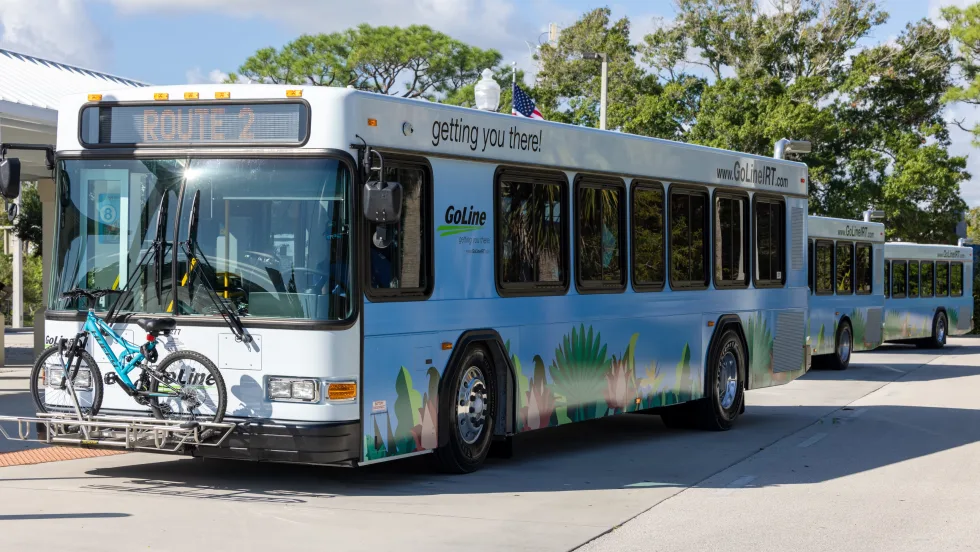
Indian River Transit’s Community-Focused Approach Earns National Recognition
Named APTA’s 2026 Outstanding Public Transportation System in its size category, Florida’s Indian River County transit system continues to grow ridership through fare-free service and a focus on evolving community needs.
Read More →
ENC Lands MATA Contract and More in Biz Briefs
In this edition of Biz Briefs, we spotlight the latest developments shaping the future of mobility.
Read More →
From Surviving to Thriving: Building Stronger Transportation Organizations
Bus Business Consultants founder Brian Dickson shares lessons on leadership, organizational health, and creating options for long-term success in a changing transportation industry.
Read More →
Everett Transit, Community Transit Outline Consolidation Agreement
The proposed agreement calls for a 50% increase in bus service in Everett, a new microtransit zone, continued paratransit service, and the transfer of Everett Transit operations to Community Transit.
Read More →
Strada360’s Steve Lassey on Turning Transit Data Into Better Decisions
From breaking down data silos to preparing for AI, Strada360 CEO Steve Lassey discusses how transit agencies can use technology to improve operations, customer information, and long-term decision-making.
Read More →