



Specialized Services Expand Mobility to Communities
Disabled individuals and those who live by infrequent bus lines benefit from Denver Regional Transportation District's expanded transit options.
Paratransit-1.jpg[/IMAGE]While the fixed-route services of a transit agency cover the majority of riders in its service area, those in geographic outskirts or with medical necessities require other options. In these cases, additional programs are needed to cover riders who cannot use standard fixed-route services.
Denver’s Regional Transportation District (RTD), which services the eight counties of the metro region, offers numerous specialized services to accommodate its ridership base. Two of its specialized programs, call-n-Ride and access-a-Ride, address mobility issues by expanding its services and creating more convenient options for riders.
access-a-Ride
RTD began operations of the access-a-Ride paratransit program in 1993. The door-to-door service allows disabled individuals, who are unable to use fixed-route buses, to phone in a reservation and be dropped off at another location in the RTD district. Its service area encompasses seven districts, and according to spokesperson Daria Serna, “Wherever there’s a fixed route, we have to have an access-a-Ride.” While the trip follows a fixed-route bus system, its starting and end points must be within three-quarters of a mile from the route. It also must have the same schedule as the fixed route that it is mimicking, which means it is in service every day of the year and runs late hours.
Riders can call on the same day, but the service’s high demand usually requires more advanced reservations. Trips are scheduled on a space-available, shared-ride basis, and a subscription service is available for those traveling to the same destination at the same time at least three times per week. Access-a-Ride operates 320 vehicles, and Serna says the service gets thousands of calls and requests each day. “In 2008, we had more than half-a-million boardings,” she says.
Call-n-Ride
The agency’s Call-n-Ride service, started in the late ‘90s, is a convenient curb-to-curb service, covering a specific geographic area and designed to supplement existing RTD service and make it easy for commuters, school children and others to get where they need to go. This service can be implemented in areas experiencing low ridership, which was the case for a particular route in the city of Brighton, north of Denver. RTD replaced the line with call-n-Ride for that community. In late 2000, the program was adopted in four more towns leading to Boulder, and as more areas found out about the option, it was quickly implemented in other communities. Currently, there are 20 cities and counties that use call-n-Ride, three with more than one zone.
The curb-to-curb service operates 39 vehicles, including small buses and compact vans, across the entire Denver metro region. Each area is run individually and has its own schedule, which may not include weekends and holidays. Unlike the paratransit service, vehicles transport only within the boundaries of its service area and do not cross borders; riders wishing to get to another city or county must transfer to another vehicle. Riders call from one hour up to two weeks in advance for a reservation and speak directly with the driver, who pulls over to schedule the ride. On an average weekday, a call-and-Ride bus transports 2,100 riders.
The decision on whether to expand call-n-Ride to another community is based purely on need. Usually, requests for expanded service are made by RTD board members for their specific community, but individuals residing in the community can also make the request.
“It’s a case-by-case basis on when we add call-n-Ride,” says Serna. “There are a lot of different criteria that go into it: looking at the current bus route, seeing if they’re working out or not, and looking at the financial part of it to see who will fund it.” RTD can replace a route with call-n-Ride, but sometimes it is more effective to offer more frequent times on its fixed route service.
Eligibility requirements
While call-n-Ride serves anyone in the area it covers and charges the same as a local cash bus fare, access-a-Ride’s eligibility requirements are much stricter. Its disabled riders must show that there is no lift equipment on the bus they need; they are unable to independently get to and from a bus stop or cannot get on and off a bus; or they are unable to understand how to complete trips. Eligibility certification is handled by the Easter Seals of Colorado, an organization working with the disabled, in a free process that requires a functional evaluation and a physician’s statement. Those verified receive a photo ID that they must show each time they board.
Fares for access-a-Ride range from $4 to $9, depending on the distance travelled. Those with the ID card wishing to travel within the community can also travel on a call-n-Ride vehicle for free. Riders can choose this option when an immediate reservation on access-a-Ride is unavailable. However, “on the call-n-Ride, they’re going to be on [a vehicle] with others who aren’t disabled,” says Serna. “Some people prefer the special care and the one-on-one attention you get with access-a-Ride.”
[PAGEBREAK]
Funding service
Funding for access-a-Ride is completely covered by the RTD. Serna says this becomes a line item on RTD’s operational budget and estimates it to be $32 million this year. With each expansion of its bus system, it must set aside funding for an access-a-Ride vehicle to follow the same route.
Call-n-Ride works as a separate entity, and funding varies for each area. “There are different agreements with different areas,” says Serna. “We have one town here that is very good at getting grants, and they will fund a call-n-Ride with a grant, whereas another city will come to us and not have the money and want RTD to fund the entire thing. We have towns and counties that say ‘we’ll fund 50 percent of it, will you fund the other 50 percent?’”
Yearly, it costs about $160,000 per community to run the weekday program. Call-n-Ride may result in being less expensive for RTD than a large-bus route, and the smaller vehicle is not as costly to maintain.
Operations, Training
The majority of both programs are operated by private contractors. MV Transportation, CUSA Transit Services, Special Transit and Global Transportation operates the paratransit service, and First Transit services the call center, while Special Transit, MV Transportation and Seniors Resource Center service the call-n-Ride contract.
Vehicles for these specialized services — leased to the contracting companies by RTD — are supplied by StarTrans (access-a-Ride/call-n-Ride) and ElDorado National (call-n-Ride).
Call-n-Ride drivers undergo a standard two-week driver training program, before taking on specific service routes for five additional days of training. Due to the nature of the service, access-a-Ride’s intensive 80-hour training program deals with topics ranging from passenger relations to laws to adverse weather procedures. It also includes an eight-hour defensive driving class, and operators are tested on techniques taught. “We require the contractor not only to do the original training for 80 hours, but in addition, they have to continue a Safety and Training Program,” says Serna. This refresher training is required for four hours each quarter.
Managing growth
With the successful implementation of the two services, the RTD has been able to expand its services to all riders, providing mobility to the entire community. Public response has been overwhelmingly positive, as call-n-Ride is convenient for those outside the city center who no longer have to wait for infrequent buses. Because it’s a curb-to-curb service, the elderly and disabled can utilize it as well.
“Call-n-ride is unique to RTD because we started the program,” says Serna. And due to its success, “we have had many communities come ask us how we started it, and how they [can] start one.”
With its ridership growing 10 percent every year, access-a-Ride has become an integral part of the RTD transit system. “Oftentimes people come to depend on access-a-Ride as their sole means of transportation,” says Serna. “I see that every day. We have many people with disabilities who don’t have families, they don’t have people to get them where they need to go and access-a-Ride is their only means of transportation. It takes them shopping, to dialysis treatment, work, school, wherever they need to go.”
To help manage the rapidly growing services, the RTD plans to enhance both through the use of new high-tech tools. For Call-n-Ride, the agency is implementing a new electronic manifest that will allow users to book online, a new option added to the current phone-only reservation system. For access-a-Ride, RTD is installing automated vehicle locators (AVL) and mobile data terminals (MDT) on each vehicle. “This technology, the AVL and MDT, will enable us to pinpoint the whereabouts of our vehicles and offer drivers turn-by-turn directions to their destination,” says Serna. The additions of both systems are expected to be fully completed by the end of 2009.
More Paratransit
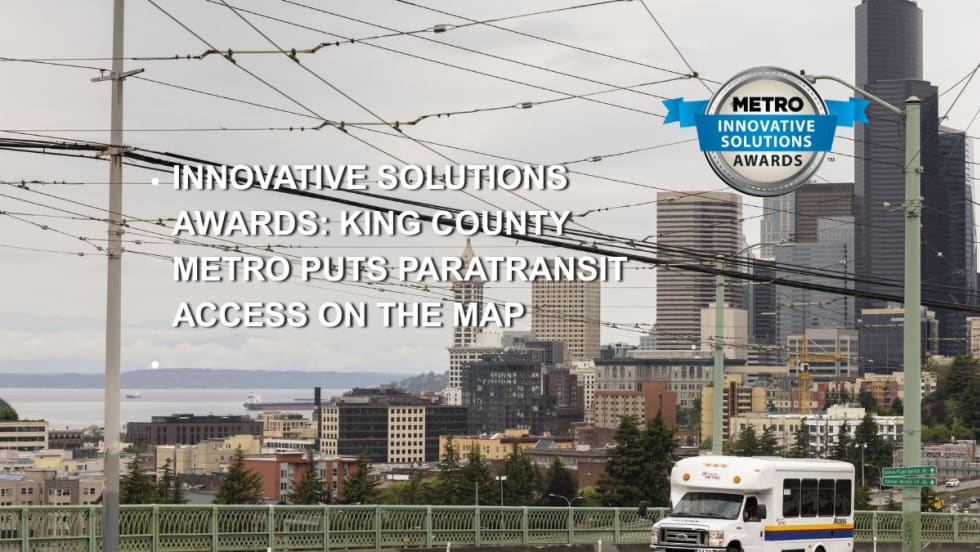
King County Metro Makes ADA Paratransit Easier to Navigate
METRO's Innovative Solutions Award winner replaces complex service-area descriptions with an accessible, interactive map that puts paratransit information directly in customers’ hands.
Read More →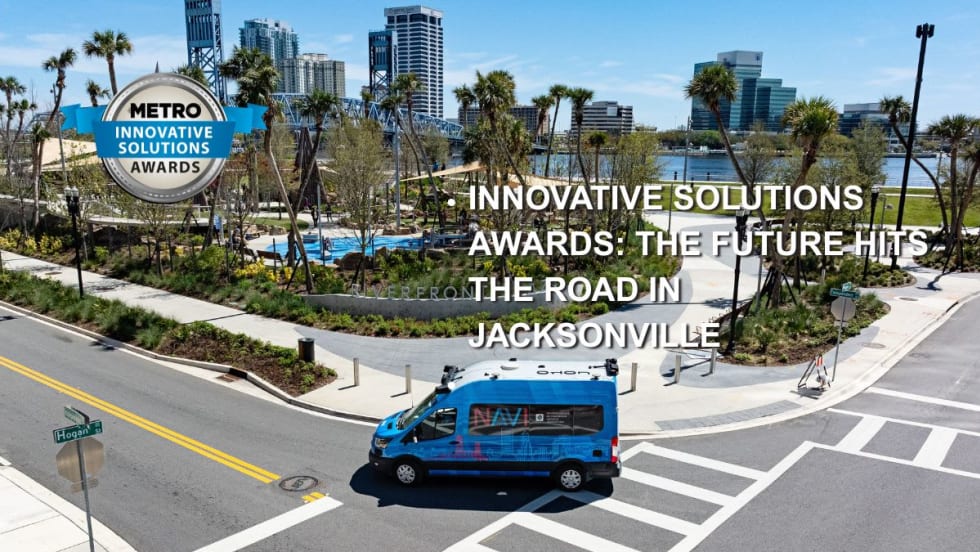
Jacksonville’s NAVI Project Charts a New Course for Autonomous Public Transportation
Through its NAVI program, JTA is showing how autonomous vehicles, intelligent infrastructure, and coordinated operations can work together to deliver everyday public transportation.
Read More →
Driving Smarter Paratransit
John Hanlon shares how AlphaRoute is leveraging AI-powered technology to help paratransit providers optimize operations, support frontline staff, and enhance the rider experience.
Read More →
METRO Magazine Announces 2026 Innovative Solutions Awards Winners
Projects Recognized for Advancing Mobility Through Technology, Accessibility, Workforce Innovation, and Operational Excellence
Read More →
Biz Briefs: STV teams with Amtrak, Motorcoach Operators Boost Fleet and Land Contracts, and More
From manufacturers and suppliers to transit agencies and motorcoach operators, these updates offer a snapshot of the projects, partnerships and business moves driving the industry forward.
Read More →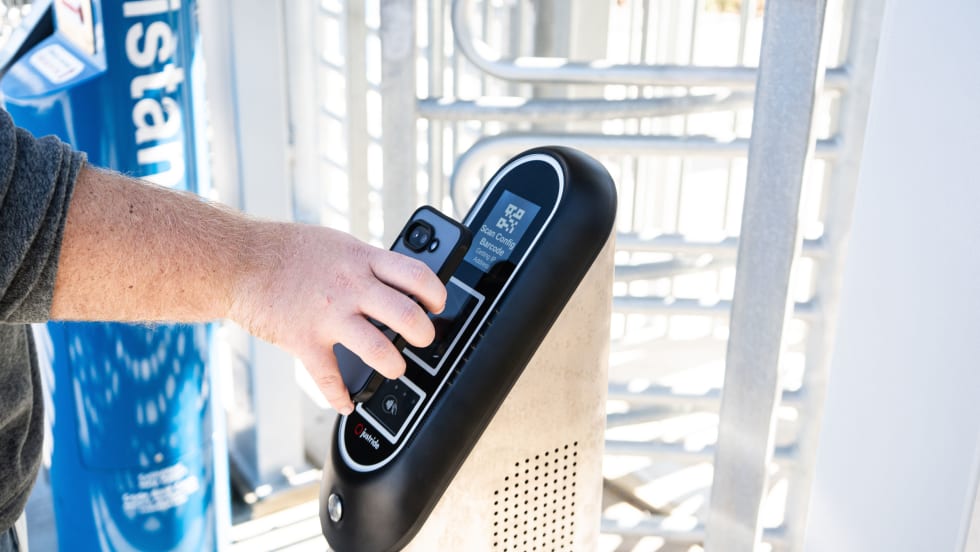
Biz Briefs: Masabi Teams with St. Louis Metro and More
In METRO's latest installment, we take a look at recent news from Transdev, Hitachi, and more partnerships making headlines across the transportation sector.
Read More →
New York MTA Leverages Zoning Program to Advance Station Accessibility
Accessibility enhancements at Nevins St Station will be financed through a development agreement tied to the MTA's Zoning for Accessibility initiative.
Read More →
Reinventing Fleet Maintenance with Real-time Visibility and AI
Transit leaders need to know what needs fixing, where to look, who is responsible, when work is completed, and what it costs without having to chase information across disconnected systems.
Read More →
SamTrans Sets Priorities for Potential Connect Bay Area Revenue
The board-approved framework allocates future funding to maintaining service, rider improvements, equity initiatives, and infrastructure repairs.
Read More →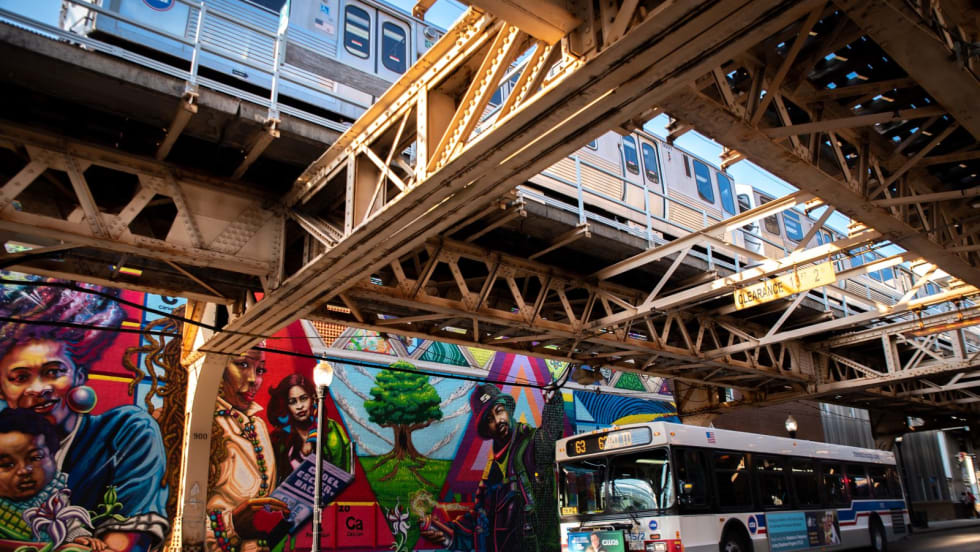
Chicago's NITA Act Moves Into Next Phase as Service Improvements Begin
Rider-focused improvements will begin rolling out across the system immediately as CTA, Metra, and Pace increase service this summer in the six-county region.
Read More →