“We measure everything, including our closing ratios as well as or maintenance, safety, and hiring practices."
- Stephen Story, president, James River Transportation


 MENU
 SEARCH
With a focus on measuring and making improvements on the fly, the Richmond, Va.-based operation has built one of the most reliable and well-run operations in the industry.

Stephen Story (left) and his team at James River focuses on versatility and addressing the challenges the company faces.
All photos courtesy Don Mears Photography
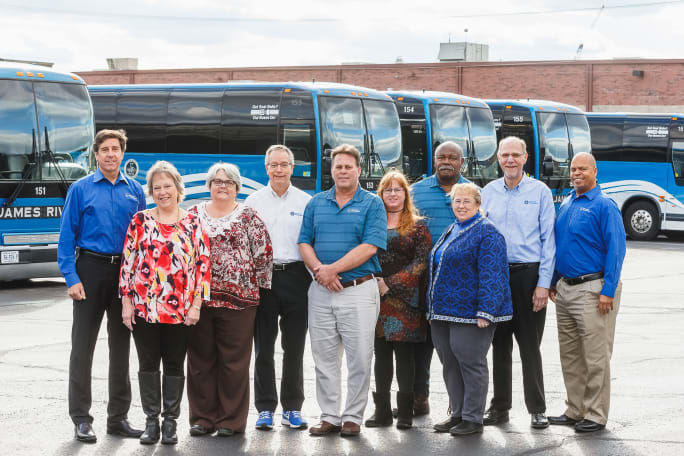
Stephen Story (left) and his team at James River focuses on versatility and addressing the challenges the company faces.
All photos courtesy Don Mears Photography
An original member of the industry’s first 20 Group, James River Transportation has spent decades as a full-service transportation provider, with a focus on delivering a premium service while also keeping a close eye on every aspect of the organization.
“We measure everything, including our closing ratios as well as or maintenance, safety, and hiring practices,” explains Story. “Our goals are then benchmarked against our company and other organizations, and if improvements need to be made, we find the solutions for those issues collaboratively.”
Tailored sales, setting goals
With close to 15 different categories of revenue, the operation has identified what its closing ratio is for each aspect of the business and focuses on selling the customer by knowing what is important to that specific customer.
“For instance, we might have a 60 percent closing ratio for our corporate work because they are legitimately calling us knowing they are going to book us based on our reputation,” says Story. “Other customers we know are shopping us by price, and we are not the cheapest, but we know we can try to sell them based on what’s important to them. Like if it’s a school, we’ll discuss our safety practices.”
Purchasing advertising based on those different values, whether it be safety, customer service, environmental benefits, or something else, the company sets sales goals for each salesperson, or “travel consultant.” That sales team follow a specific process, which includes inputting all quote requests into the company’s reservation system for logging and marketing later. The consultants than follow up with quotes at a predetermined time based on the circumstances of the client and quotes are either booked or the reasons for not booking are recorded for analysis later. As mentioned, throughout the sales process, the consultants are trained to provide key selling points during each interaction with the client.
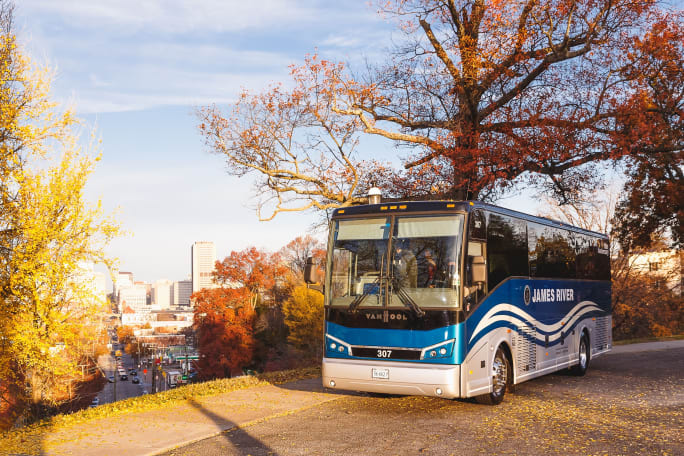
An original member of the industry’s first 20 Group, Richmond, Va.’s James River Transportation has spent decades as a full-service transportation provider.
Refocused sales, crowdsourced reservations
With a focus on versatility and addressing the challenges it may face, the company recently adapted its sales process to accommodate the larger number of customers who wish to book their travel online.
“When we first identified that this trend was growing, about 50 percent of our quote requests were online, and that number has grown to 65 percent in a very short amount of time,” explains Story. “Ten years ago, when we got that quote, we’d follow up with a phone call. Now, they don’t want that, which is why they are going online. So, what we had to do is learn how to create that conversation via email, or even through social media, to let them know about our company and why they should book with us.”
The company has also introduced crowdsourcing online reservations for special event transportation like concerts, rallies in Washington, D.C., special tours, and large event shuttles. The service is advertised on various social media platforms, and while it is a relatively small part of James River’s overall sales, the company expects the model to continue growing, which will give them access to new revenue streams and client types.
In the mid-1990s, James River started its own CDL training school, with the company estimating that about 80% of its current driver workforce has been trained from scratch.
Driver training school, revised application process
Back in the mid-1990s, James River started its own CDL training school, with Story estimating that about 80% of its current driver workforce has been trained from scratch, in house. For the last four years, the operation has exclusively advertised through Facebook for driver positions, which enables them to target interested users with paid posts that utilize proprietary keywords.
“We used to spend thousands of dollars to advertise our open driving positions,” says Story. “Now, it costs us only about $200 or $300 per training class, so its really been a gamechanger for us.”
Now, to get even more applicants through the door, James River recently changed the way it handles the application and onboarding process for drivers.
Once an applicant clicks on the Facebook ad, they are taken to employment landing page on the company’s website. The web page was specially designed to maintain the viewers interest and keep its selling points engaging.
From there, interested applicants can complete an online “quick app” in less than five minutes and submit it to James River’s HR department. During the initial screening, the operation will conduct a 30-minute telephone interview, followed by a 60-minute in-person interview.
“In the old days, which is like five years ago, applicants would go to our website, download our six-page application, print it out, fill it out, scan it, and either email it back or get in the car and drive it down to us,” Story explains. “With practices like that, we in the industry wonder why we don’t get more applicants. So we changed the process, because we realized that we hardly ever hire anybody based on their application. We hire them based on our interview process, because we are looking for people with good personalities. We feel we can teach the technical stuff, but you can’t learn to be personable.”
Once the applicant accepts the offer, James River will then move ahead with “the tedious stuff” like background checks. They also remain in contact and will sometimes pay the applicant while they wait for the next training class.
“We keep the communication with them going throughout the process because we found if we don’t, we may lose them,” says Story. “Sometimes, the next training class isn’t for another two to four weeks. If that’s the case, we offer them the chance to get paid while doing some training online. We also offer them the opportunity to come in and get help filling out all the regulatory paperwork they have to do and pay them to do so all right here.”
Story adds that the process not only makes it easier for the applicants, it also allows the company to see where the stumbling blocks are and exactly where and when the driver applicant is getting tripped up during the process, so it could then address those issues in the future.
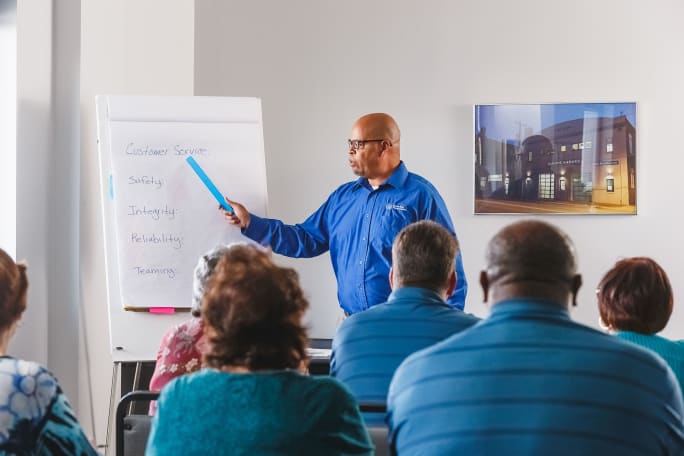
In addition to its sales and hiring practices, the transportation provider also has a nationally recognized training program.
'Soft skills,' sleep apnea management
In addition to its sales and hiring practices, James River also has a nationally recognized training program.
Approximately 12 years ago, the operation brought on a full-time corporate trainer, who is responsible for training new hires through the James River way from day one.
“Their job is to train our staff in what we call ‘soft skills,’ which includes interpersonal communication, dealing with difficult passengers, and team building,” says Story. “We also get our drivers, dispatchers, and managers all together to share best practices, so they can learn from one another and gain more experience in how our entire operation works.”
To ensure safety on the road, James River is one of the first bus companies to start a sleep apnea management program, with a physician network providing additional screening for symptoms of the condition. If a driver is identified to suffer from sleep apnea, the operation provides assistance to the employee through the entire diagnosis and treatment program. The goal is to complete the treatment with little to no wage disruption; a typical reason drivers are not more open about the sickness, according to Story.
Outside of sleep apnea, the company has taken many other steps to reduce fatigue and ensure safety.
Fifteen years ago, the operation stopped driving through the night with a single driver. Drivers would switch at 2 a.m. regardless of driving hours available. Two years ago, James River stopped allowing the bus to operate through the night, even with multiple drivers. For long single day assignments, a hotel is furnished for the driver to get proper rest — typically four to six hours — even if the assignment meets legal hours of service requirements. Also, assignments that require moderate deadhead or an early morning start will be dispatched the night before so the driver can stay in a hotel.
“Whenever we change our processes, it’s not always our idea, sometimes we’ll borrow best practices from another company,” Story explains about some of the operational and management changes the company makes. “Everyone has great ideas. Somebody out there is doing something better than us. We can’t just close our eyes to that and be afraid to make changes to our own best practices.”
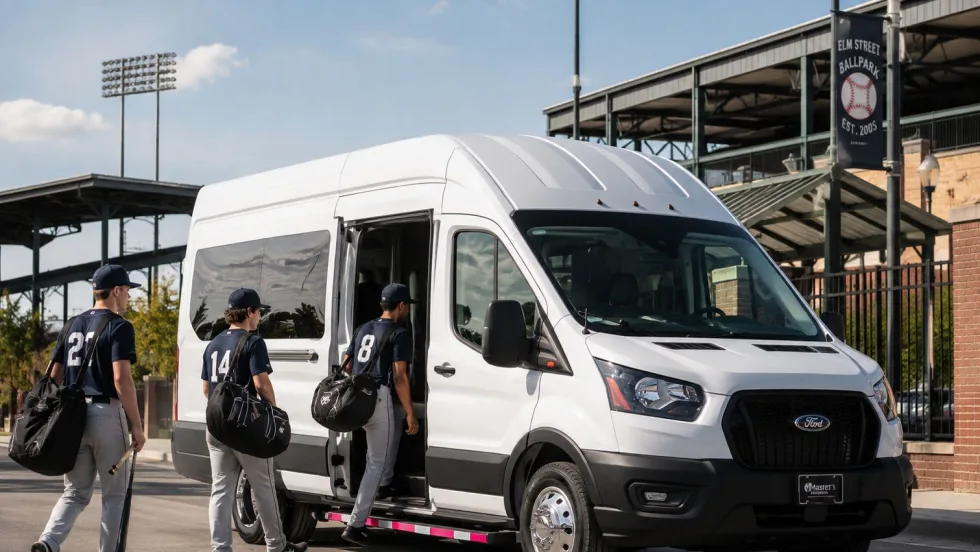
Smaller college athletic programs are rethinking fleet strategies as rising costs, driver shortages, and longer travel distances put new pressure on transportation budgets.
Read More →
Bus Business Consultants Founder Brian Dickson discusses the leadership principles, operational discipline, and strategic planning that separate transportation companies positioned for long-term success from those stuck in survival mode.
Read More →
The company’s CEO discusses carrying forward a third-generation family legacy, ABC’s continued evolution in passenger transportation, support for increasingly complex fleets, and how technology and continued investment could help operators improve uptime.
Read More →
Bus Business Consultants founder Brian Dickson shares lessons on leadership, organizational health, and creating options for long-term success in a changing transportation industry.
Read More →
The 2025 Motorcoach Economic Impact Report finds motorcoach travel supported nearly 25,000 jobs and generated $980 million in federal, provincial, and local taxes.
Read More →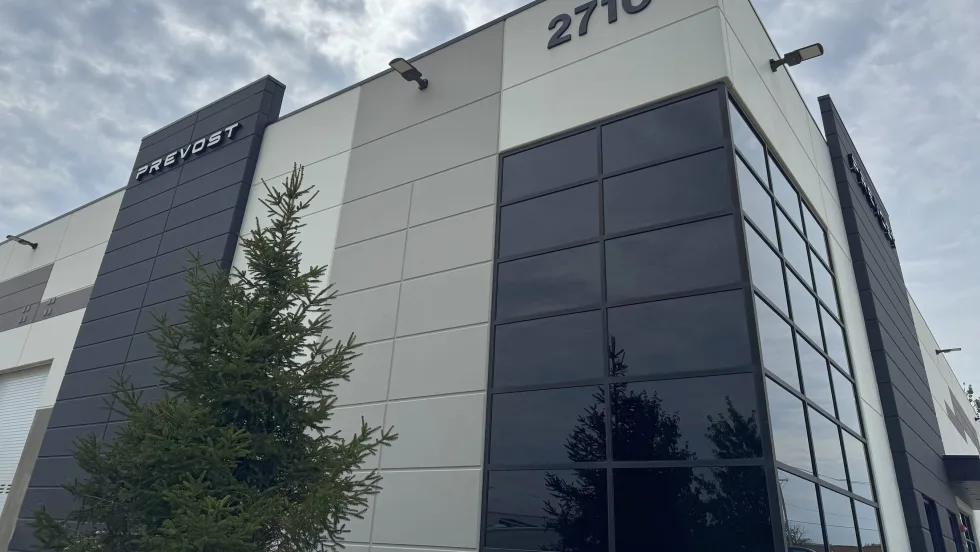
The $8.1 million Elk Grove Village investment nearly triples facility space while adding service capacity, parts storage, and customer amenities.
Read More →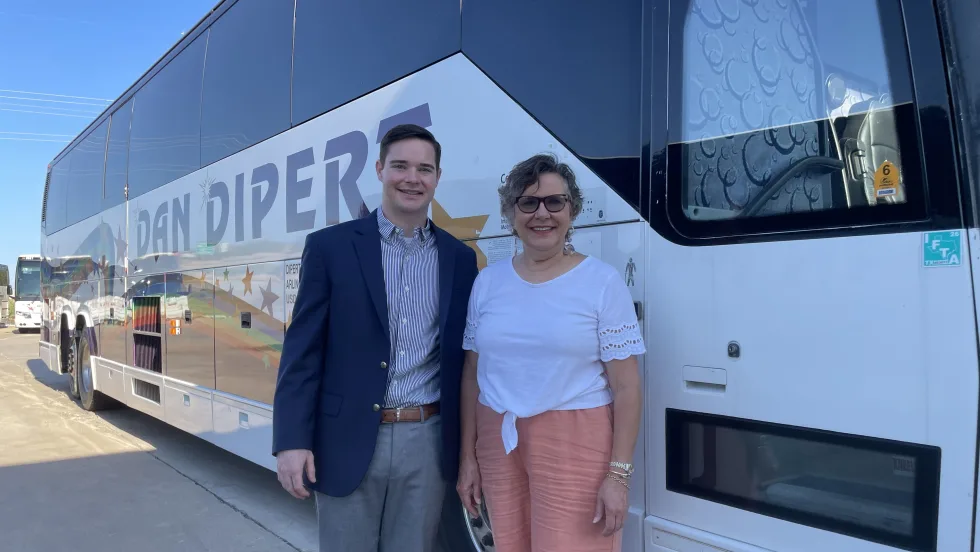
In this edition, we also cover recent appointments and announcements at the Wabtec, SilverRide, HNTB, and more, showcasing the individuals helping to shape the future of transportation.
Read More →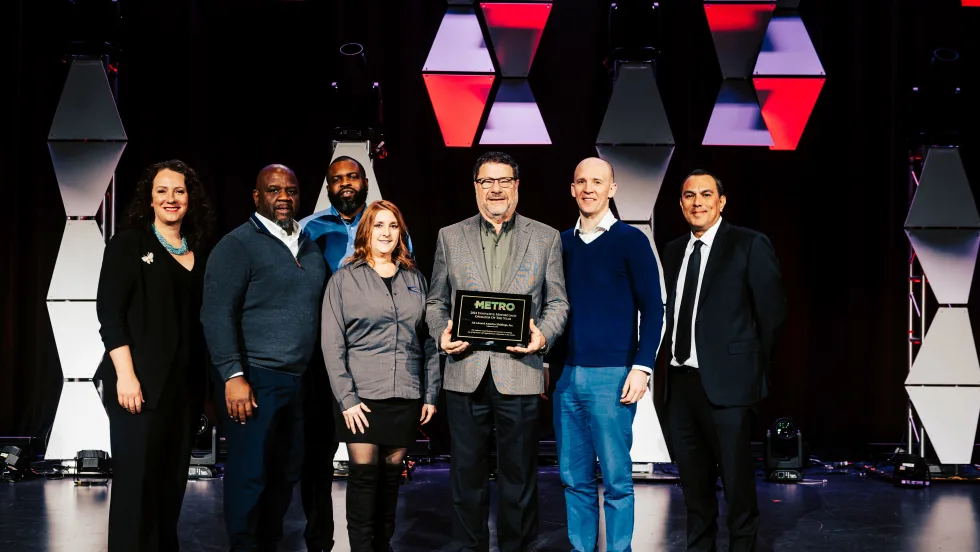
Nominations are now being accepted for METRO Magazine’s Operator of the Year and Innovative Operator of the Year awards.
Read More →
In METRO's latest installment, we take a look at recent news from Complete Coach Works, Beep, FlixBus, and more partnerships making headlines across the transportation sector.
Read More →
In METRO's latest installment, we take a look at recent news from Siemens, Prevost, Dodge, and more partnerships making headlines across the transportation sector.
Read More →