



Talk Isn't Cheap — It's Invaluable
The peer-review process is an important tool for transit agencies to acquire information, best practices and constructive criticism on projects or programs.
Knowledge is power. And when you're running a transit system, knowledge can mean the difference between success and failure. But obtaining clear, objective information or bold new ideas can be time-consuming, difficult and even impossible. Enter the peer review process. “Peer review is an extraordinarily productive and exciting process,” says Bill Fife, corporate VP and director of aviation services at DMJM+Harris. “It disseminates valuable information quickly, shortens the learning curve, breaks down communication barriers and prevents false starts, costly backtracking and turf battles.” As the co-creator of the peer review group process for the aviation industry, Fife should know. Peer review beginnings It all began in 1988, when Fife was discussing aviation industry problems with his wife, a health-care professional. She explained that her industry used a process called peer review to tap into colleagues” knowledge and experience. At a conference later that year, Fife met Donna Luh, then the airport project manager for the Niagara Frontier (Buffalo, N.Y.) Transportation Authority (NFTA). They shared their frustration with conferences that failed to address issues that were important to people in the aviation “trenches.” There wasn’t any mechanism for exchanging vital information between peers, decision-makers and project executors. Fife and Luh agreed that they needed a way to share their colleagues” knowledge, experience and ideas, but with a focus on specific projects. With his wife’s suggestion in mind, Fife enticed Luh to join him in creating the Peer Review Group (PRG). The aviation PRG immediately gained a following among airports around the world. The time and money saved in airport construction and operations proved the value of the process. Fife then teamed with Jerry Premo, rail practice leader and VP of transit for DMJM+Harris, to bring the peer review process to the firm’s transportation practice. “The peer review principles that have been so successful for aviation apply to transit as well. We don’t need to spend time and money repeating the mistakes of others. Instead, we want to share information and learn from others, applying the lessons learned from their successes and their failures,” Premo says. The first transit-related peer review took place 3 1/2 years ago in a joint airport/transit project for the New York City Metropolitan Transit Authority (MTA), Premo says. “The MTA wanted to extend the N subway line out to LaGuardia Airport. That started our transition from aviation- to transit-oriented peer review.” “For the past two years we’ve been performing peer reviews on transit projects, particularly projects for the Port Authority of New York and New Jersey. For example, our mini-peer review on the temporary PATH station at Ground Zero proved to be invaluable. And the regrettable abundance of security issues that arose after Sept. 11, 2001, has only made the process more valuable,” Premo says. How it works Every few months, participants gather for one or two days to share ideas about current or planned transit projects. A group consisting of transit managers, Federal Transit Administration (FTA) staff, directors of transit planning and engineering and program/project managers meets at a transit agency and focuses on a recent or upcoming major project of the host agency’s choosing. After a briefing, group members give their input and unique perspectives on the project. Next, the group holds an information-sharing forum on important issues faced by members. Richly varied ideas emerge that usually illuminate different approaches to solving problems. This session often reveals how other agencies have handled similar issues. Matters such as security, environmental remediation, community support, new technology or project management might be addressed, but no subject is off limits. Whatever people in the field are dealing with is fair game. And by all accounts, the approach is quite useful. “This was definitely time well spent,” says Frank Kobliski, chief operating officer of the Central New York Regional Transportation Authority. “Many issues were discussed — ADA compliance, charter bus service regulations, security issues and progressive discipline programs — yielding a useful exchange of practices from the participating agencies.” Information exchange Kobliski refers to an April 2002 peer review on surface transportation hosted by the NFTA. Participants identified more than 20 pressing topics in advance: innovative service ideas, clean-fuel options, procurement limits set by transit boards, FTA drug and alcohol testing, marketing issues and vulnerability analyses. Participants also toured NFTA’s Metro facilities. But while the tour was useful and informative, the participants came for the information exchange. “Interaction with my peers is always beneficial to me,” says Michael York, deputy general manager of operations of the Greater Cleveland Regional Transit Authority. A veteran of the peer review process, York has attended sessions that covered travel-demand forecasting, ITS, operations planning studies, and the development of a maintenance and inventory management system. Lawrence M. Meckler, NFTA executive director and host of this peer review, also believes that his agency profited. “Sharing information about how best to operate public transit systems is hugely valuable. Peer review helps us develop best practices that benefit our customers. And ultimately, that’s what this is all about.” Guidelines to follow But good peer review sessions do not simply happen because you bring transit professionals together. There are some basic guidelines. “Two elements should drive the formation of any peer review endeavor,” says Fife. First, find someone who has successfully led the peer review process, preferably more than once. A leader must guide the discussion and keep it productive, while creating an atmosphere of openness and acceptance. Next, make sure that you have the right blend of participants. Ideally, two-thirds of the participants should be veterans of the process. Experienced peer reviewers are generally more open and willing to share information. They get the process moving and kept it moving, and that will maximize the value for everyone. But don’t limit it to veterans. “While veterans keep things moving, new blood often drives the pace, excitement and productivity of the process,” says Fife. “It’s also important to have a diverse representation of disciplines to broaden the scope and open the lines of communication between fields. “It’s also essential to build trust among the participants. If people don’t trust each other, they won’t talk openly,” he says. “The sessions must be worthwhile. If you’re not focusing on what’s important, people won’t show up next time,” says Premo. “Another key factor is the commitment of the host facility. The host must be prepared to openly confront its project’s flaws. That’s what this process is all about, an honest perspective.” Recognizing that it may seem more like art than science, Fife and Premo add that there is no standard form or rigid structure dictating how to proceed. As long as information is being shared in a supportive and open format, the process is working. Peer reviews can address a specific aspect of a project, or an entire program. Arthur Schurr is a New York-based freelance writer whose articles on infrastructure appear in national magazines.
More Management
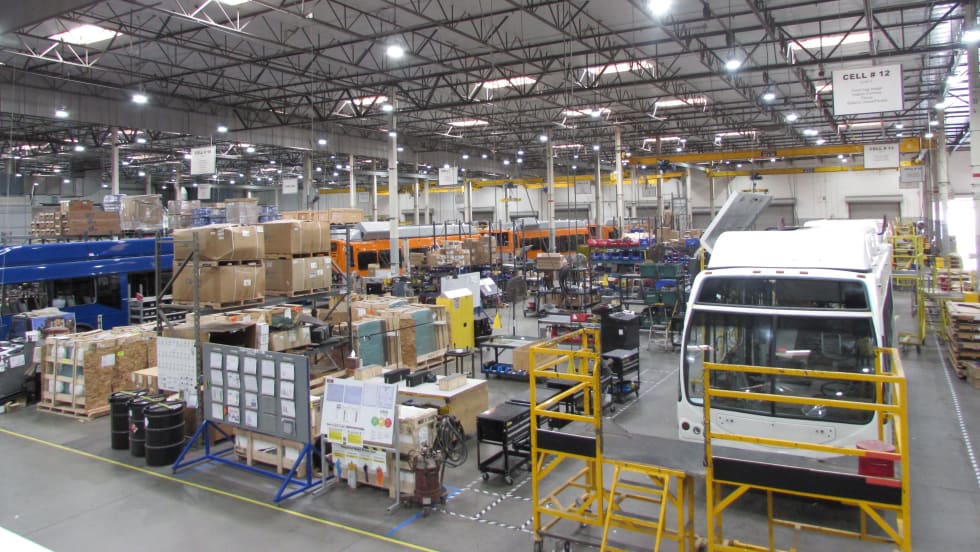
LA Metro Board Awards 220 Battery-Electric Bus Contract to ENC
The contract, which is the largest base award of battery-electric buses by a U.S. transit agency, will be built in Southern California, sustaining good jobs as LA prepares to welcome the world in 2028
Read More →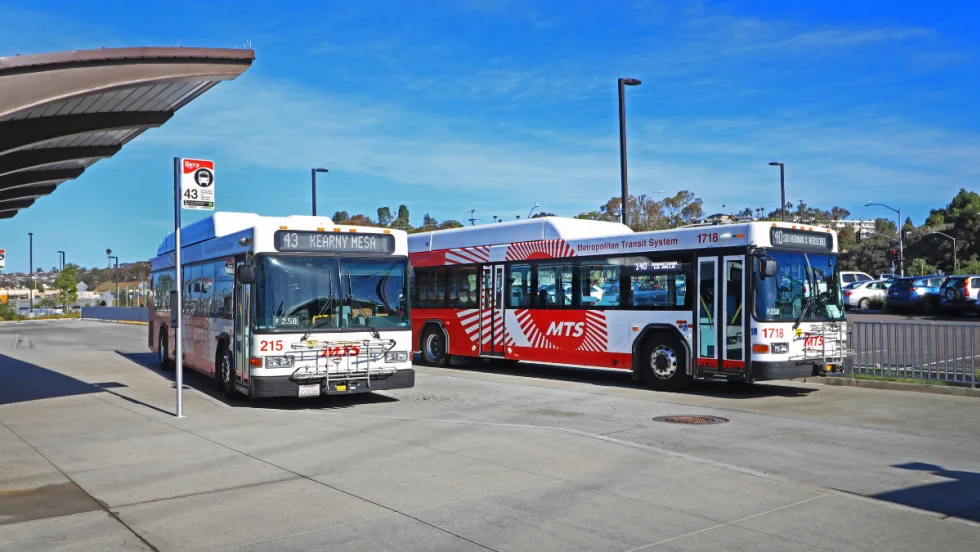
What’s Behind San Diego MTS’s Award-Winning Transit Strategy
Named one of APTA’s 2026 Outstanding Public Transportation Systems with 50 million or more annual passenger trips, California’s San Diego Metropolitan Transit System points to gains in ridership, safety, technology, and reliability as foundations of its success.
Read More →
Public Transit Conference Returning to GFX in 2027, Call for Papers Now Open
The Call for Papers is now open, allowing transit agency professionals and industry experts to help shape the PTC educational program by submitting session ideas for consideration.
Read More →
Indian River Transit’s Community-Focused Approach Earns National Recognition
Named APTA’s 2026 Outstanding Public Transportation System in its size category, Florida’s Indian River County transit system continues to grow ridership through fare-free service and a focus on evolving community needs.
Read More →
ENC Lands MATA Contract and More in Biz Briefs
In this edition of Biz Briefs, we spotlight the latest developments shaping the future of mobility.
Read More →
From Surviving to Thriving: Building Stronger Transportation Organizations
Bus Business Consultants founder Brian Dickson shares lessons on leadership, organizational health, and creating options for long-term success in a changing transportation industry.
Read More →
Everett Transit, Community Transit Outline Consolidation Agreement
The proposed agreement calls for a 50% increase in bus service in Everett, a new microtransit zone, continued paratransit service, and the transfer of Everett Transit operations to Community Transit.
Read More →
Strada360’s Steve Lassey on Turning Transit Data Into Better Decisions
From breaking down data silos to preparing for AI, Strada360 CEO Steve Lassey discusses how transit agencies can use technology to improve operations, customer information, and long-term decision-making.
Read More →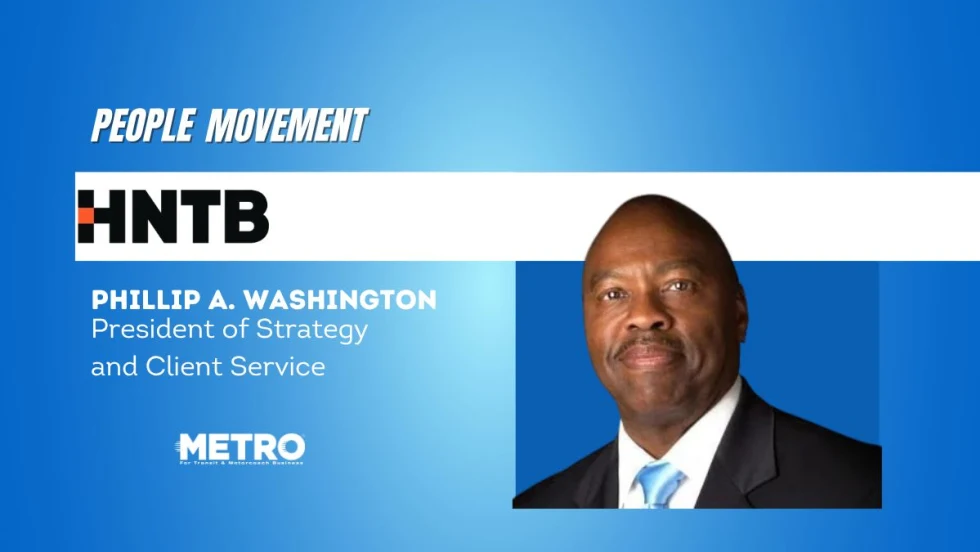
People Movement: Phil Washington Joins HNTB, Denver RTD Launches CEO Search, and More
In this edition, we also spotlight recent personnel moves at STV, the Eno Center for Transportation, and more, highlighting the people taking on new roles across the transportation industry.
Read More →
SEPTA Details Accelerate Vision for Transit System
The plan outlines investments in trolley modernization, new Metro and Regional Rail vehicles, accessible stations, and more frequent bus and rail service.
Read More →