



TCS named 2018 Innovative Operator of the Year at ABA Marketplace
Since 2012, the family-owned coach company has experienced an approximate 20% growth year-over-year, which has come from new business and some small acquisitions, and expanded its fleet from 18 to 61 motorcoaches.

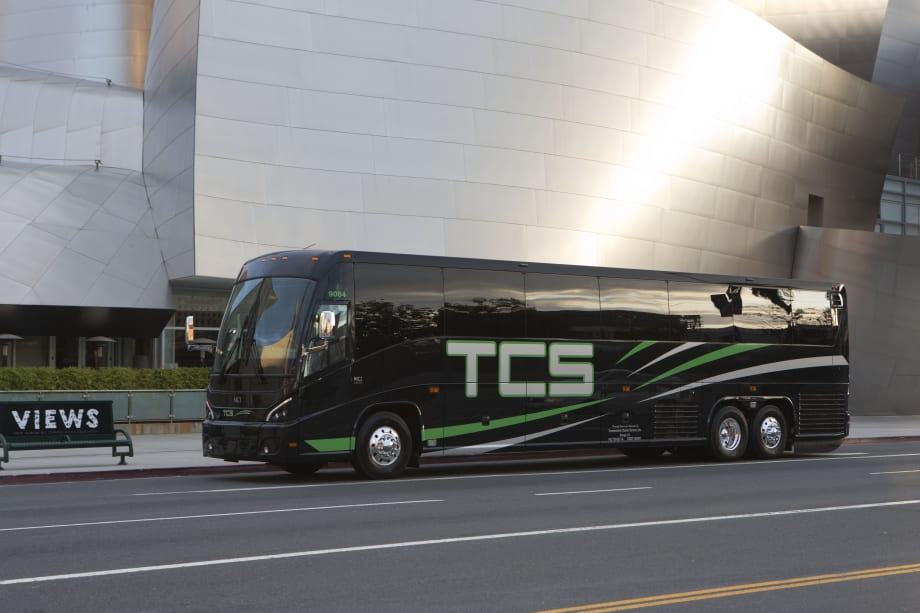
Orange, Calif.'s TCS was named METRO's Innovative Operator of the Year on Monday morning at the American Bus Association's Marketplace in Charlotte, N.C. President/Owner Terry Fischer and his brother VP, Operations, Kevin Fischer were on hand to receive the award from METRO's VP, Emiritus, Frank Di Giacomo.
Like many in the motorcoach industry, Terry Fischer, president/owner of TCS, grew up in the bus business, getting his start at his father’s company, which mostly ran school buses, in Alberta, Canada. His early involvement at his father’s operation, led to a lifelong journey.
“I ended up getting a Commercial Driver’s License as soon as I turned 18, while I was attending university in Calgary, and drove motorcoaches for Brewster Transportation in the Canadian Rockies,” says Fischer. “After university, I stayed on at Brewster for a few years, driving coaches around the time Calgary hosted the Winter Olympics.”
Starting off as a mechanic, Fischer then re-joined his father’s operation, where he coaxed him into adding his first motorcoach, and worked his way through the ranks from serving in the safety and training departments to eventually becoming VP, operations, and finally, VP, sales and business development.
After his father stepped into semi-retirement, Fischer helped grow the business to 25 coaches and 75 school buses, before the family decided to sell in 2005. Fischer stayed on with the new ownership for a few years, but eventually left to join a larger motorcoach company on the west coast. The company he was working for also went through an ownership change after a few years and he decided it was time for him to own his own motorcoach business.
“When you’ve been in a family business for so long, it’s difficult to do corporate,” Fischer explains. “I decided I wanted to have my own company again and found that TCS was for sale, so I connected with the seller, put together a deal, and we took over the company in January of 2012.”
After “right-sizing” the company’s school bus fleet from 14 outdated models to six newer models, which are primarily used for charter purposes, Fischer has grown the TCS fleet from 18 to 61 motorcoaches, and also has four low-floor transit buses that the company uses for its Southwest Airlines shuttle contract at Los Angeles International Airport.
As the business began to grow, Fischer’s brother Kevin sold the family’s ski resort business and joined TCS as VP, operations, along with his wife Tracey, who is also working in the company. Fischer’s wife, Kathryn, serves as VP, sales.
Rebranding the operation
One of Fischer’s first major undertakings after purchasing the company was to update the TCS brand.
“The branding had been the same since the owners started the business in 1988 — to me it seemed a little stale,” he says.
Fischer teamed with a graphic designer for the update, first pairing down Transportation Charter Services to TCS, then working together to create a fresh silver-and-lime-green logo, which prominently stands out on the operation’s sleek, black motorcoaches.
“We always ran black motorcoaches in Canada, so I knew we wanted to bring that to TCS and create a motorcoach that looked like a hot rod going down the road,” he says. “Our coaches really turn heads when they are going down the road because it is really hard to miss the TCS logo. The most important thing, I think, about making your brand stand out is to make it easily identifiable.”
After re-branding, Fischer and his team began reinforcing the brand with everything they did from the uniforms and clothes employees wear, including customized Nike sneakers, to the “swag” they handed out to customers.
“It’s almost like a culture, in a sense,” he says. “Our brand has become popular around the country based on social media and some other things we have done. There are a lot stronger brands out there, but we have created a brand recognition that makes our company appear to be bigger than it is.”
TCS’ growth came from Fischer’s background in the tour and travel industry, which fit in nicely with the company’s well-established charter work.
“Our growth in tour and travel, which is really seasonal work, has helped create a really solid utilization rate for our company year-round,” he says.
The company has also grown through the acquisition of some smaller motorcoach companies in the Orange County and Los Angeles areas, where TCS bought their vehicles, took on their drivers, and took over their customer list and book of business. The company also recently closed a deal on Honolulu’s Polynesian Adventure Tours, which will include Fischer taking over as president of the operation.
“We bought the company and now own it, but it will remain to operate as a separate brand with its entire current staff remaining onboard,” Fischer explains.
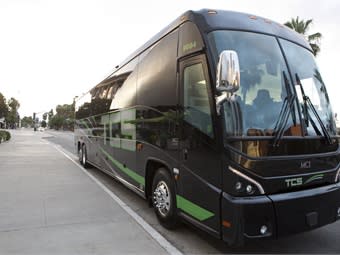
In just about five years, TCS has expanded its fleet from 18 to 61 coaches.
Managing growth
While the growth has been rapid, Fischer says it has been manageable because it has been gradual rather than sudden.
“Over the last five years, we have probably grown by somewhere in the neighborhood of 20 to 30 percent, year-over-year,” he says. “Twenty percent growth isn’t massive. It’s not like doubling the size of your company in one year. To take on twenty percent growth is like adding five or six coaches a year, which isn’t horrible to manage.”
Fischer adds that he thinks the company’s growth is sustainable because the company regularly re-examines its infrastructure and adds management and necessary personnel when needed on a gradual basis.
“We are big on process. Rather than just throwing people at an issue, we come up with the proper ways to build the mouse trap and follow and manage that process,” he explains. “As long as you have your processes and procedures written out and everybody is reading the playbook and following along, we work together very well as a team. And, I feel that we can work a lot more efficiently and effectively when you follow very distinct processes.”

The 2018 model of MCI’s J4500 features more legroom and a comfortable 60-seat capacity.
As its business continues to grow, TCS has seven MCI J4500s on order, with the company set to take delivery of its first in January. The 2018 model of MCI’s J4500 features more legroom and a comfortable 60-seat capacity, as well as new standard touches, including indirect LED ceiling lights, puck-style spotlights, and entryway illumination.
Additionally, a reconfigured lavatory and air-intake system produced 20 inches of new floor space, which allowed for best-in-class legroom and an optional, rear window — the first ever on an MCI coach. The reconfigured design also allowed for mechanical advantages, such as improved engine air filtration and easier maintenance.
“The coach has remained pretty constant over the years, but they have now done some new and innovative things with the frontend and backend, and since the acquisition by New Flyer, I feel that the company’s innovation has really taken off,” says Fischer. “To me it’s very exciting. Just looking at the seating, styling, and some of the other things they’ve done to their coaches, it fits very well with the TCS brand and what we are all about.”
More Motorcoach

METRO Opens Submissions for 2026 Motorcoach Awards
Nominations are now being accepted for METRO Magazine’s Operator of the Year and Innovative Operator of the Year awards.
Read More →
Biz Briefs: Alstom Lands Canadian Contract, LYT to Supply California TSP, and More
In METRO's latest installment, we take a look at recent news from Complete Coach Works, Beep, FlixBus, and more partnerships making headlines across the transportation sector.
Read More →
Biz Briefs: RIPTA Unveils New Frontrunners, Clevland RTA Adds New Siemens, and More
In METRO's latest installment, we take a look at recent news from Siemens, Prevost, Dodge, and more partnerships making headlines across the transportation sector.
Read More →
People Movement: Holly Arnold Joins Transdev and More
In this edition, we also cover recent appointments and announcements at Pace, CamTran, MCI, and more, showcasing the individuals helping to shape the future of transportation.
Read More →
ABA Report: Motorcoach Travel Generates $161.6B Economic Impact
The 2025 analysis finds motorcoach travel supported nearly 900,000 jobs and generated $28 billion in federal, state, and local taxes.
Read More →
CharterUP’s Armir Harris on Technology, AI, and the Future of Group Mobility
In a recent episode of METROspectives, CharterUP Founder/CEO Armir Harris discussed the company’s evolution from an online charter bus marketplace into a technology platform supporting public- and private-sector mobility and much more.
Read More →
People Movement: ABC Names John Walsh as Chief Commercial Officer
In this edition, METRO also covers recent appointments and announcements at the DART, STV, and more, showcasing the individuals helping to shape the future of transportation.
Read More →
From Surviving to Thriving: Building Stronger Transportation Organizations
Bus Business Consultants founder Brian Dickson shares lessons on leadership, organizational health, and creating options for long-term success in a changing transportation industry.
Read More →
Biz Briefs: Luminator Marks Milestone and More
From manufacturers and suppliers to transit agencies and motorcoach operators, these updates offer a snapshot of the projects, partnerships and business moves driving the industry forward.
Read More →
ABAF Study Reveals Growing Insurance Crisis for Motorcoach Operators
Preliminary findings show 98% of operators faced premium increases over the past five years, while shrinking insurer participation is putting added pressure on businesses and customers.
Read More →