



The Science of Preventive Maintenance at NYCT
Keeping 4,600 buses in working order requires a dynamic PM strategy that integrates OEM recommendations, regulatory requirements and performance indicators. Here’s how NYCT manages the task.
The residents and daily commuters of New York City rely upon an effective public transportation system for traveling throughout the five boroughs of the city. New York City Transit (NYCT), Department of Buses (DOB), is a vital part of that transportation system. Operating 24 hours a day, seven days a week in the “city that never sleeps,” the DOB’s 13,000 employees provide reliable and safe bus service for 2.2 million customers each day. NYCT operates 245 bus routes (207 local and 38 express) that serve more than 14,000 bus stops. Those routes are serviced by the DOB’s fleet of 4,600 buses, comprising 40-foot buses manufactured by GMC, TMC, Nova Bus, Orion and New Flyer; 45-foot over-the-road buses built by MCI; and New Flyer 60-foot articulated buses. In addition to buses with conventional diesel fuel, NYCT operates Orion CNG buses, New Flyer low-floor CNG buses and Orion electric hybrid buses. These buses are operated from 18 depots located throughout New York City’s five boroughs. The depots are responsible for operating, inspecting and maintaining the buses. In addition, other major overhaul programs are performed at the central maintenance facilities on a scheduled basis. Depots play critical role The depots are the heart and soul of the DOB. The depot personnel are divided into the maintenance and transportation departments. The maintenance personnel are charged with performing preventive maintenance (PM) and repairing the buses. The transportation employees are responsible for operating the buses and ensuring that each route has the appropriate number of buses assigned. The two departments work hand-in-hand to make daily bus service. Reliability is a fundamental customer requirement for any transit system. Achieving the customer’s expectation of reliability, safety and quality — at the right levels and for the lowest cost — should be the focus of any PM program. Integrated process No single formula works for all vehicles and vehicle subsystems. Developing a PM program requires the integration of regulatory requirements, original equipment manufacturer (OEM) recommendations for maintenance, failure modes and effects analysis (FMEA) for vehicle components and systems, vehicle or system duty cycles, information on vehicle system and performance and quantifiable performance objectives. The intervals or frequencies of the PMIs are driven by the vocation of the vehicle and its service application (low speed, high density transit vs. high speed express). NYCT DOB performs the following preventive maintenance procedures at regularly scheduled intervals:
Bus scheduled operations inspection
HVAC system inspection
CRT and emission control system inspections
Electrical inspection
Fire suppression system inspection
Wheelchair lift and ramp systems inspection
Modified rear door interlock (MRDI) inspection
Exhaust system opacity and back pressure tests
Vehicle condition and cleaning PMs The bus scheduled operations inspection covers the entire bus and generally includes 36 steps (with multiple sub-steps) focusing on the following bus subsystems:
Brakes/steering
Engine/transmission
Suspension
Heating/cooling
Electrical and body/undercarriage The other specific subsystem inspections consist of between five and 17 steps, and are more detailed than the bus scheduled operation inspection. The defects found during each of these inspections are recorded and used to create a follow-up work order for the repairs to be made. A moving target PM programs are dynamic and must change with vehicle use, technology or simply because of performance data. NYCT DOB is continually altering its PM programs to obtain the best vehicle performance at the lowest cost. The PM program takes a vehicle system approach — the frequency of each inspection varies as the application of the bus varies. The scheduled interval for the depots’ inspection activities varies based on depot location (duty cycle) and bus type (local or express). The scheduled interval is initially set at the OEM recommendation and is adjusted based on performance indicators such as mean distance between failure (MDBF). Often, since the operating environment in New York City is severe, the preventive maintenance inspections (PMIs) developed for NYCT are more extensive and on a shorter interval than recommended by the OEMs. Detailed procedures for each type of PMI are developed by technical support personnel based on OEM recommendations and DOB operating experience, and are available at computer terminals located in the depots. Maintenance personnel have access to the inspection forms and procedures, as well as OEM and other technical maintenance documentation, at these computer terminals. Master schedule A complete PMI matrix chart is available to maintenance personnel. Inspections are broken down into several levels of complexity based on application. At a specified mileage interval, one or more of the inspections are performed on each bus. The PM process is constantly reviewed so that the best level of performance is achieved for the lowest cost. The matrix is available at special computer terminals (named “FLEET”) throughout the DOB’s 18 depots. As a maintainer is preparing to perform an inspection, he or she clicks on the appropriate checkmark for the bus model/number and inspection type. An inspection checklist form, which lists the required steps for the inspection, is then automatically generated. The maintainer can print the checklist to follow during the inspection. The FLEET system also contains parts manuals, service manuals, maintenance directives and bulletins and other related information. MIDAS tracks work NYCT’s Maintenance Information, Diagnostics and Analysis for Surface (MIDAS) system is an Oracle database used to track work performed on the buses. The MIDAS system automatically creates work orders for the PMIs. MIDAS is adaptable to NYCT’s large variation of buses, duty cycles and PM schedules; therefore, changes to inspection cycles can be made easily. All work done on any bus, including scheduled inspections, PM repairs and general overhauls, is input into MIDAS. With this system, the current condition of a bus and its history are available at one’s fingertips. Once a bus is inspected and any required repairs are made, it is deemed fit for service. However, before each pull-out the bus operator performs a daily pre-trip inspection of the bus. This brief inspection is to ensure that the bus is in safe operating condition and includes a check of such things as the service and emergency brakes, horn, interlock, fire extinguisher, exterior lights and windshield wipers. In addition to inspecting the buses on a regular basis, PM involves monitoring the bus data to spot maintenance issues. Bus road calls, buses out of service and MDBF information is reviewed daily by technical support personnel. If an emerging problem is noted (e.g., one depot is experiencing more brake-related road calls than other depots), the issue is quickly investigated — both from an inspection/maintenance perspective and from an equipment perspective. Many times, changing an element of the PMI can resolve the issue and improve vehicle performance. PM as an investment Like other public agencies, NYCT is always striving to keep costs low while maintaining a high level of customer service. An effective PM program is important to meeting that goal. Although preventive maintenance can be labor intensive and time-consuming, the benefits far outweigh the costs. By repairing relatively small problems during an inspection (such as connecting loose wires), larger problems can be avoided (such as having a no-start road call while a group of passengers waits at a bus stop). NYCT’s efforts in preventive bus maintenance are essential to keeping the buses in good repair and, ultimately, meeting the goal of providing safe, effective and reliable transit service to the public.
More Management

Bus Tech Talk: Keeping Transit Technicians Ahead of the Technology Curve
In this episode of Bus Tech Talk, Complete Coach Works’ Business Development Manager Mark Hollenbeck and METRO’s Executive Editor Alex Roman sit down with Obed Mejia, Senior Technical Trainer for Bus Maintenance, at LA Metro to discuss how rapidly evolving bus technology is changing the maintenance shop — and the skills technicians need to keep pace.
Read More →
Michael Schneider Joins Paslay Group to Expand Transportation Practice
The longtime transportation executive will help Paslay Group grow its advisory and program management work across transit, highway, and other infrastructure sectors.
Read More →
People Movement: Connectpoint Expands Leadership Team, Stadler Names New Group CEO, and More
In this edition, we also spotlight recent personnel moves at Burns, UZURV, and more, highlighting the people taking on new roles across the transportation industry.
Read More →
More Than a Summer Job: Building the Next Generation of Transit Talent
The Delaware River Port Authority and PATCO have transformed their internship program into a hands-on professional development experience that introduces students to the breadth of transportation careers — and creates a pipeline for future employees.
Read More →
LA Metro Board Awards 220 Battery-Electric Bus Contract to ENC
The contract, which is the largest base award of battery-electric buses by a U.S. transit agency, will be built in Southern California, sustaining good jobs as LA prepares to welcome the world in 2028
Read More →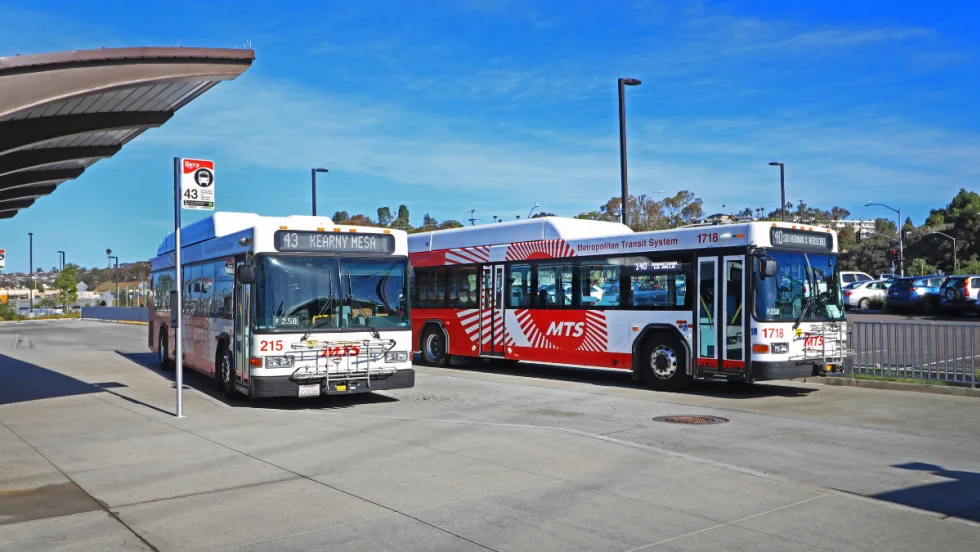
What’s Behind San Diego MTS’s Award-Winning Transit Strategy
Named one of APTA’s 2026 Outstanding Public Transportation Systems with 50 million or more annual passenger trips, California’s San Diego Metropolitan Transit System points to gains in ridership, safety, technology, and reliability as foundations of its success.
Read More →
Public Transit Conference Returning to GFX in 2027, Call for Papers Now Open
The Call for Papers is now open, allowing transit agency professionals and industry experts to help shape the PTC educational program by submitting session ideas for consideration.
Read More →
Indian River Transit’s Community-Focused Approach Earns National Recognition
Named APTA’s 2026 Outstanding Public Transportation System in its size category, Florida’s Indian River County transit system continues to grow ridership through fare-free service and a focus on evolving community needs.
Read More →
ENC Lands MATA Contract and More in Biz Briefs
In this edition of Biz Briefs, we spotlight the latest developments shaping the future of mobility.
Read More →From Surviving to Thriving: Building Stronger Transportation Organizations
Bus Business Consultants founder Brian Dickson shares lessons on leadership, organizational health, and creating options for long-term success in a changing transportation industry.
Read More →