



Tips for a Cooler Summer and Warmer Winter
Preventive maintenance, with a comprehensive checklist of annual inspection items, helps to keep buses running with an internal climate that's pleasing to your passengers.
It's that time of year again, when the transit industry makes the transition from heat to air conditioning for its vehicles. This transition can go smoothly or be a nightmare, often depending on the quality of the preventive maintenance program in place for these all-important systems. The key word here is preventive, which means finding and eliminating minor problems before they become major problems. Following a preventive air conditioning and heat maintenance program is the best way to keep your fleet on the street with air conditioning and heat on demand. Annual check-ups advised What makes a solid air conditioning and heat preventive maintenance program? One that is designed to have every part of the air conditioning and heat system on each vehicle serviced at least annually. This practice will give your maintenance staff the opportunity to detect minor problems before they become major headaches. It's preventive and proactive maintenance. At the Transit Authority of River City (TARC) in Louisville, Ky., we strive not to run buses that do not have working air conditioning or heat. A few years ago we made the decision to make air conditioning and heat work a specialty job. Now, we have three technicians who perform all the air conditioning and heat work, with one technician on each shift. That system has worked out remarkably well. We have drastically reduced the number of swap-offs for both air conditioning and heat-related problems. Of course, we all know that you never eliminate all the problems, but with a good preventive maintenance program, you can greatly reduce them. Since TARC primarily uses Thermo King air conditioning units, we wanted to devise an inspection sheet that would help us get the inspection job done efficiently. With three specialized technicians doing all the inspections, each is responsible for approximately 100 buses. Any time saved per inspection without compromising the quality of the work is a big plus when you make the transition from one system to the other. Basics of inspection To accomplish that, we used Thermo King's preventive maintenance A, B and C inspections, combining them to devise an inspection sheet that does the job well for us. TARC's inspection sheet really does cover the ABCs of A/C and heating systems, including the following general items. Keep in mind that I can't list everything due to space concerns. Condenser, evaporator and heater core. These cores are inspected for leaks (heater core connection hoses) and cleaned during annual inspections. A shop vacuum is used to clean leaves and other trash from the condenser. Since most condensers are mounted on top at the rear of the bus, everything that hits the top of the bus stops in the condenser. All three of the cores are then washed out with a water hose and, depending on the condition of the cores, a cleaning solution may be used. Always be careful not to use an acid solution on Thermo King units as this will destroy the plastic coating and cause corrosion. Compressor, alternator and blower mounts. Compressor alignments should be checked after every transmission change and annually, especially if they are mounted beside the V730, 731 or 731R Allison transmissions. The clearance is so small that any misalignment will cause the transmission case and high-pressure manifold of the compressor to be damaged. Proper alignment will also reduce belt wear. Because some of our buses still use an individual air conditioning alternator to power the blowers, the voltage, mount bolts and belts on these must be checked annually. Blower mounts and blower wheel alignment must also be checked. Mounts must be tight, and any misalignment of the blower wheel will result in the destruction of the wheel. If mounts are welded to frame, check to see that none of the welds are broken, loose or cracked. Return-air filters. All air conditioning, under-seat heater and defroster filters are replaced or cleaned (depending on type of material used) at every 3,000- and 6,000-mile vehicle inspection plus every air-conditioning preventive maintenance inspection. Electrical connections. Inspect all electrical connections and grounds for signs of frayed, loose, bare or corroded wires. On the Thermo King Intelligaire systems, the grounds are as important as the electrical connections because the system uses both power and ground inputs and outputs when used with the Allen Bradley or Dinex multiplexing systems. The Thermo King Intelligaire Smart Controller is also an excellent troubleshooting tool. Refrigerant lines. Check refrigerant lines for sign of leakage. Dirt collection on the lines usually indicates a leak. Hard copper lines to the condenser and evaporator should also be inspected. Most systems have O-rings in the hard copper lines going to the condenser, and these should also be checked. They are usually located behind the blower box and can be a pain to change. Condenser and evaporator motors. These are two of the most important operations on the inspection sheet. If these motors don't work, it makes no difference what else is working because your system is still down. The most important items to inspect on these motors are the brushes and armature. The brushes should be changed if they are worn to half size or smaller. Always include grooves when cleaning the armature. Marine (booster) pump. Inspect pump and hoses for leakage and inspect brushes if a brushless pump is not used. Replace brushes annually. Liquid line dehydrator (filter driver). Replace when system has been opened for any reason. If system has not been opened, replace annually. Refrigerant level. Make sure the system is full of refrigerant before checking oil level, pressure and temperature readings. Compressor oil level. Check compressor oil level after any service that requires opening the system. Oil level should be half full in sight glass for Thermo King compressors. If system has not been opened, check annually. Operating pressures and temperatures. Check and record the following pressures and temperatures: suction pressure, discharge pressure and oil pressure, high-pressure cut out, low-pressure cut out, ambient temperature, discharge air temperature and returns air temperature. These readings will give you an excellent idea of what state of repair the system is in and some indicators of where service is required. They will also indicate if the high-pressure and low-pressure cut-out switches are working. If either switch is not working, it must be replaced to avoid destroying the unit. Clutch, clutch bearing and drive belt. Adjust clutch, lubricate clutch bearing and adjust drive belt annually.
More Management

People Movement: Connectpoint Expands Leadership Team, Stadler Names New Group CEO, and More
In this edition, we also spotlight recent personnel moves at Burns, UZURV, and more, highlighting the people taking on new roles across the transportation industry.
Read More →
More Than a Summer Job: Building the Next Generation of Transit Talent
The Delaware River Port Authority and PATCO have transformed their internship program into a hands-on professional development experience that introduces students to the breadth of transportation careers — and creates a pipeline for future employees.
Read More →
LA Metro Board Awards 220 Battery-Electric Bus Contract to ENC
The contract, which is the largest base award of battery-electric buses by a U.S. transit agency, will be built in Southern California, sustaining good jobs as LA prepares to welcome the world in 2028
Read More →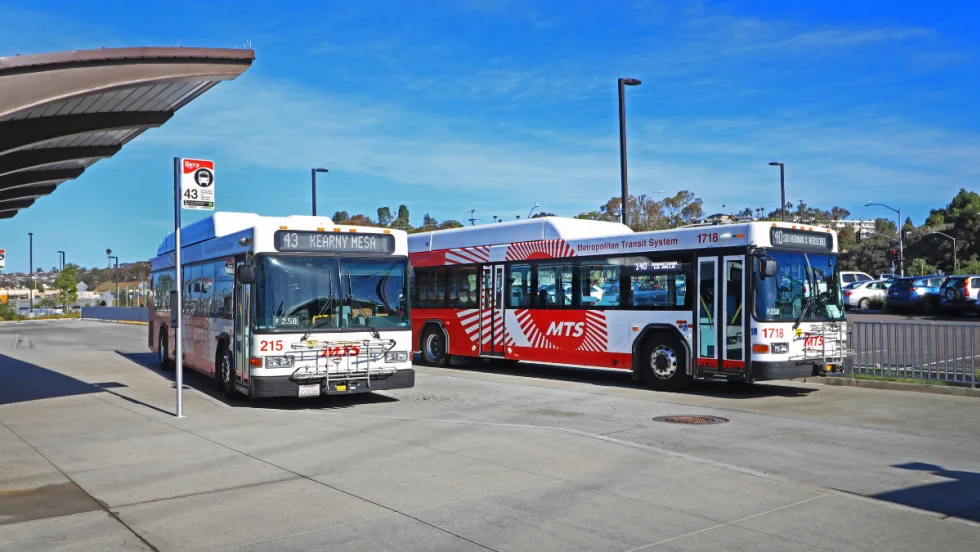
What’s Behind San Diego MTS’s Award-Winning Transit Strategy
Named one of APTA’s 2026 Outstanding Public Transportation Systems with 50 million or more annual passenger trips, California’s San Diego Metropolitan Transit System points to gains in ridership, safety, technology, and reliability as foundations of its success.
Read More →
Public Transit Conference Returning to GFX in 2027, Call for Papers Now Open
The Call for Papers is now open, allowing transit agency professionals and industry experts to help shape the PTC educational program by submitting session ideas for consideration.
Read More →
Indian River Transit’s Community-Focused Approach Earns National Recognition
Named APTA’s 2026 Outstanding Public Transportation System in its size category, Florida’s Indian River County transit system continues to grow ridership through fare-free service and a focus on evolving community needs.
Read More →
ENC Lands MATA Contract and More in Biz Briefs
In this edition of Biz Briefs, we spotlight the latest developments shaping the future of mobility.
Read More →
From Surviving to Thriving: Building Stronger Transportation Organizations
Bus Business Consultants founder Brian Dickson shares lessons on leadership, organizational health, and creating options for long-term success in a changing transportation industry.
Read More →
Everett Transit, Community Transit Outline Consolidation Agreement
The proposed agreement calls for a 50% increase in bus service in Everett, a new microtransit zone, continued paratransit service, and the transfer of Everett Transit operations to Community Transit.
Read More →
Strada360’s Steve Lassey on Turning Transit Data Into Better Decisions
From breaking down data silos to preparing for AI, Strada360 CEO Steve Lassey discusses how transit agencies can use technology to improve operations, customer information, and long-term decision-making.
Read More →