



Tips for Design and Layout of a First-Class Bus Maintenance Facility
No site is perfect, but every proposal should be viewed from all angles. Key considerations: cost of acquisition, room for expansion, topography, environmental factors — and your future neighbors.
In a perfect world, you’d want to build a new bus maintenance facility on a site that’s level, rectangular and centrally located within the service region. In addition, you’d like it be free of environmental contamination and large enough to accommodate all present needs and any future expansion. But that’s not all. You’d also like to have adequate existing utility services and, of course, no neighbors to lodge complaints about traffic, noise and congestion. Certainly you’ve heard of NIMBY (Not in My Back Yard!). Where can you find such a site? No, don’t start looking. It probably doesn’t exist, not even in Kansas. Often the available sites are limited based on considerations other than the most obvious ones. Limiting site selection factors include local political agendas, real estate and redevelopment interests, zoning regulations, availability and affordability of suitable land. In large urban areas, many of the available sites generally are one of two types. The first type is one that currently has a transit facility. These sites can generally be adapted for re-use without going through the full environmental impact statement (EIS) process, which can take a considerable amount of time and money. These sites generally will require an environmental assessment along with some environmental clean-up, usually for petroleum hydrocarbons. The challenge of using such a site is that it often requires staged construction to erect a new building, renovate an existing structure, or both. Such a site may also require the temporary relocation of the bus operations. All of these things will add to the capital and operating costs of the project. The second type of site generally available is one that has one or more significant undesirable features. Such features can include a high initial purchase cost, a remote location from the service area, significant environmental contamination (including petroleum hydrocarbons, heavy metals, asbestos and pesticides), large elevation differences, the presence of wetlands restricting development or adverse subsurface geological conditions. The best approach to selecting a site is to weigh the capital and operating costs of all available site options before deciding on the best way to proceed. Laying out the site Before a site can be laid out, the functional requirements must be defined. The most important factor is the existing bus fleet size and the potential for an expanded fleet size. Included in this thought process should be consideration of what might be needed if the future fleet is to include articulated buses, alternatively fueled buses and paratransit vehicles. Basic elements to be included in the planning process include assessing the spatial area requirements for general bus maintenance, fare removal, fueling, exterior washing, interior cleaning and bus storage. Additional space will be required for administrative and operating staff offices, training rooms, lunch rooms, locker rooms and associated toilet facilities. Space will be needed for parts storage, body and paint shops, tire shops and heavy repair areas. On-site parking will be required for vehicles for employees and vendors who will park on the site. Accommodations should be provided for such items as landscaping, site security, storm water management facilities and, potentially, water treatment facilities. Overall site layout considerations for daily operations need to include queuing space for buses during the mid-day and evening pull-in, bus circulation and storage space prior to maintenance and servicing and circulation area for buses to move to and from storage on the site. Entrance and exit locations to and from the site to adjacent streets are also very important in the consideration of the overall site layout. Care must be taken to separate the automobile circulation and parking areas from that of the buses. Pedestrian circulation from the automobile parking areas to the office, maintenance and bus storage area needs to be analyzed to maximize pedestrian safety. The overall site layout needs to be well considered to maximize the operational efficiency. The site should be planned and laid out to allow as much counterclockwise bus flow as possible, as left turns are easier to make than right turns. Provisions should be made for snow removal operations and snow storage for properties in the northern areas of the United States. The overall site layout should avoid any wetlands or hazardous materials areas as this will add potentially significant capital costs to the project. Placing the buildings The placement of the buildings on the site will be determined by the overall operations to be accommodated. Buildings, either separate or combined, will be required for the bus maintenance facility (which generally includes the administrative and operations areas), the bus storage building (in cold climate areas) and the service facility building for fare removal, fueling, washing and cleaning. There needs to be sufficient queuing for buses into and out of all of the buildings. Bus, truck, automobile and pedestrian circulation on site and between buildings should be separated as much as possible for safety purposes. Each building should be sized to handle present and future operational requirements. An important additional consideration for siting of the buildings is the potential expansion of the buildings. The buildings should be located as close to existing utilities as possible to minimize utility infrastructure costs. The building should also be placed on the site in a manner that provides for adequate access to all four sides of each building structure for local fire fighting apparatus. Do’s for site selection When considering the construction of a new bus maintenance facility, consider the following when selecting a site:
Include all stakeholders in the process, especially local politicians and authority staff members.
Determine the capital funding source in advance.
Consider existing service routes, proposed routes and access to main thoroughfares.
Assess adequate and controlled access from the site to at least one major artery.
Plan for the future now; consider sites large enough for expansion.
Select a site that is large enough so that all bus operations can be done at ground level.
Verify adequate utility services are available adjacent to the site.
Perform an environmental soil sampling and testing program to identify potential remediation costs and to determine potential building foundation costs.
Consider the traffic load that the facility will place on existing streets and roads.
Investigate applicable building and zoning codes.
Investigate whether stormwater retention will be required.
Verify that local ordinances allow for adequate fuel storage. Don’ts for site selection Consider the following things to avoid when choosing a facility site:
Don’t choose a site that requires excessive deadhead mileage of bus fleet to revenue routes.
Don’t select a site with unknown environmental or geotechnical conditions.
Avoid sites with wetlands.
Avoid the selection of a site that is within the 100-year flood plain.
Avoid sites with severe elevation changes.
Don’t wait to contact local building officials and fire marshals about the project.
Avoid sites that do not have adequate existing utility services — especially sewer and water.
Don’t assume that the facility will be welcomed into any neighborhood.
Don’t delay the discussion on whether alternative-fuel vehicles should be considered during the design.
Avoid storing buses outside in climates where the temperature falls below 35 degrees.
Don’t assume anything — plan ahead for all possibilities to avoid surprises later. Do’s for facility layout Once a site is selected, consider the following when laying out the facility:
Separate bus, automobile, truck and pedestrian traffic.
Provide sufficient queue space for buses during afternoon pull-in and morning pull-out functions.
Lay out the bus circulation for counterclockwise bus movement.
Allow for adequate turning radii of buses.
Provide for a secondary access to and from the site.
Locate buildings on the site to allow for growth.
Provide adequate access around buildings for local fire fighting apparatus.
Locate fueling tanks in an area that can be easily accessed by fuel trucks.
Plan for access of various delivery vehicles. Keep this separate from other vehicular traffic.
Provide a separate parking area for trucks that deliver parts and tires.
Minimize walking distances from automobile parking areas to work areas.
Determine whether the local sewer district will require effluent pretreatment.
Buffer the site from adjacent properties to avoid potential noise and light pollution.
Include adequate building maintenance and support facilities space in the facility footprint.
Choose low-maintenance building materials.
Program site and building security into the design.
Include the principles of sustainable green design and energy conservation.
Design the facility to score as high as possible on the LEED(TM) Green Building Rating System.
Include at least one LEED(TM) certified professional on the design team.
Seek qualified professional assistance — there is no substitute for experience!
More Management

Game Day in Motion: Moving Millions During the 2026 World Cup
Between packed transit stations to team motorcoaches, see how agencies and operators across North America tackled the transportation demands of the 2026 FIFA World Cup.
Read More →
Surface Transportation Extension Averts Shutdown, Leaves Transit Funding Gap
The stopgap keeps federal transportation programs moving, but missing advance funding could complicate the transit and rail projects agencies are planning next.
Read More →
Bus Tech Talk: Keeping Transit Technicians Ahead of the Technology Curve
LA Metro’s Obed Mejia discusses technician training, evolving maintenance technology, fleet replacement, and strategies for getting the most out of today’s transit fleets.
Read More →

Why Simulating Pedestrian Movement Has Become Essential for Modern Rail Stations
Pedestrian microsimulation is helping rail planners identify bottlenecks, test station designs, and prepare complex transit hubs for growing passenger volumes.
Read More →
People Movement: Holly Arnold Joins Transdev and More
In this edition, we also cover recent appointments and announcements at Pace, CamTran, MCI, and more, showcasing the individuals helping to shape the future of transportation.
Read More →
NITA Launches New Era of Regional Transit in Chicago
The new authority replaces the RTA and brings CTA, Metra, and Pace under a strengthened regional framework for funding, planning, fares, safety, and service coordination.
Read More →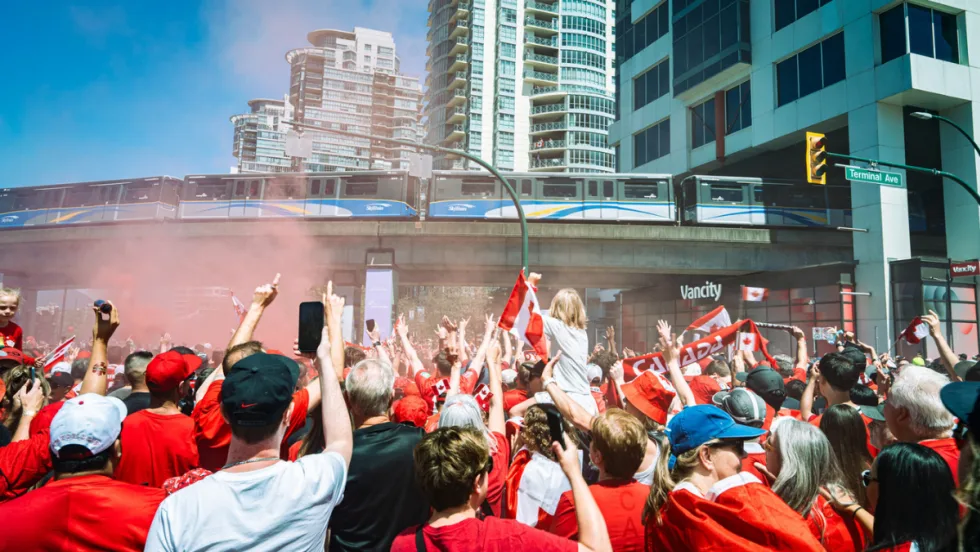
How World Cup Mobility Put Transit and Motorcoaches to the Test
Behind the seamless trips were months of planning, multimodal partnerships, and lessons agencies and operators can carry into the next mega-event.
Read More →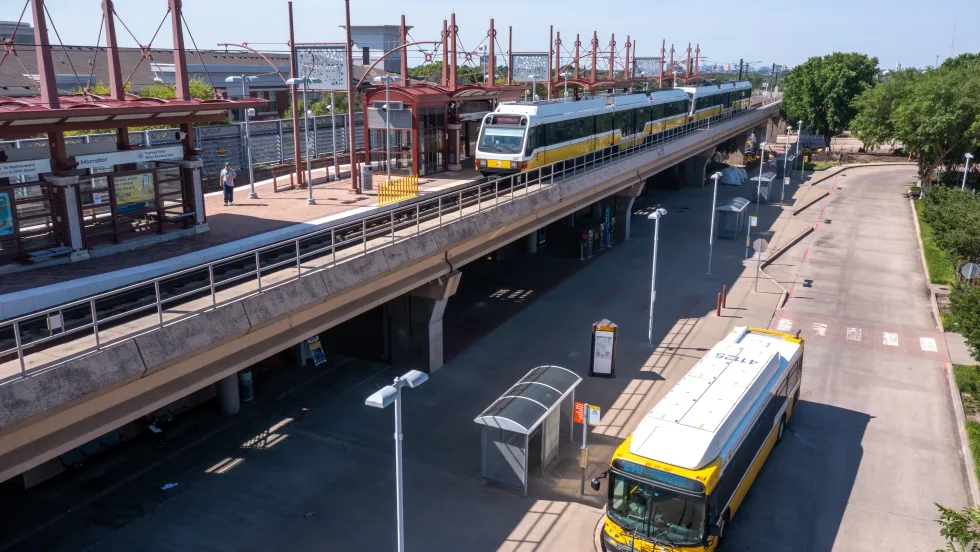
DART Introduces Dashboard to Track Ridership Data
The initial release represents the first phase of DART’s efforts to expand access to ridership information. Additional dashboard features, data, and functionality will be introduced in future phases.
Read More →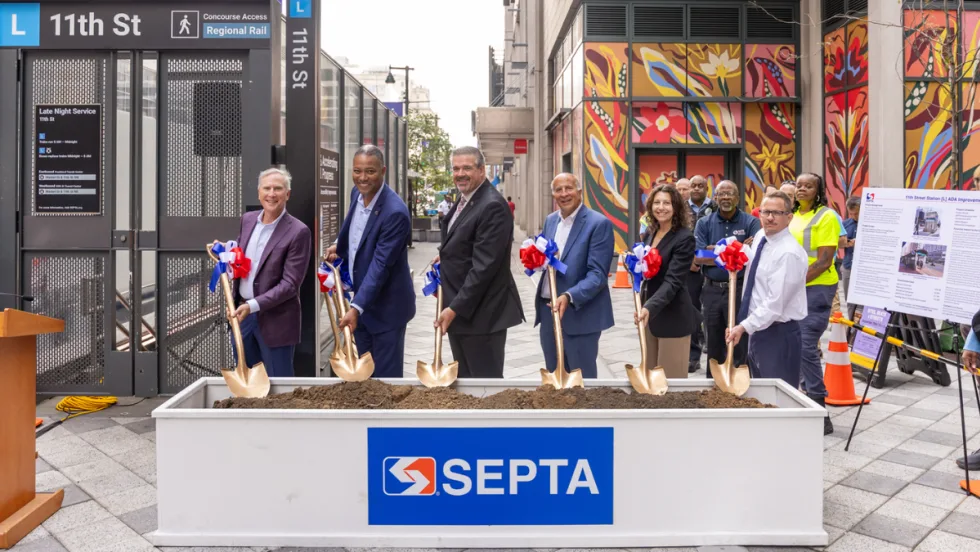
SEPTA Breaks Ground on $44M Accessibility Upgrade at 11th Street Station
The project will add elevators and other upgrades to make the busy L station fully ADA accessible, with a yearlong closure expected to accelerate construction and save up to $3 million.
Read More →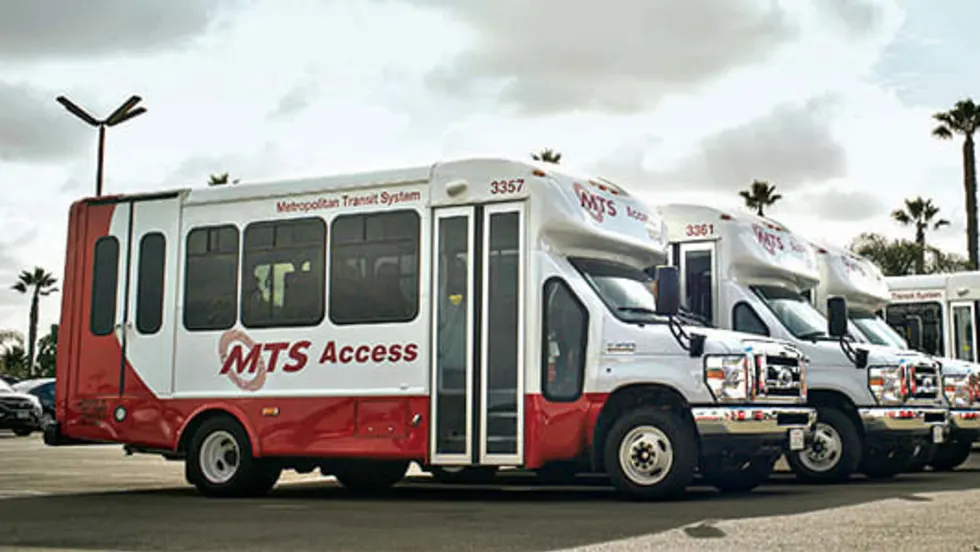
FTA Opens $610M for Transit Fleet Modernization
Propane autogas gives transit agencies a reliable, funding-eligible option for fleet upgrades.
Read More →