



Tracking Transit Performance: A Measurement for Success
Whether it's tracking overtime, how marketing efforts impact ridership or customer complaints, performance measures help transit agencies target trouble spots and take corrective action.

Establishing performance measures can help transit agencies meet their goals and objectives, by enabling them to target trouble spots and take corrective action. The private sector has long used performance measures as a basic tool for benchmarking, which can be used in much the same way on the public side.
Ideally, all transit agencies should have performance measures on some level, says Victoria Perk, senior research associate with the National Center for Transit Research. “Having such information means agency staff has a better picture of overall transit operations.” Also, it allows for agencies to have standards or guidelines for making service changes. For example, if service cuts must be made, the agency can use its performance indicators to defend the decision to its board and the public, she says.
“Performance measures just make sense,” says Patricia Hendren, an associate with Cambridge Systematics. “They help provide direction to accomplish your goals.” The idea behind performance measures is to bring the private sector mentality into the public. Data is the No. 1 reason that transit agencies struggle with performance measures, Hendren says. “Data is expensive to collect, and having accurate data is crucial for the whole process.”
Some performance measures are required, such as those for the National Transit Database, including passengers per vehicle mile, farebox recovery ratio and cost per passenger. Other required measures fall under the auspices of the ADA and federal grant applications. Integrating measures can be crucial to systems that link funding allocations to performance.
Beyond the required data, transit agencies can develop additional performance measures to help manage all areas of the operation and identify areas for improvement. Agencies can get professional help in developing their own measures or use other available resources.
One such resource is the Transit Cooperative Research Program, which prepared a study (No. 88) titled “A Guidebook for Developing a Transit Performance-Measurement System,” available online at www.tcrponline.org. The study lays out recommended measures, case studies of various transit agencies and private sector uses, says study Chairman John Bartosiewicz, executive vice president and CEO of McDonald Transit Associates Inc.
Measures and management
Performance measures can be incorporated into a transit agency’s management style. “My management philosophy has always been, if you can’t measure it, you can’t manage it,” says Cal Marsella, general manager of Denver’s Regional Transportation District (RTD). His strategy is management-by-objective, which reports system performance on a quarterly basis. “We have objectives and performance measures that speak to how we are actually making progress toward the board-established policy goals and objectives.“
RTD’s quarterly performance reports list the agency’s core goals and the objectives needed to obtain those goals. Performance measures for each objective are broken down to include data for the past four years for comparison. “I keep separate goals for my private providers (50% of RTD’s services are contracted out) and our internal operation to see how they are doing vis-a-vis each other.”
An example of the RTD strategy to target problems can be seen in its analysis of on-time performance. “If I see that my goal for on-time performance is 88% and at the end of the quarter it comes in as 86.5%, my red flag goes up,” he says. He then looks for the root of the problem by tracking it for specific trends. “I may come in and say, ‘Where are we running late, is it certain routes, certain drivers?’”
By getting the reports every quarter, Marsella says he has time to deal with them if there is a problem. The RTD also incorporates performance-based goals to monitor and manage projects such as building a park-and-ride or putting out a bid for vehicle procurement. “We are building a major light rail project right now, so every year I put in milestones and expected completion dates in the report,” he says. “So the board can see how we are performing on a regular basis, to know whether we are tracking, or if we are running behind.
“My staff has their areas of responsibility, so everybody knows right away where they are, and they coordinate their work efforts to meet their goals,” Marsella says.
Transit agencies can go a step further by reporting performance on a weekly basis, as does the Metropolitan Atlanta Rapid Transit Authority (MARTA) with TranStat, its performance accountability program.
The program features weekly briefings, where various department heads present intra-departmental performance issues for evaluation, says LaWanna Bradford-Dunning, MARTA’s director of corporate business strategy and analysis. Monthly briefings involve a more detailed evaluation of each performance measure using graphs of trends, process control charts, geographic mapping of performance deficiencies and after-action reviews of recent incidents.
“Performance must link to financial or customer outputs, or drivers of change, which is the focus of TranStat,” Bradford-Dunning says of the program’s accountability-based design.
TranStat is modeled after the New York Police Department’s Compstat and Baltimore’s Citistat programs. Since implementation of the TranStat program a year ago, MARTA has seen measurable improvements in many critical areas, including a 22% reduction in overtime expenditures, a 40% reduction in bus service-related complaints and a 16% increase in mean distance between bus service calls.
Marketing boosts ridership
Success can be monitored in various aspects of a transit operation, including marketing. By tracking ridership, the marketing department of Delaware’s DART First State (DART) analyzes the effectiveness of various marketing campaigns.
“When we spend any type of effort in our marketing, we want to see how that relates to an increase in ridership,” says Drew McCaskey, DART’s marketing and web manager. The agency uses surveys to first find out how its customers receive news and information, and analyzes data to find out which specific type of marketing is more effective than another. For one particular campaign touting DART’s R2 train service from Philadelphia to Wilmington, Del., the agency used TV, radio, direct mail and billboards to appeal to customers. After the media blitz, McCaskey says, the marketing department tracked the changes in ridership to measure the effectiveness of its marketing efforts. The 2004 campaign proved a success, with a 17.96% increase compared to June 2003, and a 23.45% increase over June 2002.
“The performance is basically saying, ‘How we are doing in the efforts we have invested in? Have we met our goals or haven’t we?’” McCaskey says. Once a campaign is deemed successful, the marketing department looks for characteristics of the campaign that can be replicated within others. “My senior management is always saying, ‘OK, Drew, you’ve got this much money and you’re running this much advertising, what are we getting for it?’ He tracks performance measures to reinforce to management that his efforts are improving the bottom line.
Monitoring maintenance
Performance measures keep the maintenance department of a transit agency in check as well. Metro in St. Louis assesses how well its vehicles are maintained by tracking the number of miles between road calls. “If you have a very high mileage between road calls, then your vehicles are rarely breaking down,” says Kathy Klevorn, Metro’s director of budget and grants. “On a very global basis, that measurement shows how well your vehicles are being maintained.”
In 2001, Metro’s buses tallied nearly 3,800 revenue miles between road calls and today, the agency is running 15,500 miles, which shows the impact of the performance measurement philosophy, she says.
Tracking and analyzing data has also helped the agency hone its preventive maintenance program. Knowing the history of various vehicle parts and their expected life spans can help determine when to replace them. Over the years, Klevorn says, Metro dramatically improved the maintenance of its fleet based on data collected. “[Roughly] 10 years ago, we had a fleet of vehicles that had pretty significant engine and transmission issues.”
After tracking the problems and collecting data, the results influenced the decision to buy another type of vehicle. While its research department collects data in various areas of operation, such as passenger boarding information and customer service, Metro’s maintenance department uses a specific computer system called M5 to track vehicle issues.
Improving customer service
Measurements can also be used to reduce complaints and increase customer satisfaction. At MARTA, customer complaints showed a marked increase from a FY ‘04 to FY ‘05 analysis. The increase was expected, as the system went through a major service modification that reduced levels of bus service. “We noticed as we started to assess the root cause of complaints that there were some service enhancements we could make that were within affordable ranges,” says MARTA’s Bradford-Dunning. Once those improvements were made, the agency saw an immediate and significant decline in customer complaints.
More Management

Right-Sizing Rural Transit: Lessons from North Grenville’s On-Demand Model
A small municipality shows how flexible service, rider needs, and public accountability can expand mobility with limited resources.
Read More →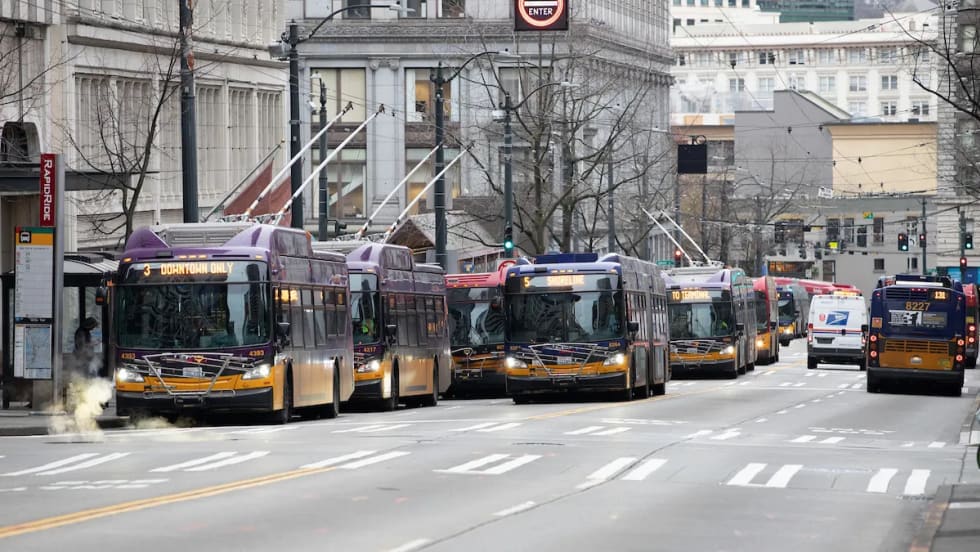
Transit Ballot Victories Signal Strong Voter Support: What Comes Next?
Voters approved billions in public transportation investments in 2026, giving agencies opportunities to preserve service, expand operations, and strengthen regional connections amid a changing political landscape.
Read More →
Transit Expands Agency Partnerships, Reaching 200 Official App Partners
COO Jake Sion discusses Transit’s growth, the success of its Transit Royale program, and how technology is helping agencies improve the rider experience.
Read More →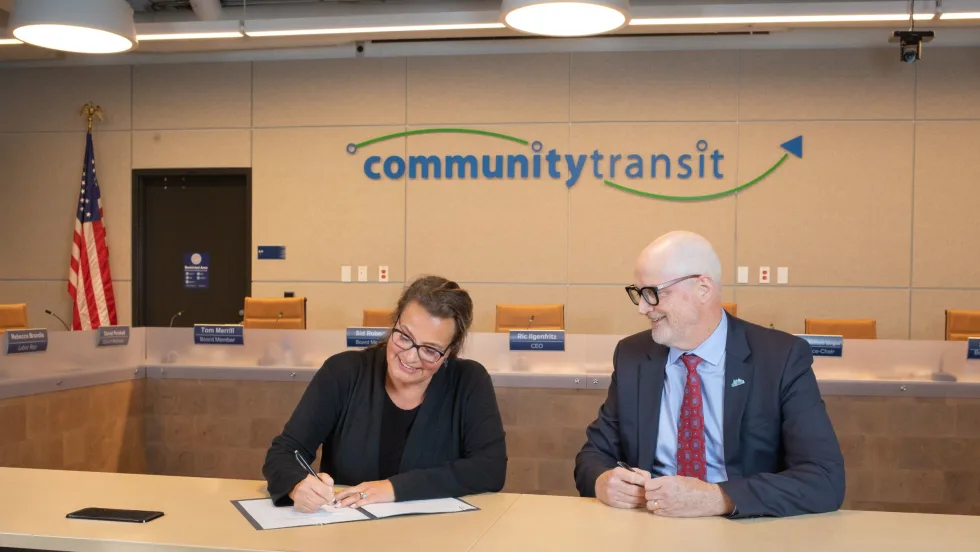
Everett Transit, Community Transit Approve Consolidation of Services
The agreement will bring Everett Transit into Community Transit’s network in April 2027, with plans to increase bus service by 50% by 2031 and expand regional connections.
Read More →
NITA Proposes $5B Operating Budget, $9.7B Capital Program for 2027
The proposed budget includes funding for expanded transit service, safety initiatives, fleet upgrades, and infrastructure improvements across CTA, Metra, and Pace.
Read More →
Financing, Fleet Replacement Requires a More Strategic Approach
Executives from ABC Companies and MCI discuss how rising costs, changing market conditions, and post-pandemic challenges are prompting motorcoach operators to rethink financing strategies, fleet replacement cycles, and long-term planning.
Read More →
Bringing Austin’s First Light Rail System to Life
Austin Transit Partnership CEO Greg Canally discusses the city's nearly 10-mile light rail project, its collaborative approach to project delivery, the importance of community engagement, and the milestones ahead as construction approaches in 2027.
Read More →
ETA CEO John Maglio on Transit Technology, Innovation, and Building Agency Trust
ETA founder and CEO John Maglio explores the evolution of transit technology, the importance of reliable systems, and how stronger partnerships can help agencies improve operations and the passenger experience.
Read More →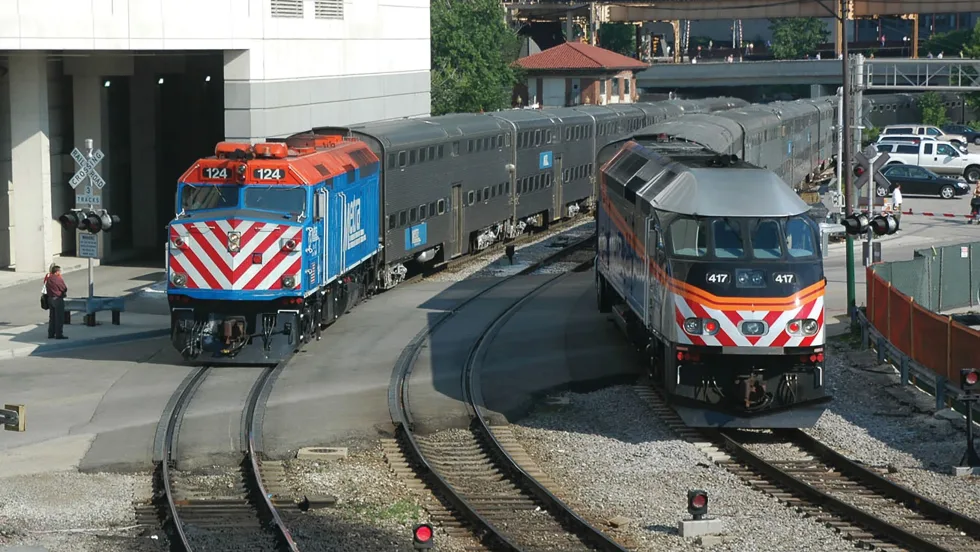
Metra Draft Plan Outlines Costs, Service Improvements for Regional Rail
The Systemwide Network Plan identifies infrastructure needs and potential investments to expand all-day, bidirectional rail service across the Chicago region.
Read More →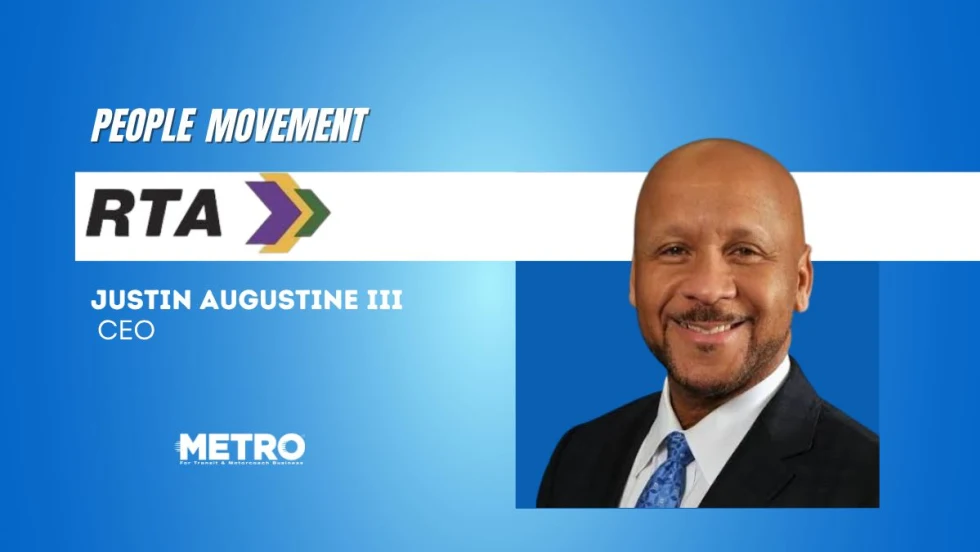
New Orleans RTA Names Augustine III as New CEO
In this edition, we also spotlight recent personnel moves at HDR, PATH, STV, and more, highlighting the people taking on new roles across the transportation industry.
Read More →