



Transit Agencies in Demand at Local Universities
Tapping into the student market has been a ridership generator for transit agencies and a good congestion solution for universities.
With 44,000 students and only 24,000 parking spaces, campus transportation at Michigan State University (MSU) is becoming more of a necessity than a luxury. As with so many other universities around the country, MSU looked to its local transit authority to help it serve the commuting population of its students, faculty and staff. While MSU had previously run its own campus transportation service, the Capital Area Transportation Authority (CATA) in Lansing, Mich., was approached in 1999 to replace it with a fixed-route service. “The level of professionalism and expertise that [CATA] brought to the table has made a big difference in terms of the service being provided,” says Jeffrey Kacos, MSU’s director of the division of campus parking and planning. CATA took over the service at no cost to the university and agreed to an annual service contract of 32,820 hours. Anything over that is billed to MSU, which purchased $400,000 worth of additional service last year. Additional service is only added after a demand test is done, proving that an average of 15 passengers per hour will use the particular route. Each of the eight times the test has been performed, the service was expanded. In its first year, ridership on CATA’s university service was 900,000. Three years later, the projected ridership is 2 million. “Students are gaining confidence that the bus is a good alternative,” says Debbie Alexander, director of strategic management for CATA. During its first year, the service was left as it already existed at MSU. CATA collected data on student movement to better develop connector locations. More frequent bus service was also added. Another restructuring will take place this fall, when 10-minute frequencies will be reduced to seven minutes. Students do pay for the service at MSU. Rides are 50 cents each, or student passes can be purchased. A semester pass, the most popular option, costs $40 (to be raised to $45 next year) and a campus-only annual pass costs $65. Since freshmen are not allowed to have a car on campus and many students with cars are forced to park in remote lots, the passes offer an inexpensive alternative to driving. Passes are also available to faculty and staff, and the university buys those in bulk to distribute. Those passes are given free to those who purchase parking permits, which cost $156 per year and allow parking in any of the designated areas. That has helped ridership on the system for faculty and staff grow from zero rides to an estimated 8,000 to 10,000 rides this year. “The bus is becoming a more critical component for moving faculty and staff around,” Kacos says. Kacos does not see the parking problem decreasing any time soon. In fact, he believes the population of the campus will continue to grow and that buildings will eventually replace current parking lots. “There are no fewer people parking now, but some daily trips may have been reduced,” he says. “There are always more students wanting to register to drive.” To add even more capacity at the same cost, articulated buses are being considered. Currently, 40-foot RTS and New Flyer low-floor buses are used. The university also operates three motorcoaches (or special event buses) that provide service that CATA cannot legally provide to the campus because the service is federally funded, Kacos says. “When it was our own service, we provided service as frugally as possible,” he says. “CATA’s depth of knowledge in transit helped redesign it.” Both MSU and CATA entered into the service agreement cautiously, visiting several campuses around the country that already had such a relationship in place. “Everyone we talked to seemed to feel positive about the way it worked,” Kacos said. Alexander says that CATA attempted to enter a service agreement with MSU for about 15 years. What made it finally happen, she says, was the change of administration that occurred in 1999. “The vice president of operations was a CATA rider as a student,” she says. Joint service in Kentucky Not all universities rely solely on transit agencies to provide transportation to the campus. At the University of Kentucky (UK), on-campus service is provided by the school’s transportation department and outer campus service by LEXTRAN, the local transit agency. UK’s Campus Area Transportation Service (CATS) runs four routes 19 hours a day, Monday through Friday. LEXTRAN is under contract to provide shuttle service from off-campus areas (stadium, housing) to the campus. Ridership for CATS is about 150,000 to 175,000 a year, while ridership on the outer campus routes is 800,000 to 850,000 a year. “We look at the university as one of the main magnets for passenger transportation,” says Stephen D. Rowland, executive director of LEXTRAN. “We have reconfigured routes to go through or by the university.” UK contracts the agency only when school is in session, August through May. Operating costs for LEXTRAN’s university service are about $400,000 a year, most of which is covered by the university and a federal grant. “I don’t know what we’d do without LEXTRAN,” says Don Stone, transportation supervisor at UK. LEXTRAN also offers a student pass, which, at $50 a semester, is a deep discount of its regular monthly pass. The transit agency has applied for a Congestion Mitigation and Air Quality (CMAQ) grant to hopefully begin offering free service to students and faculty. That free service would bring a projected 6% to 10% increase in ridership, Rowland says. “We were trying to initiate a fee-based [service], but the university was reluctant,” Rowland says. “But, every university is reluctant to increase fees or tuition.” LEXTRAN has 14 routes, 10 of which run near or through the university. The entire system had 4.5 million passenger trips in 2001. The CATS service is in its twelfth year of operation and runs five 22-passenger vehicles and two charter buses. Seven university-employed drivers were hired to operate the vehicles, which run on three routes at 20-minute intervals around campus. Stone says he hires retirees rather than student drivers because they are more dependable and not as apt to constantly change their schedules. The charter buses are there for any department that needs them. UK also faces an on-campus parking problem. The university has an enrollment of 35,000, no fewer than 28,000 of which are on campus. “On-campus parking is not as readily available as it used to be,” Stone says. “It’s moving out a little further. We encourage students to use the bus because there is no parking within.” CATS is offered free to students and is paid for with revenue from parking permits. Providing transportation service to students has also been a boon to many local businesses that hire student workers, Rowland says. The university is also the largest employer in the city, which means traffic is worse when school is in. “When classes are in, it’s like its own city,” he says. Student passes successful Rather than devoting fleets and service time to providing transportation to a university, many transit systems work with the school to provide discounted service to students. The Campus Area Bus Service (CABS) at Ohio State University is fully owned and operated by the university. Its partnership with Central Ohio Transit Authority (COTA) comes in the form of a $9 per quarter mandatory fee students pay that allows them to go anywhere COTA offers service. “The $9 all comes back to the agency, offsetting revenue we would use without the U-Pass program,” says Mike Greene, COTA’s director of planning. “We receive the same amount of passenger revenue, so we’re not making money, we’re just not losing it.” The U-Pass program began about five years ago after Ohio State’s student government voted to enact the fee. In response, COTA has supplemented service on a few of its routes, extending service to areas students want to live in. A shuttle service to a large retail development center and an expansion of service hours were also put into place. “There’s been an uptick in overall ridership,” Greene says. “Use has grown steadily and has hit a plateau.” There is some overlap between the service COTA provides and what CABS offers. The university has added routes that go off campus to allow more students onto campus without bringing their cars, says Beth Kelley, associate director of transportation and parking services at Ohio State. That is essential since the campus has 30,000 parking spaces to accommodate 55,000 students (48,000 of which live on campus) and 20,000 faculty and staff. “The parking and bus systems work as one,” she says. CABS has an annual ridership of 4 million and operates 83,000 service hours annually. In the summer of 1998, the CABS service was expanded per a recommendation of the 1998 Ohio State Transportation and Parking Master Plan. The service was doubled as an immediate initiative to help resolve parking issues on campus. To try to get people to use the bus service, parking is cheaper the further out a student parks on the 1,700-acre campus. The service used to be funded by the university’s general fund, but is now funded by the transportation and parking department. Annual operating costs are $3.3 million. Several full time drivers operate 11 Flxibles, 14 Gilligs, two Nova Buses, three Blue Birds, three school buses, three airport shuttles, two MCI motorcoaches and eight paratransit vehicles. Those drivers are supplemented with student drivers, who are trained to get their CDLs. A transportation facility, including a maintenance shop, is housed on campus. The on-campus service is free to students and to anyone else in the community who wishes to use it. “It just means one more car not coming to campus,” Kelley says. The University of Minnesota (UM) has also had success with the U-Pass, though it is still in the process of premiering a two-year pilot program. The $50-per-semester pass acts as an all-you-can-ride bus pass for the metropolitan area. In fall 2000, 9,000 passes were issued. That number increased to 13,500 in fall 2001. The fall semester typically sees more use on the system than the spring semester because of the weather. “It’s growing more than we anticipated,” says Bill Stahlmann, UM’s transit manager. “It’s getting people out of their cars and onto buses, reducing air pollution and congestion.” The U-Pass pilot program was funded by a $5 million CMAQ grant, 80% of which was given by the government, with the remaining 20% contributed evenly from UM and Minneapolis’ Metro Transit. The grant also subsidized metro bus passes for faculty and staff, who can get a monthly pass for $40 instead of $66. All students pay a service fee, which was just increased from $7.50 to $10. “Everybody benefits because there are fewer cars on campus,” Stahlmann says. Negotiations to continue the U-Pass service are currently taking place. The service will cost an anticipated $2 million annually, Stahlmann says. UM does provide its own campus transportation service, which is contracted to First Student Inc. to operate and maintain. For UM, the benefits of contracting out the service are many. “You don’t have to worry about maintenance, housing the buses and taking care of personnel,” Stahlmann says. The service centers around transporting students across the Mississippi River from one campus to the other. The university has an exclusive six-mile busway to help it provide its shuttle service. The shuttle service runs at five- or 15-minute headways during the day and makes 10 stops around campus. This semester, limited stop service was added, creating only five stops on the route. Annual ridership on the Connector Service for 2000-01 was 3 million, up 6% from the previous year and 10% from the year before that. Stahlmann attributes that growth to more students living on or near campus. In addition to the connector shuttle, UM has a circulator service that runs two shuttles every 10 minutes. There is also a direct bus service from the heart of the Minneapolis campus to the west bank campus as well as a door-to-door paratransit service. UM runs nine buses (primarily 40-foot Blue Bird and RTS buses) to serve a campus population of 47,000 students and 13,000 faculty and staff. It is looking at possibly running 60-foot articulated New Flyer buses to add more capacity rather than adding buses. Students at UM ride the service for free. The system, which has a projected annual budget of $3.5 million for next year, is paid for through parking revenue. The budget for the parking department was just under $30 million for 2001-02. Of that, the bus system received 15% and the U-Pass program 13%. ******************************************** University of Iowa relies on students Owned by the university and operated by students, Cambus has been a successful transportation operation at the University of Iowa for the past 30 years. The service was started after the student government and associations pushed for it because they needed a way during the winter to cross the river that separates the campus. A student fee was created as the primary source of operating funds. Now, the service has an annual ridership of 3.5 million, and 75% of the campus’ 28,000 students use it. Cambus has 140 student employees, all of whom began as drivers at the system. Six of them are now supervisors and the only permanent, non-student staff are one manager and four maintenance crew. “I’m a big advocate of using student labor,” says Cambus Manager Brian McClatchey. “There is a significant cost savings.” He says he finds the students to be highly motivated and they take pride in their jobs. It’s also one of the better paying jobs on campus and was developed to accommodate students’ schedules. With Cambus for 14 years, McClatchey has seen several students pursue careers in transportation. Even the manager of the local bus system was employed by Cambus as a student. “It’s kind of nice to see that someone [entered the field] on purpose,” he says. The University of Iowa, Iowa City and the city of Coralville all share FTA funding for their transportation services. Though that funding is distributed based on a local formula, it is skewed to benefit the city systems, McClatchey says. He says there has been some discussion about Cambus teaming up with the transit agencies, but really doesn’t see any advantages. “That’s mainly because we are using student labor. If we were to move away from that, any financial savings would certainly fall,” he says. “We’re also able to respond quickly to any changes because everything is in-house.” For Cambus, the benefit of the FTA funding is the capital it provides. Five percent of its operating capital comes from the funding, as well as money for facilities and vehicles. “If a university is starting a system from scratch, the capital side is the most difficult, unless you have access to funding,” McClatchey says. “You must be highly committed to the service.” At peak, Cambus runs 19 fixed-route buses and three paratransit vehicles. Its fleet comprises 40-foot Gilligs, Orion II low-floors and Champion and Blue Bird minibuses. The university has just under 13,000 parking spaces to accommodate its students, 13,500 faculty and staff and 7,500 members of the largest university-owned teaching hospital, located on campus. “There’s been a significant growth in perimeter parking lots out of necessity and land use concerns,” he says.
More Management

Bus Tech Talk: Keeping Transit Technicians Ahead of the Technology Curve
In this episode of Bus Tech Talk, Complete Coach Works’ Business Development Manager Mark Hollenbeck and METRO’s Executive Editor Alex Roman sit down with Obed Mejia, Senior Technical Trainer for Bus Maintenance, at LA Metro to discuss how rapidly evolving bus technology is changing the maintenance shop — and the skills technicians need to keep pace.
Read More →
Michael Schneider Joins Paslay Group to Expand Transportation Practice
The longtime transportation executive will help Paslay Group grow its advisory and program management work across transit, highway, and other infrastructure sectors.
Read More →
People Movement: Connectpoint Expands Leadership Team, Stadler Names New Group CEO, and More
In this edition, we also spotlight recent personnel moves at Burns, UZURV, and more, highlighting the people taking on new roles across the transportation industry.
Read More →
More Than a Summer Job: Building the Next Generation of Transit Talent
The Delaware River Port Authority and PATCO have transformed their internship program into a hands-on professional development experience that introduces students to the breadth of transportation careers — and creates a pipeline for future employees.
Read More →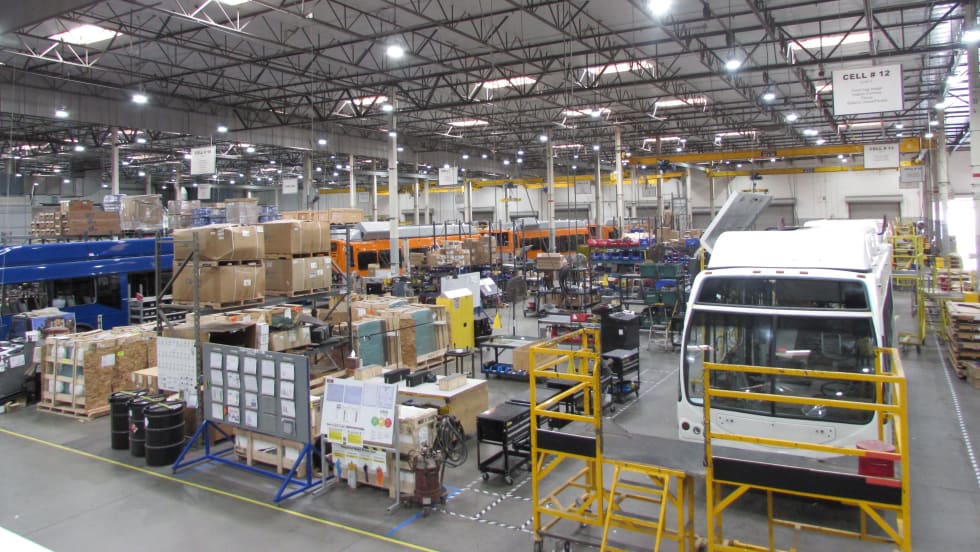
LA Metro Board Awards 220 Battery-Electric Bus Contract to ENC
The contract, which is the largest base award of battery-electric buses by a U.S. transit agency, will be built in Southern California, sustaining good jobs as LA prepares to welcome the world in 2028
Read More →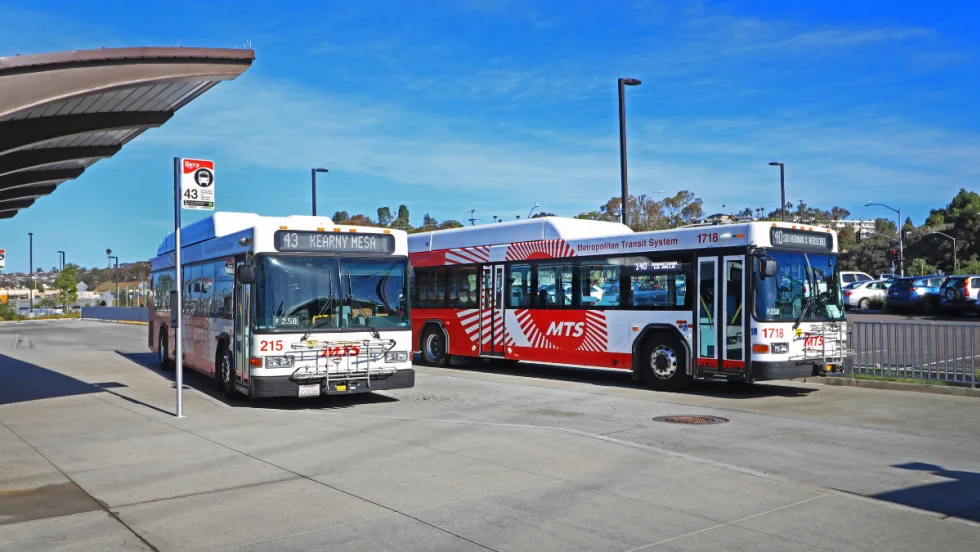
What’s Behind San Diego MTS’s Award-Winning Transit Strategy
Named one of APTA’s 2026 Outstanding Public Transportation Systems with 50 million or more annual passenger trips, California’s San Diego Metropolitan Transit System points to gains in ridership, safety, technology, and reliability as foundations of its success.
Read More →
Public Transit Conference Returning to GFX in 2027, Call for Papers Now Open
The Call for Papers is now open, allowing transit agency professionals and industry experts to help shape the PTC educational program by submitting session ideas for consideration.
Read More →
Indian River Transit’s Community-Focused Approach Earns National Recognition
Named APTA’s 2026 Outstanding Public Transportation System in its size category, Florida’s Indian River County transit system continues to grow ridership through fare-free service and a focus on evolving community needs.
Read More →
ENC Lands MATA Contract and More in Biz Briefs
In this edition of Biz Briefs, we spotlight the latest developments shaping the future of mobility.
Read More →From Surviving to Thriving: Building Stronger Transportation Organizations
Bus Business Consultants founder Brian Dickson shares lessons on leadership, organizational health, and creating options for long-term success in a changing transportation industry.
Read More →