



U.S.-style BRT embraced by UK system
BRT offers perfect solution to reduce travel times.
While many U.S. cities have taken their inspiration for bus rapid transit (BRT) from abroad, the Greater Manchester Passenger Transport Executive is studying American BRT ideas. Since the late 1980s, the Executive (the British version of a regional transit authority) has studied a variety of proposed service improvements on an 11-mile route between central Manchester and the suburb of Leigh. Light rail was initially favored but eventually was ruled out as too expensive. Planners then began looking at a variety of bus improvements. Their goal was and remains to reduce travel times along the corridor by half. One solution, guided busways, became increasingly attractive in the following decade as Leeds’ guided busway project achieved famous success less than 100 miles away. Manchester’s plan currently calls for a BRT route incorporating a combination of guided busway, signal priority, exclusive bus lanes and bus-preferred lanes. The first 5.4 miles of the plan would comprise the guided busway section, which would use the trackbed of an abandoned railway. The remaining 5.6 miles would involve extensive bus-priority measures, including traffic-signal priority and converting one lane of a local highway system into a 24-hour reserved bus lane. According to Roy McDonald, bus development manager for the Executive, their vision of BRT would include an upgraded vehicle that would offer quality, comfort, style and accessibility to passengers beyond existing buses offered in the country. “Consequently, we would expect the design and profile of the BRT vehicles to look markedly different from the current standard bus,” he said. Executive plans to submit its application for funding to the British government this summer for a fleet of approximately 15 such vehicles. They would then be leased to private-sector operators for BRT service. Construction of the busway section, signal-priority system and upgraded stations and shelters would begin in early 2005.
More Management

Public Transit Conference Returning to GFX in 2027, Call for Papers Now Open
The Call for Papers is now open, allowing transit agency professionals and industry experts to help shape the PTC educational program by submitting session ideas for consideration.
Read More →
Indian River Transit’s Community-Focused Approach Earns National Recognition
Named APTA’s 2026 Outstanding Public Transportation System in its size category, Florida’s Indian River County transit system continues to grow ridership through fare-free service and a focus on evolving community needs.
Read More →
ENC Lands MATA Contract and More in Biz Briefs
In this edition of Biz Briefs, we spotlight the latest developments shaping the future of mobility.
Read More →

From Surviving to Thriving: Building Stronger Transportation Organizations
Bus Business Consultants founder Brian Dickson shares lessons on leadership, organizational health, and creating options for long-term success in a changing transportation industry.
Read More →
Everett Transit, Community Transit Outline Consolidation Agreement
The proposed agreement calls for a 50% increase in bus service in Everett, a new microtransit zone, continued paratransit service, and the transfer of Everett Transit operations to Community Transit.
Read More →
Strada360’s Steve Lassey on Turning Transit Data Into Better Decisions
From breaking down data silos to preparing for AI, Strada360 CEO Steve Lassey discusses how transit agencies can use technology to improve operations, customer information, and long-term decision-making.
Read More →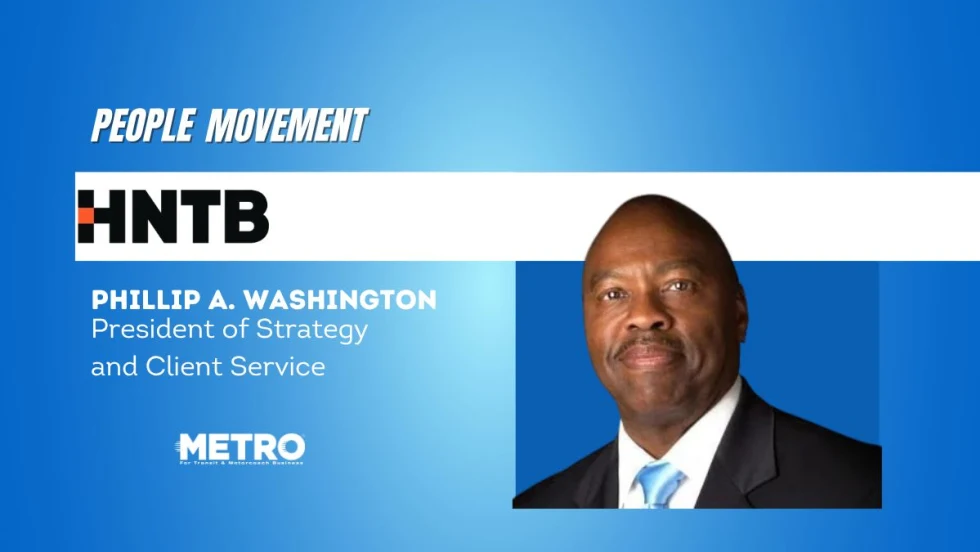
People Movement: Phil Washington Joins HNTB, Denver RTD Launches CEO Search, and More
In this edition, we also spotlight recent personnel moves at STV, the Eno Center for Transportation, and more, highlighting the people taking on new roles across the transportation industry.
Read More →
SEPTA Details Accelerate Vision for Transit System
The plan outlines investments in trolley modernization, new Metro and Regional Rail vehicles, accessible stations, and more frequent bus and rail service.
Read More →
FTA Ends Direct Oversight of MBTA Safety Actions
The federal agency closed its remaining special directive to the Massachusetts Department of Public Utilities following a safety review that began in 2022.
Read More →
Report: Transit Bus Manufacturing Supports 34,100 Jobs, $5.1B in GDP
The “Buses Mean Business” report examines the transit bus manufacturing industry’s economic footprint, supply chain, and rising demand for vehicle replacements.
Read More →