



Vehicle Wash Systems: What to Know Before You Buy
In an effort to reduce environmental impacts, as well as cut down on water costs, wash manufacturers have developed water-saving technologies, which are fast becoming standard features on vehicle wash systems.
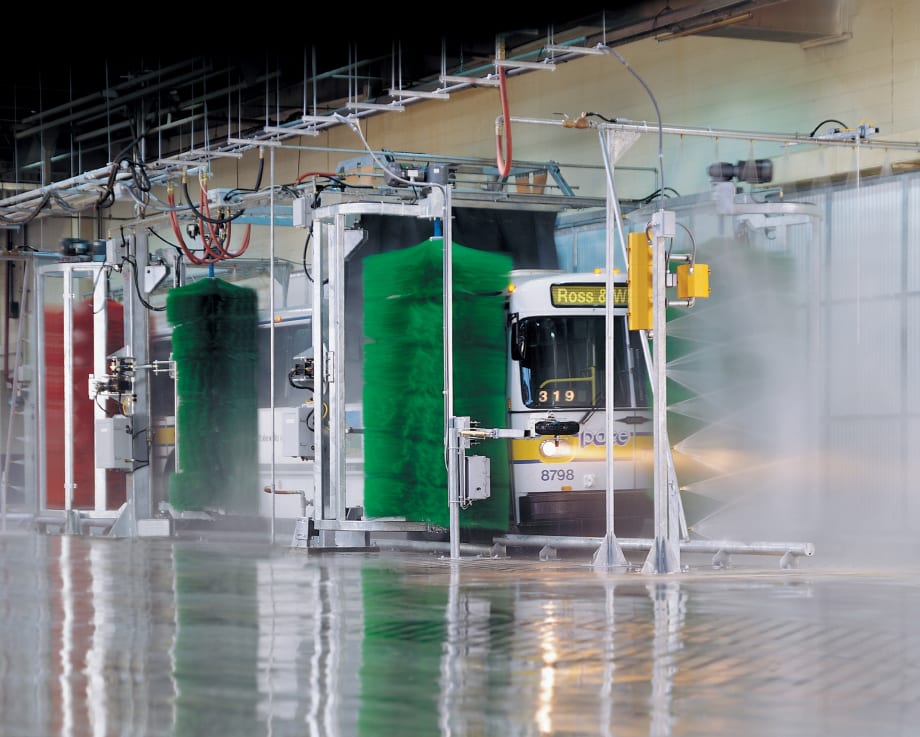
Ross& White Co.
Ross& White Co.
Whether you have a fleet of 20 vehicles, or hundreds, what your vehicle looks like says a lot about your operation. Keeping transportation fleets clean and polished is key to presenting your brand at its best. METRO Magazine spoke to vehicle wash system manufacturers — NS Wash Systems, Ross & White Co., Westmatic Corp. and Whiting Systems Inc. — to find out what factors to consider.
Factors to consider
Wash quality. A quality wash promotes strong brand image while communicating safety to your operation’s ridership. Brush materials and styles are important factors. Some manufacturers have turned to using foam materials in brushes. To that end, NS Wash uses slower-turning soft synthetic fiber mitts called Lammscloth to polish the vehicle and simulate a true hand wash, according to founder Thomas Ennis.
To thoroughly clean the dirtiest parts of the vehicle — the front and back —Westmatic employs brushes that overlap.
To help cut down on soap and water usage, foaming agents are being employed during the wash cycle to help the cleaning product adhere to the vehicle.
Wash times. Improving wash times helps fleet maintenance directors keep rolling stock washes frequent without interruption to other necessary yard processes. Depending upon the number of vehicles in your fleet, some wash system types are better suited for a particular fleet. Typically, transportation operations with fleets of more than 50 vehicles install a drive-through type system, where a bus drives through a series of brushes and rinses.
Smaller fleets tend to use a gantry system, where a vehicle is stopped and the wash system rides on a track while it washes the vehicle.
“One of the big advantages of the gantry system is you can wash all types of vehicles,” says Chuck Techner, sales manager for Westmatic.
Gantry designs incorporate high-speed PLC (programmable logic controllers), an industrially hardened computer, which manages an array of functions including imaging the vehicle, managing brush contact pressures, gantry speed and application points for cleaning products, says Whiting’s John Criscuolo, account manager, business development.
Operating and lifecycle costs. Customers must consider efficiencies of systems; whether the wash system uses less water and electricity.
Durability. Does the wash system have the ability to withstand the rigors of nightly washing? Long-term value is also an important requirement, says Jeff Ross, president of Cary, Ill.-based Ross & White. Likewise, simplicity of design is essential so as not to create maintenance issues.
Infrastructure. Customers need to know if their existing utilities — water, air, electricity and drainage — will support a heavy-duty wash system. They must also consider the space that will contain the wash system.
Warranties. Is the wash system covered by a manufacturer’s warranty? Typically, warranties for components are one year, while coverage for structures is 10 years to 15 years.
Tech developments
New developments in vehicle washing systems include the use of electronically controlled brushes, which helps reduce maintenance costs, says Techner.
Other innovations include the ability for manufacturers to remotely monitor the wash system via the Internet, providing data on washes and diagnosing any issues.
“We have the ability to remotely monitor and diagnose problems and upgrade the wash system programs. This allows us to make custom changes to system processes from our offsite Command Center,” Criscuolo says. “We can provide information on each wash performed. Reports are available via private website access or email.”
Green aspects
In an effort to reduce environmental impacts, as well as cut down on water costs, wash manufacturers have developed water-saving technologies. These are fast becoming standard features on vehicle wash systems, or can be an added option. Water reclamation systems are standard features on Ross & White’s bus and rail washers.
Some recycling systems can reclaim as much as 85% of the water, as with Westmatic's Water Recycling System. The remaining wastewater that is not recycled is filtered through the company’s patented water purification system. Through this chemical-free process, wastewater can reach a purification level of 99% — now clean and safe to proceed out into the sewage system.
“A well maintained reclaim system will return quality re-use water to the wash system,” Criscuolo says. This is a requisite for a quality wash process. It is essential that end users understand the balance between wash water reclaim, required maintenance and the wash process, he adds.
Another green aspect of the wash system is the use of enzyme-based vehicle wash agents, says Ross.
Sustainability has also extended into the manufacturing process, as some wash systems are built with eco-friendly materials.
“We use all aluminum in our fabricating, because its 90 percent recyclable, so when you take the bus wash out, it’s worth something,” says Ennis. “Much of the aluminum we buy is made from recycled aluminum.”
Company considerations
Transit managers need to look beyond the wash equipment and consider the company’s track record, says Ross.
A plant validation tour is encouraged, as it reveals much about the prospective vendor. Customers are also encouraged to ask about “aftersale” programs such as maintenance, says Criscuolo.
Speaking to previous clients is also recommended so you prospective buyers can get unbiased opinion on products.
RELATED: "Long Island Rail unveils new train wash facility."
[PAGEBREAK]
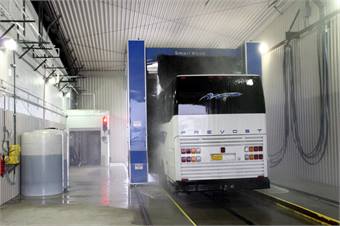
Whiting Systems Inc.
Whiting Systems Inc.
www.whitingsystems.com
(800) 542-9031
Whiting Systems, with headquarters in Alexander, Ark., develops cleaning programs designed to wash commercial trucks, coaches and trains. Other services include helping customers control costs through its reporting and remote system analysis. Providing dedicated wash attendants, is another service offering.
The SmartWash SCOUT provides comprehensive cleaning of all standard size vehicles, including coaches, vans and trucks. This two- or three-brush Roll Over Gantry is available in both 12- and 14-foot maximum vehicle height models.
Whiting uses SmartWash technology to determine the precise surface load pressures for gantry-mounted brushes by motor current sensing. This advance eliminates the potential for contact incident while providing maximum cleaning.
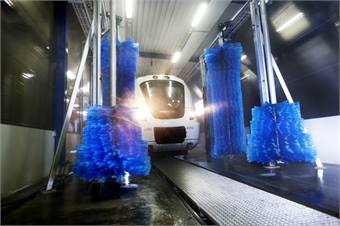
Westmatic Corp.
Westmatic Corp.
www.westmatic.com
(866)747-4567
Westmatic Corp. manufactures automatic large vehicle wash systems, which include environmentally-friendly bus, truck and train wash equipment. The company also specializes in wastewater treatment, with advanced water recycling and its patented Renaren advanced water purification system.
The Westmatic Twin Line train wash system (pictured), for electric or diesel-driven trains, senses the shape of different railcars and washes in both directions. It can be set up to wash the train entering from either end of the wash bay and can wash the front, roof and rear of the vehicle in a single wash cycle. Available with multiple wash programs, the Twin Line has high-density brushes for the sides and roof. The system can be delivered with a dryer/blower system and automatic window squeegee for the passenger windows.
The company’s 4-Brush Drive-Through “Transit-Master” bus wash system is designed for fleets with a high-volume wash schedule. This system is capable of washing transit buses, with front-mounted bicycle racks, using brushes. The wash cycle time is approximately 90 seconds.[PAGEBREAK]
Ross & White Co.
www.rossandwhite.com
(847) 516-3900
Serving the industry since 1933, Cary, Ill.-based Ross & White designs, manufactures and installs vehicle wash equipment for buses, trains and trucks. Customers include major transit agencies, shipping companies, railroads, tour bus operators, trucking companies and school districts.
All Ross & White wash systems are manufactured from hot-dipped galvanized steel. Standard bus wash (pictured) features include high-pressure front sprays for bike rack areas, high-pressure wheel wash sprays, water reclaim systems and selectivity for different brushing configurations. Optional features include, reverse osmosis water treatment systems, water strippers, touch-screen controls and Internet connectivity.
Standard features for its rail wash, include six-brush systems for commuter rail; six-brush wraparound wash systems for light rail, high-pressure wash systems to compliment the brushing systems, and water reclaim systems with water treatment and PH control.
NS Wash Systems
NS Wash Systems
www.nswash.com
(877) 679-2741
NS Wash Systems in Inglewood, Calif., has been designing and building innovative vehicle wash systems for more than 50 years. At the heart of NS Wash Systems’ products are the patented Flex-A-Round Brushes, which thoroughly clean the front, sides and rear of the vehicle, automatically adjusting to variations in vehicle size and contour.
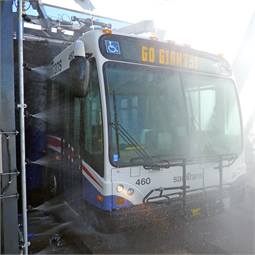
The Model 5M-220 bus wash system (pictured) is modular in design and customized to the unique needs of transit authorities. This series boasts significant improvements, such as rugged ladderized frame construction for extended life and durability; improved chemical applicators; oscillating Lammscloth scrubbers for roofs, and “Wrap-a-Round” brushes for better front and back coverage.
Designed for maximum versatility and the ability to upgrade, this compact machine is able to fit into smaller bays and clean a variety of shapes and sizes of vehicles. This set-up also includes high-pressure blasters for the tires.
More Bus

New York MTA Plans Largest Bus Fleet Upgrade in More Than a Decade
The agency is seeking manufacturers for 650 new CNG buses to replace aging vehicles, improve reliability, and advance its broader fleet modernization strategy.
Read More →
Building a Flexible Path to Transit Electrification
John Hroncich discusses BAE Systems’ modular and scalable approach, lessons learned from decades of real-world operations, and how agencies can identify electrification strategies that fit their fleets.
Read More →
Bus Tech Talk: Keeping Transit Technicians Ahead of the Technology Curve
LA Metro’s Obed Mejia discusses technician training, evolving maintenance technology, fleet replacement, and strategies for getting the most out of today’s transit fleets.
Read More →
Biz Briefs: RIPTA Unveils New Frontrunners, Clevland RTA Adds New Siemens, and More
In METRO's latest installment, we take a look at recent news from Siemens, Prevost, Dodge, and more partnerships making headlines across the transportation sector.
Read More →
People Movement: Holly Arnold Joins Transdev and More
In this edition, we also cover recent appointments and announcements at Pace, CamTran, MCI, and more, showcasing the individuals helping to shape the future of transportation.
Read More →
The High Cost of Transit Buses: Industry Leaders Look to Procurement Reform
Transit leaders and policymakers examine how standardized bus designs, streamlined procurement, and predictable funding could help agencies stretch budgets and deliver better service.
Read More →
The Business Voice Behind Public Transportation
As chair of APTA’s Business Members Board of Governors, Ray Melleady explains how more than 850 business members are partnering with transit agencies to advance funding, innovation, and industry-wide collaboration.
Read More →
From Surviving to Thriving: Building Stronger Transportation Organizations
Bus Business Consultants founder Brian Dickson shares lessons on leadership, organizational health, and creating options for long-term success in a changing transportation industry.
Read More →
Finding the ‘Happy Medium’: Optimizing Maintenance Without Sacrificing Reliability
The key to maintenance optimization isn’t doing less work—it’s doing the right work at the right time on the right assets.
Read More →
LA Metro, City of West Hollywood, and Partners Advance Smarter Bus Lane Enforcement
The award-winning partnership combines AI-powered detection with human oversight to improve bus reliability, accessibility, and enforcement efficiency.
Read More →