



Vendor Managed Inventory: Benefits of a Transit Supply Chain Network Realized
Working with a partner with similar goals and interests has been a rewarding experience for the eight transit system members of the VMI partnership, with parts price savings averaging around 15% to date. Part 3 of 3 in a series.
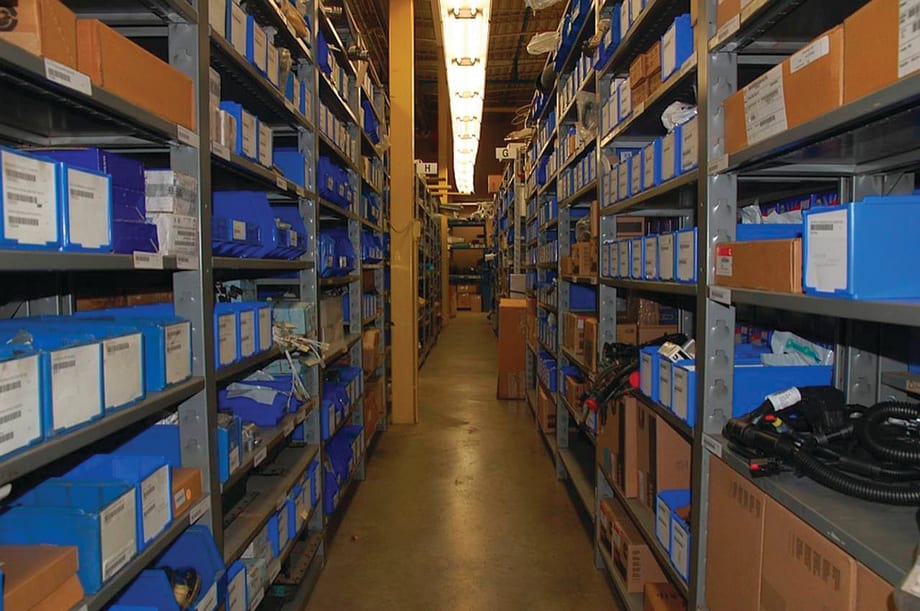
On Nov. 7, 2011, Metrolinx awarded North America’s largest Vendor Managed Inventory (VMI) consortium contract for the parts management of more than 1,700 transit vehicles to Pennsylvania-based Neopart LLC. This article, the third in a series, will outline the benefits and challenges faced under a VMI supply chain in Southern Ontario, Canada.
In previous articles [METRO Magazine: February/March 2012; May 2012], I detailed the costly and disconnected state of materials management across Southern Ontario’s transit bus operators. To rectify this issue, I discussed how a business case was developed to consolidate and shift the risk of parts availability onto specialists in transit part sourcing and delivery. Upon obtaining stakeholder approval and conducting a rigorous procurement process, Metrolinx and eight participating transit systems, in partnership with Neopart LLC, commenced their journey into VMI in late 2011.
Develop performance indicators
To support the introduction of VMI, Metrolinx and eight participating transit systems recognized the importance of building a strong baseline and key performance indicator (KPI) system to track the expected success and improvement of the VMI project. Developing KPIs is critical to ensuring vendor performance can be measured for purposes of contract management, which has not been the case in a number of other VMI projects. As well, the ability to measure savings and improvements was foreseen to be of interest to the municipal councils and boards that transit systems are accountable to.
As such, one of the first deliverables of the project’s Steering Committee was to retain the services of a supply chain consultant to develop the KPIs. A joint database was developed by importing 200,000 line items from participants with SKUs, usage and prices dating back one year. Thirteen KPIs were adopted and automated to generate monthly status reports. The primary KPI to measure the vendor’s performance was the ability to obtain a perfect order within a target range of 96%.
After consolidating the data, it was determined that 44,500 SKUs existed in the eight-member consortium for more than 26 vehicle models, ranging from cutaways to 60-foot buses. Of note was the magnitude of the aftermarket parts supplier base with 380 vendors involved in the supply chain servicing the needs of the eight transit systems. At the time, the single largest supplier group was comprised of 194 distributors followed by 75 OEMS, 36 consumable material companies and seven bus manufacturers.
Neopart began an extensive process of cross-referencing the parts, as mentioned in previous articles. This consumed a considerable amount of transit staff resources, as stockkeepers were required to provide support in tracking core part manufacturers. Ray Melleady, Neopart’s project lead, refers to this as peeling the layers of the onion. The benefits of carrying out the cross-reference along with identifying the mean-failure-rate-per-unit installed has allowed Metrolinx and Neopart to develop a lifecycle cost for a specific part SKU, thereby providing an estimate of its total dollar value over time.
Moreover, as part of its baseline KPI development, Metrolinx examined the last point of shipment distance and carbon footprint of the existing material management process. After investigating over 10,717 packing slips for 12 transit garage locations and cross-referencing supplier addresses, it was discovered that the average distance traveled per part was 283 miles. As part of its implementation plan, Neopart established a hub-and-spoke distribution center in Mississauga, Ontario to service all facilities with three trucks. This allowed the last point of shipment to decrease to 40 miles, on average. Furthermore, consolidated daily shipping translated into 3,240 unique deliveries across the consortium, which meant a reduction of 86% in CO2 emissions. Overall, this means that stockkeeper processing time for deliveries could be reallocated to other productive tasks. Another green initiative introduced by Neopart was a pallet recycling program, with trucks picking up previous day pallets to be reused in shipping. [PAGEBREAK]

The consortium received full transparency into the price Neopart pays for each part plus the markup and receives a lowest price guarantee that is monitored on an ongoing basis.
First delivery
The first delivery under the VMI system rolled out to Ontario-based Oakville Transit in February 2012. The delivery was a small skid of filters, wipers and other fast-moving items. The purchasing process had fundamentally changed with buyers/stockkeepers redirecting all requests for parts to one company without having to worry if they were getting the best price. This feature was built into the contract, whereby the consortium received full transparency into the price Neopart pays for each part plus the markup and receives a lowest price guarantee that is monitored on an ongoing basis.
A few weeks later, Hamilton Street Railway and the London Transit Commission went live with a phased integration approach. This was devised to allow Neopart to better manage demand and volumes. The first weeks saw large quantity order requests driven by the traditional min/max levels. As transit system stockkeepers are becoming more familiar with the process and the quantities, lower on-hand quantity levels are beginning to emerge while keeping up with availability requirements.
The 100-day post award period for a project of this size and complexity has many challenges. Metrolinx’s VMI project was no different with the emergence of issues regarding fill rate, back orders and brand preference. Each problem was addressed with procedures jointly established by the consortium and Neopart. The eight fleet managers stayed the course and continue to support the project seeing major parts price savings from day one.
Post-Launch Benefits
As the project continued to roll out with greater SKU integration, one major unforeseen benefit has been the interest of parts manufacturers to directly supply the consortium. This helped remove many layers of materials supply chain, resulting in reduced purchasing costs. The primary appeal for manufacturers is the dedicated volumes and long-term predictability for manufacturing purposes. In many Fortune 500 companies, these supply chain practices are called IPFR (Integrated Planning Forecasting and Replenishment), which has been achievable with the two-way knowledge exchange between the end-users and manufacturers with the goal of bringing down parts cost. As well, with the average cost of materials management being 18 cents on the dollar, it will drop drastically as this project continues to rollout and costs are reduced throughout the supply chain from buying to billing.
Working with a partner with similar goals and interests has been a rewarding experience for the consortium with parts price savings averaging around 15% to date. The cross reference developed in conjunction with Neopart for transit parts SKUs is one of the largest in the industry, with the benefit of providing the true value of finding the core part sourcing.
The consortium has yet to realize the many other expected benefits of the VMI system. However, it is positive that the continued process of sourcing core and the integration of other Ontario transit systems will continue to reduce parts cost and stock-out risks.
More Bus

New York MTA Plans Largest Bus Fleet Upgrade in More Than a Decade
The agency is seeking manufacturers for 650 new CNG buses to replace aging vehicles, improve reliability, and advance its broader fleet modernization strategy.
Read More →
Building a Flexible Path to Transit Electrification
John Hroncich discusses BAE Systems’ modular and scalable approach, lessons learned from decades of real-world operations, and how agencies can identify electrification strategies that fit their fleets.
Read More →
Bus Tech Talk: Keeping Transit Technicians Ahead of the Technology Curve
LA Metro’s Obed Mejia discusses technician training, evolving maintenance technology, fleet replacement, and strategies for getting the most out of today’s transit fleets.
Read More →
Biz Briefs: RIPTA Unveils New Frontrunners, Clevland RTA Adds New Siemens, and More
In METRO's latest installment, we take a look at recent news from Siemens, Prevost, Dodge, and more partnerships making headlines across the transportation sector.
Read More →
People Movement: Holly Arnold Joins Transdev and More
In this edition, we also cover recent appointments and announcements at Pace, CamTran, MCI, and more, showcasing the individuals helping to shape the future of transportation.
Read More →
The High Cost of Transit Buses: Industry Leaders Look to Procurement Reform
Transit leaders and policymakers examine how standardized bus designs, streamlined procurement, and predictable funding could help agencies stretch budgets and deliver better service.
Read More →
The Business Voice Behind Public Transportation
As chair of APTA’s Business Members Board of Governors, Ray Melleady explains how more than 850 business members are partnering with transit agencies to advance funding, innovation, and industry-wide collaboration.
Read More →
From Surviving to Thriving: Building Stronger Transportation Organizations
Bus Business Consultants founder Brian Dickson shares lessons on leadership, organizational health, and creating options for long-term success in a changing transportation industry.
Read More →
Finding the ‘Happy Medium’: Optimizing Maintenance Without Sacrificing Reliability
The key to maintenance optimization isn’t doing less work—it’s doing the right work at the right time on the right assets.
Read More →
LA Metro, City of West Hollywood, and Partners Advance Smarter Bus Lane Enforcement
The award-winning partnership combines AI-powered detection with human oversight to improve bus reliability, accessibility, and enforcement efficiency.
Read More →