



Washington Agencies Lower Emissions, Costs with Propane Autogas
With a goal to lower their emissions and total operating costs, Washington state’s Kitsap Transit and the Whatcom Transportation Authority sought an alternative fuel solution for their paratransit shuttles.
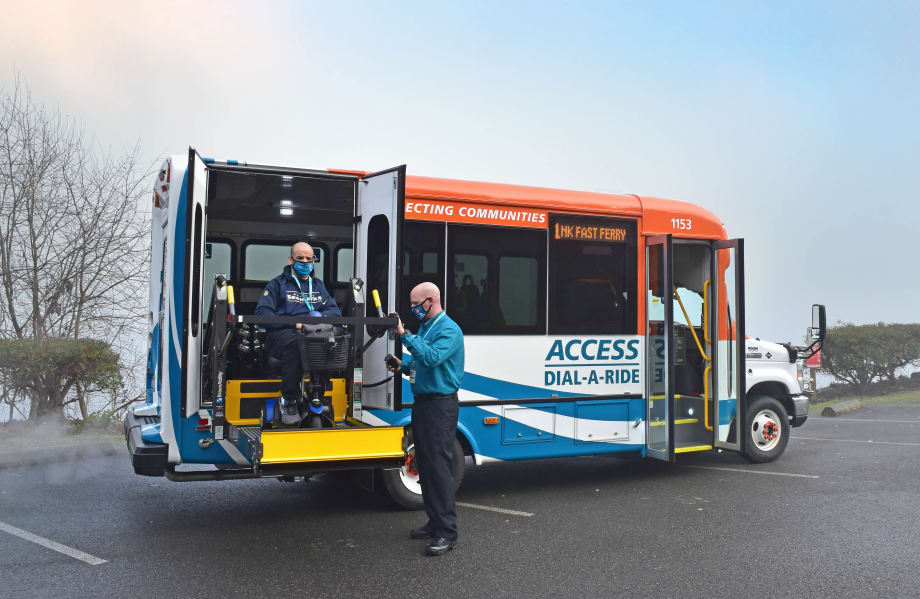
Propane vehicles are known to be easy to maintain and reliable to operate.
Kitsap Transit
With a goal to lower their emissions and total operating costs, two Washington transit agencies sought an alternative fuel solution for their paratransit shuttles.
Making the Switch to Propane
Kitsap Transit is the public transit agency serving Kitsap County outside of Seattle, Wash. The agency transports more than 3.5 million riders each year and operates routed buses, both regular full-day service countywide and custom rush-hour service for ferry commuters. It also offers paratransit services, ACCESS, for seniors and people with disabilities. Currently, Kitsap Transit has 69 ACCESS vehicles.
Whatcom Transportation Authority provides public transportation services throughout Whatcom County in the northwestern corner of Washington. Its services include fixed routes, paratransit, zone serice and a vanpool program. The agency has 62 fixed-route buses and 47 paratransit buses.
Both Kitsap and Whatcom began looking for paratransit vehicles with cleaner emissions that would help lower their fuel cost; they found a solution with ROUSH CleanTech’s Ford E-450 propane autogas paratransit shuttles.
“Kitsap Transit strives to be a sustainable, green travel option for our environmentally conscious commuter base,” says Dennis Griffey, maintenance director for Kitsap Transit. “By choosing propane shuttles for our paratransit vehicles, we’re doubling down on our commitment to our community.”
Since 2015, Kitsap Transit has added 49 paratransit propane shuttles to its ACCESS fleet, replacing aging diesel models. Whatcom Transportation Authority has purchased 22 propane buses since 2019, replacing aging gasoline models. The Washington agencies are among dozens of transit agencies operating propane vehicles. Currently, there are more than 1,500 ROUSH CleanTech propane transit shuttles across the U.S.
Driving Emissions Down
For Whatcom, reducing its carbon footprint was an important factor in replacing its paratransit vehicles.
“Whatcom Transportation Authority is on a mission to reduce greenhouse gas emissions that drive climate change,” says Ron Mountain, fleet manager for the agency. “Transitioning our paratransit fleet to propane is one of the most effective ways we can reduce our emission footprint.”
When compared with gasoline or diesel vehicles, fleet vehicles that run on propane autogas, including the ROUSH CleanTech Ford E-450 cutaway chassis, emit fewer greenhouse gases, smog-producing hydrocarbons, and virtually eliminate particulate emissions.
Griffey pointed out that transportation sector is one of the largest contributors to greenhouse gas emissions. “Kitsap Transit is committed to environmentally sustainable practices in its own operations,” says Griffey. “Since 2013, Kitsap Transit has made operational changes, including using propane vehicles, that have reduced our carbon-dioxide footprint by more than 7.2 million cubic feet which is equal to 375.5 metric tons — nearly 5% decrease overall.”
Increasing Savings
Propane vehicles are known to be easy to maintain and reliable to operate. They lower maintenance costs, including fewer quarts of oil required, fewer oil changes, and less costly filter packages.
“Propane has reduced our maintenance costs and wear and tear on the engine and components,” says Griffey. “We don’t need to do as much serving for fluids, coolants, and filters.” He adds that the agency’s propane autogas transit buses average 25 cents less per mile than its comparable diesel vehicles.
Whatcom had some initial maintenance issues; the agency worked with ROUSH CleanTech to replace the fuel pumps.
Compared with other fuels, propane also has the lowest total cost of ownership. In addition to reduced maintenance, the fuel is 40% less expensive than gasoline and about 50% less than diesel per gallon. Additionally, propane excels in operating in cold weather.
“Being in the Pacific Northwest, we endure some rough winter conditions. Whatcom Transportation Authority’s propane shuttles don’t have any cold-start issues and warm up quickly. That saves our team time and money,” says Mountain.
Requirements for a propane vehicle repair facility are generally the same as those for conventionally fueled vehicles, helping fleet managers keep costs low compared with other alternative fuel facilities.
Both the Propane Education & Research Council and ROUSH CleanTech provide savings calculators that include a lifetime ownership cost summary comparing vehicle cost savings and savings per mile.
Fueling with Ease
Kitsap and Whatcom experience additional savings with their propane shuttles by locking in an annual per-gallon fuel cost for propane to ensure price and supply remain consistent.
Kitsap Transit has two 2,000-gallon dispensers at its North and Charleston facilities, as well as one 1,000-gallon leased dispenser at its South facility. The agency reports it saves almost 70% per gallon when purchasing fuel for its propane shuttles, compared to its diesel shuttles.
Whatcom Transportation Authority has three 1,000-gallon dispensers on its property to accommodate its propane fleet.
Installing propane fueling infrastructure costs less than any other transportation energy source — conventional or alternative. Propane supplier Ferrellgas helped both Kitsap and Whatcom choose the right fueling option based on the fleet size, routes, budget, and facility space.
“Our employees fill up onsite. That, plus the facts that propane is produced domestically and has an abundant supply, allows us to budget better,” says Mountain.
More than 90% of the U.S. propane autogas supply is produced domestically, with an additional 7% from Canada. Fueling with American-made propane autogas helps with energy security goals and reduces the nation’s dependence on imported oil.
Feedback From the Drivers
Drivers have noticed many improvements while operating the propane shuttles.
“Our operators really appreciate the power and the pep the propane vehicles have. They are quieter and don’t have that diesel smell,” says Griffey.
Vehicles fueled by propane autogas reduce noise levels by about 50% compared to a diesel engine, allowing drivers to better focus on passengers and the road.
Some of Whatcom Transportation Authority drivers expressed concern about operating the vehicles in warm weather.
“ROUSH CleanTech worked with us to help eliminate 'vapor lock' in warm weather, which satisfied our drivers,” says Griffey.
Vapor lock is caused by a liquid fuel, such as propane, changing state while still in the fuel delivery system.
Funding and Future Opportunities
To transition their fleets to propane, Kitsap Transit and Whatcom Transportation Authority utilized local, state, and federal funding to purchase their buses and trucks.
Both agencies tapped into Federal Transportation Administration (FTA) grant programs for support. ROUSH CleanTech’s Ford E-450 cutaway has completed the FTA’s New Model Bus Testing Program (Altoona Testing), which allows transit agencies to access federal funds that cover 85% of an entire alternative fuel vehicle cost with a 15% local match. Completion of Altoona Testing means all compatble paratransit body configurations are eligible for FTA funding.
Both Kitsap and Whatcom plan to add more propane vehicles to their fleets. According to Mountain, every future paratransit order for Whatcom Transportation Authority will be propane-fueled. And, Griffey says that Kitsap Transit will replace all its remaining 6.6-liter diesels with the 7.3-liter low nitrogen oxide Ford E-450 propane cutaway vehicles.
“We were looking for cleaner emissions, reduced down time, and lower cost per mile,” says Griffey. “ROUSH CleanTech’s propane-fueled E-450s achieved all these goals.”
More Paratransit

Biz Briefs: RIPTA Unveils New Frontrunners, Clevland RTA Adds New Siemens, and More
In METRO's latest installment, we take a look at recent news from Siemens, Prevost, Dodge, and more partnerships making headlines across the transportation sector.
Read More →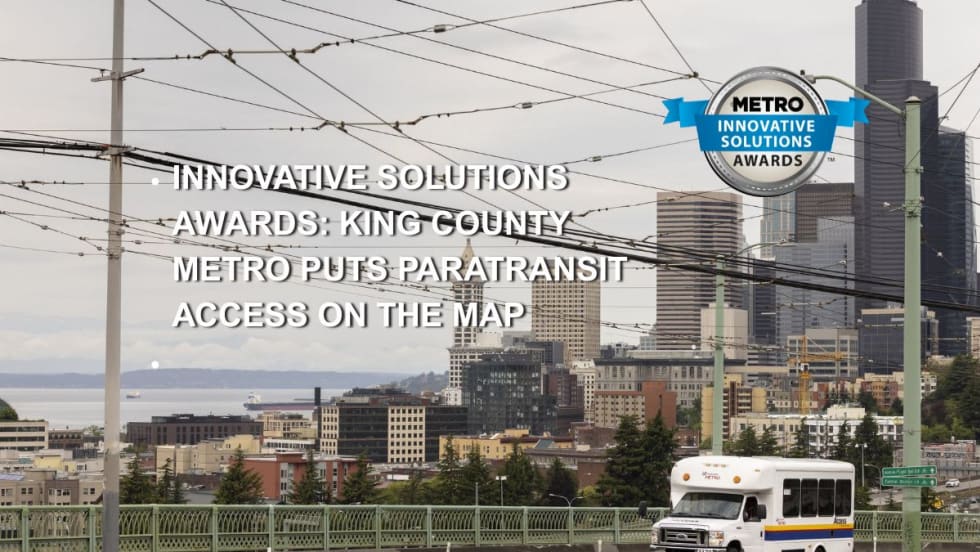
King County Metro Makes ADA Paratransit Easier to Navigate
METRO's Innovative Solutions Award winner replaces complex service-area descriptions with an accessible, interactive map that puts paratransit information directly in customers’ hands.
Read More →
Jacksonville’s NAVI Project Charts a New Course for Autonomous Public Transportation
Through its NAVI program, JTA is showing how autonomous vehicles, intelligent infrastructure, and coordinated operations can work together to deliver everyday public transportation.
Read More →
Driving Smarter Paratransit
John Hanlon shares how AlphaRoute is leveraging AI-powered technology to help paratransit providers optimize operations, support frontline staff, and enhance the rider experience.
Read More →
METRO Magazine Announces 2026 Innovative Solutions Awards Winners
Projects Recognized for Advancing Mobility Through Technology, Accessibility, Workforce Innovation, and Operational Excellence
Read More →
Biz Briefs: STV teams with Amtrak, Motorcoach Operators Boost Fleet and Land Contracts, and More
From manufacturers and suppliers to transit agencies and motorcoach operators, these updates offer a snapshot of the projects, partnerships and business moves driving the industry forward.
Read More →
Biz Briefs: Masabi Teams with St. Louis Metro and More
In METRO's latest installment, we take a look at recent news from Transdev, Hitachi, and more partnerships making headlines across the transportation sector.
Read More →
New York MTA Leverages Zoning Program to Advance Station Accessibility
Accessibility enhancements at Nevins St Station will be financed through a development agreement tied to the MTA's Zoning for Accessibility initiative.
Read More →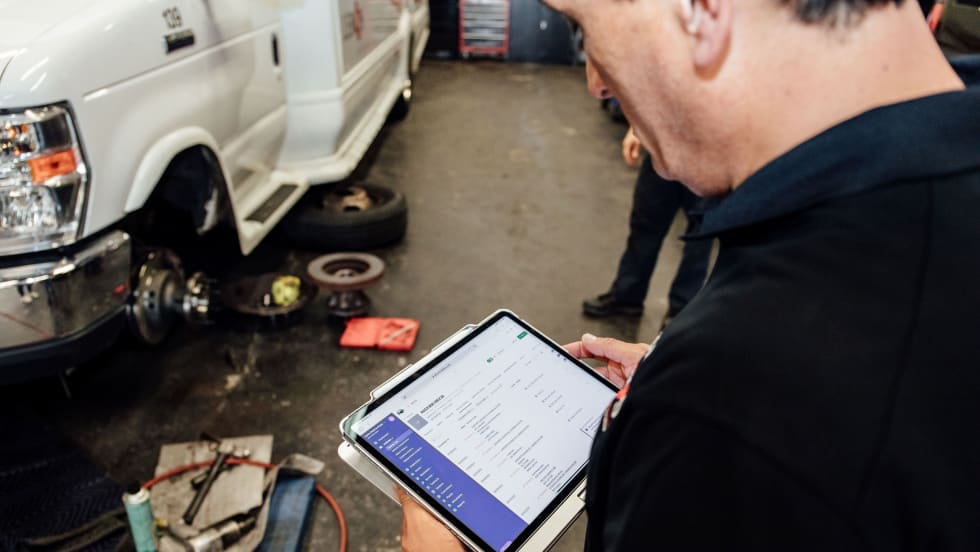
Reinventing Fleet Maintenance with Real-time Visibility and AI
Transit leaders need to know what needs fixing, where to look, who is responsible, when work is completed, and what it costs without having to chase information across disconnected systems.
Read More →
SamTrans Sets Priorities for Potential Connect Bay Area Revenue
The board-approved framework allocates future funding to maintaining service, rider improvements, equity initiatives, and infrastructure repairs.
Read More →