



What Happens After You Sell Your Motorcoach Business?
Most people immediately focus on how much they can put in their pocket so they often miss out on how they might improve their financial position after the sale.
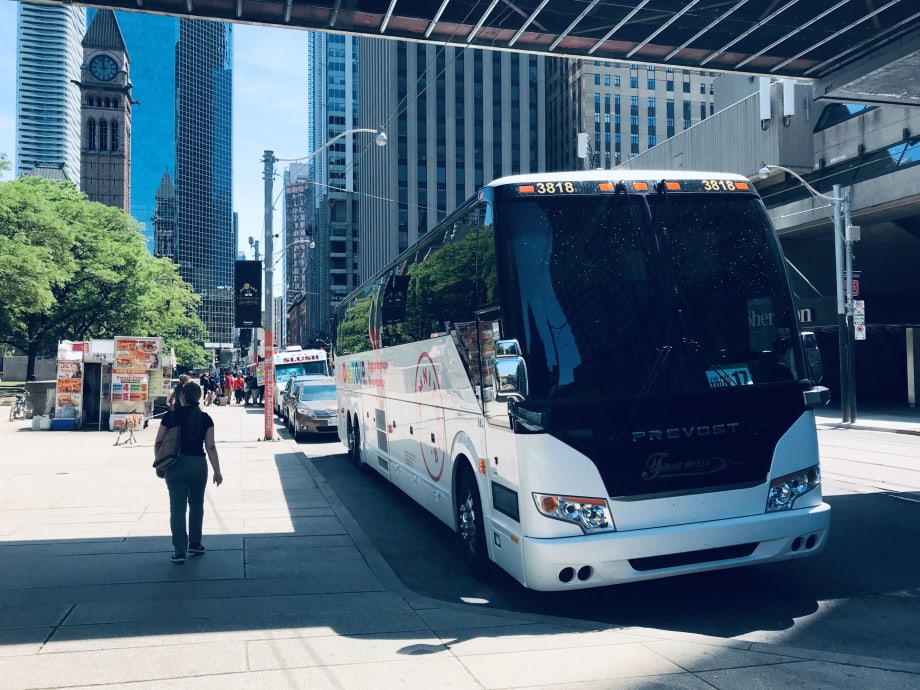
Most people often miss out on how they might improve their financial position after the sale of their motorcoach company.
- Many sellers prioritize immediate financial gain from selling their motorcoach business.
- They often overlook opportunities to enhance their financial situation post-sale.
- Focusing solely on immediate profit can lead to missed financial improvement strategies.
*Summarized by AI
What happens after you sell your business? You might be (happily) surprised to find out. Most people, when selling their business, immediately focus on how much they can put in their pocket at the time of sale. What they often miss is how they might improve their financial position after the sale. This is often called “The second bite of the apple.” In a successful private equity transaction, it is not uncommon for the “second bite” to be of equal value to the owner as the first transaction.
But before we go there, let’s take a look at a real-life example of a bus company sale. We must add a caveat; the bus operator sold his business to a private equity group (PEG), not another bus operator. I explain why that’s critical in just a moment.
Valuing A Bus Company
The bus company in this example had good, not great, financials. The owner was prudent, kept his debt at reasonable levels, and had decent profit margins. Overall, somewhat average among private bus companies.
In developing what’s called an Opinion of Value, we collected the following items:
- The past three years of financials.
- Trailing 12-month financials. For example, if the current month is July, we look at financials from July of the previous year through June of the current year.
- The list of equipment. This is essentially the equipment list with insured values attached to your insurance policy.
To calculate company value, we began with EBITDA — earnings before interest, taxes, depreciation, and amortization. Then we made adjustments/add backs for expenses such as family salaries, one-time expenses (e.g., ELDs), discretionary expenses such as association membership (quick disclaimer here, we don’t believe UMA membership is discretionary. It’s a must-have), as well as other items.
When all is said and done, our client’s adjusted (or normalized, as the CPAs would say) EBITDA came out to about $2.5 million, which isn’t bad, wouldn’t you say? When you factor in multiples of 4.5, the company’s value came out to $11.25 million ($2.5M x 4.5 = $ 11.25M). And, as was said earlier, this operator was wise enough to keep his debt at reasonable levels. In this case, he had to satisfy about $2 million in outstanding debt. This meant he would pocket $9.25M ($11.25 – $2.0 debt $9.25M) before tax by selling 100% of his business to a private equity group.
What’s Important to the Buyer, A Private Equity Group (PEG)
First, you should know that PEGs are not interested in just maintaining and operating a bus company. They want to grow their investment. Recognizing that a bunch of blue-suit, MBA types know little to nothing about running a bus company, PEGs will want to keep the bus company’s management team, put them under contract, and pay each of the team members a very good salary to continue to run and expand the business. To keep most of the management team in place, the private equity group will encourage the owner(s) to stay on, at least for a period, and to maintain some equity ownership in the business.
In our example, the owner elected to retain 20% ownership of the business, pocket the other 80% for himself and his family, and, in the process, leave behind all the risks, expenses, and liabilities of ownership. For example, if the operator needed to buy new buses after a new contract, the PEG would provide the funding. The days of personal guarantees are history.
After the Sale – Growing the Company
First, you should know that PEGs are beholden to their investors, who expect them to grow whatever investment they make with their money. Otherwise, what’s the point? These investors can always put their money into mutual funds, bonds, stocks, or any other investment instrument. But instead, they provide their funds to a private equity group to invest in companies with growth potential.
As everyone knows, there are basically two ways to grow a company;
- First, organically. You expand into new markets, capture new contracts, grow your customer base, etc.
- The second way, of course, is through acquisitions, by buying other bus companies in their market and assimilating those new entities into the business. And, with each approach, the PEG would provide the funding. They are eager to do this because they have funds that need to be employed rather than sit around in some interest-bearing instrument.
While continued organic growth is always important to a PEG’s investors, the latter becomes the preferred strategy since it’s typically a faster way to grow their investment and a process they have been through many times.
Three- to Five-Year Window
So let’s take a look at what’s happened to this particular bus owner, who, along with his team, continued to operate his business and acquire other smaller bus companies in their market. By bringing new transactions into his company, he was able to reduce his overall operating expenses, leverage the additional equipment, expand into new markets, and gain access to new customer bases.
In a matter of a few years (three to five), the value of the 20% ownership he kept grew in value to almost as much as the 80% he pocketed when he sold to the private equity group initially.
Here's How It Works
To keep it simple, let’s say the company sold for $ 5 M. As such, the owner retained 20% of the equity, or $1M, and held the remaining $4M at close. Over the next three to five years, the owner and his management team worked to grow the company through internal expansion and acquisitions, thanks to financial backing from the PEG. Over those several years, the company's value grew to $18 million from its original $5 million. Thus, the value of the owners 20% holding also increased to $3.6M (20% x $18M = $3.6M). Almost the same amount he pocketed with the original sale.
So that is the second "bite at the apple."
Deciding to sell or bring in a partner (PEG) for your company is not always easy. Especially like most in this industry, an entire family is involved in that decision. In thinking through your decision, though, it’s important to know and understand all the options available to you. Keeping a small equity stake can be an exciting and potentially very profitable way to improve your financial position while minimizing the headaches and risks of ownership.
About the Author:Victor S. Parra is an adviser for Corporate Finance Associates.
Quick Answers
Beyond immediate financial gain, it's important to consider long-term financial planning and how the proceeds can improve your overall financial position and investment strategy.
*Summarized by AI
More Motorcoach

Report: Canadian Motorcoach Industry Generates $4.4B in Economic Impact
The 2025 Motorcoach Economic Impact Report finds motorcoach travel supported nearly 25,000 jobs and generated $980 million in federal, provincial, and local taxes.
Read More →
Prevost Opens Expanded Chicago-Area Service Center
The $8.1 million Elk Grove Village investment nearly triples facility space while adding service capacity, parts storage, and customer amenities.
Read More →
People Movement: Dan Dipert Coaches Adds Third-Generation Leader, Keolis Names New Valley Metro VP/GM, and More
In this edition, we also cover recent appointments and announcements at the Wabtec, SilverRide, HNTB, and more, showcasing the individuals helping to shape the future of transportation.
Read More →
METRO Opens Submissions for 2026 Motorcoach Awards
Nominations are now being accepted for METRO Magazine’s Operator of the Year and Innovative Operator of the Year awards.
Read More →
Biz Briefs: Alstom Lands Canadian Contract, LYT to Supply California TSP, and More
In METRO's latest installment, we take a look at recent news from Complete Coach Works, Beep, FlixBus, and more partnerships making headlines across the transportation sector.
Read More →
Biz Briefs: RIPTA Unveils New Frontrunners, Clevland RTA Adds New Siemens, and More
In METRO's latest installment, we take a look at recent news from Siemens, Prevost, Dodge, and more partnerships making headlines across the transportation sector.
Read More →
People Movement: Holly Arnold Joins Transdev and More
In this edition, we also cover recent appointments and announcements at Pace, CamTran, MCI, and more, showcasing the individuals helping to shape the future of transportation.
Read More →
ABA Report: Motorcoach Travel Generates $161.6B Economic Impact
The 2025 analysis finds motorcoach travel supported nearly 900,000 jobs and generated $28 billion in federal, state, and local taxes.
Read More →
CharterUP’s Armir Harris on Technology, AI, and the Future of Group Mobility
In a recent episode of METROspectives, CharterUP Founder/CEO Armir Harris discussed the company’s evolution from an online charter bus marketplace into a technology platform supporting public- and private-sector mobility and much more.
Read More →
People Movement: ABC Names John Walsh as Chief Commercial Officer
In this edition, METRO also covers recent appointments and announcements at the DART, STV, and more, showcasing the individuals helping to shape the future of transportation.
Read More →