



Zero emissions, transit reliability may come to fore in 2019
We as an industry need to be clear-eyed about how new battery buses are, the challenges they face and the alternatives available to ensure the reliability that BRT demands.
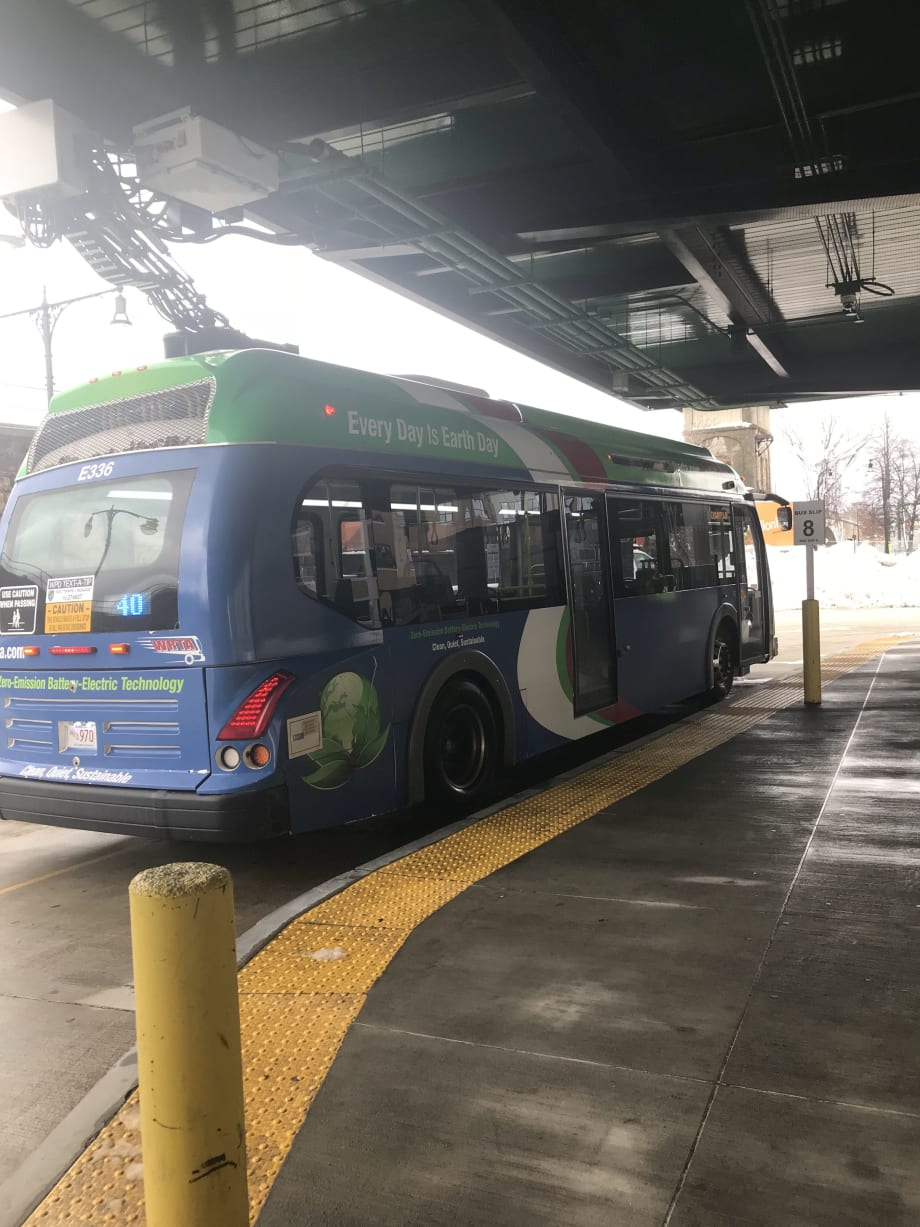
WRTA
WRTA
All throughout 2018, we have published articles about the accelerating demand in battery-electric buses being procured by public transportation agencies. We also have seen the continued growth in bus rapid transit (BRT). However, the early experience of agencies employing this new technology in BRT service has been mixed. We as an industry need to be clear-eyed about how new battery buses are, the challenges they face, and the alternatives available to ensure the reliability that BRT demands. The last thing that our industry needs is a series of high-profile failures.
Battery bus demand growing rapidly
Zero-emission buses (ZEBs) powered by three types of energy storage and distribution: electric batteries, hydrogen fuel cells, and electric overhead catenary in the case of trolleybuses. More and more agencies in public transportation have ordered battery-electric buses and a few continue to experiment with hydrogen fuel-cell buses. The battery-electric variety is growing rapidly, mostly because the costs of deploying them are much less expensive than those for hydrogen fuel cells.
Funding also matters, as the so-called federal “Lo-No grant” program, a set-aside within the Major Capital Investment Program, has continued to grow in recent years. In addition, many state and local governments, which oversee as much as 40% of the U.S. population and the American economy, remain committed to greenhouse-gas emissions reductions contained in the Paris climate agreement, and policies to achieve them. For example, California is poised to issue a new regulation early next year that would mandate all transit agencies to have completed a transition to ZEBs by 2040.
BRT service raises reliability stakes
Meanwhile, BRT deployments continue at a steadily increasing pace. Indeed, virtually every agency in METRO’s Top 100 Transit Bus Fleets has either a BRT line in service, or one in the works. An increasing number of these are planning to operate these new lines with battery-electric buses, following the examples of Albuquerque; Indianapolis; and San Joaquin, Calif.
Deployment of ZEBs still face several challenges, however, and at least three have significant implications for BRT project success. The first of these is range, though rapid improvements in battery storage have been made in recent years, which make deployments increasingly feasible for BRT, because BRT service requires more hours of operation than typical local service. A second challenge, though, is reliability, which is also getting better, but in practice, remains less than older propulsion technologies. The final challenge, operating cost, remains the most vexing, largely because of electricity rates in most regions of the U.S. Fortunately, electric utilities are beginning to respond favorably to transit’s need for more cost-effective rates.
All three of these issues bear watching in the coming year. They have particular importance for BRT.
More Technology

From Hardware to Digital Partner: Luminator Charts Its Next Chapter
CEO Magnus Friberg discusses Luminator’s shift toward becoming a digital partner, the growing importance of software and interoperability, and how AI can help agencies improve operations and passenger experience.
Read More →
Beyond the Checklist: A Structured Approach to Transit Maintenance
Reliability-Centered Maintenance helps transit agencies move beyond routine checklists to focus limited resources on the assets and failures that have the greatest impact on safety, reliability, and service.
Read More →
NJ TRANSIT Advances Bus Technology Upgrades Across Statewide Fleet
More than 1,500 buses now feature upgraded technology designed to improve arrival predictions and provide free Wi-Fi, with deployment expected to reach nearly 2,000 buses by the end of 2026.
Read More →

Building a Flexible Path to Transit Electrification
John Hroncich discusses BAE Systems’ modular and scalable approach, lessons learned from decades of real-world operations, and how agencies can identify electrification strategies that fit their fleets.
Read More →
Biz Briefs: Alstom Lands Canadian Contract, LYT to Supply California TSP, and More
In METRO's latest installment, we take a look at recent news from Complete Coach Works, Beep, FlixBus, and more partnerships making headlines across the transportation sector.
Read More →
From Legacy Silos to Conversational Intelligence
What if transit leaders could ask any operational question and get a trusted answer in seconds? Conversational AI is transforming how agencies use their data.
Read More →
USDOT Announces Rail Vehicle Replacement Grants, Chattanooga AV Shuttle Funding
More than $191 million in federal funding will help three transit agencies replace aging rail vehicles and support a new autonomous shuttle service in Chattanooga.
Read More →
Bus Tech Talk: Keeping Transit Technicians Ahead of the Technology Curve
LA Metro’s Obed Mejia discusses technician training, evolving maintenance technology, fleet replacement, and strategies for getting the most out of today’s transit fleets.
Read More →
Biz Briefs: RIPTA Unveils New Frontrunners, Clevland RTA Adds New Siemens, and More
In METRO's latest installment, we take a look at recent news from Siemens, Prevost, Dodge, and more partnerships making headlines across the transportation sector.
Read More →
Why Simulating Pedestrian Movement Has Become Essential for Modern Rail Stations
Pedestrian microsimulation is helping rail planners identify bottlenecks, test station designs, and prepare complex transit hubs for growing passenger volumes.
Read More →