



Creating Standards in Bus Operations
Those of you who take a few minutes each month to follow my blogs, or have attended one of my past presentations at transit events, first let me thank you. These blogs and presentations, in combination, have been promoting surface transit standards in a form of a standardized curriculum for over 10 years now. I ask you, are we not long overdue in getting transit specific standards a done deal? By the time of this posting, I would have again stood before a group of transit professionals at a recently attended transit function in Orlando, Fla., speaking on this exact topic.

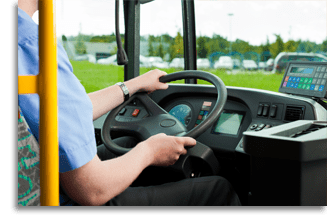

Those of you who take a few minutes each month to follow my blogs, or have attended one of my past presentations at transit events, first let me thank you. These blogs and presentations, in combination, have been promoting surface transit standards in a form of a standardized curriculum for over 10 years now.
I ask you, are we not long overdue in getting transit specific standards a done deal? By the time of this posting, I would have again stood before a group of transit professionals at a recently attended transit function in Orlando, Fla., speaking on this exact topic.
Curriculum is only one of many ingredients that make up a "Total Standards Package."
There may be many ways that basic skills are being taught to new hire bus operator candidates throughout our agencies, but the standardization of the methods we use and how consistent we are in delivering them as “Standard Operating Procedures,” (SOP) is what we should be discussing. It's time for us to discuss and agree on what the safest applications and formulas are and deliver them as part of SOPs agency-wide.
Other ingredients to be considered in a "Standards" program are:
A fixed amount, not an endless amount, of skill development time on the training bus
A “Train the Trainer” program - Route familiarization for bus operators.
Standardized written assessments
A corrective action program
Collision ratings standardization
An annual refresher program
A potential problem operator program
Transitional Operator Program
A post-training program
Automatic final day disqualifiers
Hiring procedures - Eliminating potentially unsafe candidates prior to training bus assignment.
Giving bus operators every possible advantage in providing safe reliable service after basic skill development training can begin with operator-friendly bus designs. Increasing visibility for the operator as opposed to decreasing visibility by unfriendly windshield designs, and in some cases oversized mirrors and size and placement of fareboxes.
Pedestrian contact, especially on left turns along with right-side fixed object contact, can be greatly reduced by providing bus operators the best unobstructed view possible of both the road ahead and to the sides of the bus.
In my curriculum reviews, I've noticed a lack of standards involving:
Basic Skill Development of a new hire candidate
Mirror set up and utilization (real view vs convex)
Covering the right side of the bus
Steering technique
Definition of blind spots
Speed while conducting turns
Frequency of mirror scans
Total training time spent on the training bus before determining pass / fail (agency issue)
All of the above mentioned are critical elements in safe operations. In closing, with pedestrian distractions so visibly obvious, I want to emphasize the need for detailed instruction with regard to right and left turns.
Right and Left Turn Technique:
Regarding pedestrian / fixed object contact, are we all emphasizing the most important steps in these high risk maneuvers? Is the HOW and WHY a turn should be conducted a specific way clearly communicated and understood?
Instructor Consistency: (this is extremely critical to have in place)
When an instructor is absent from their training bus duties for a day and after returning to the training bus his / her students state that "the replacement instructor that filled in said we should do it differently than the way you taught us," then that is considered a "lack of standardization among instructors.
It will repeat itself to the trainee during Route Familiarization, if the RF Operators that the trainees will eventually be assigned to, are not an extension of the teachings of the training center instructors.
Let's bring these and other items of importance to the table that can provide safer passenger service and minimize collisions and fatalities.
There is a lot of work to be done and it's time to start building strong standards that will be consistently utilized as agency wide norms in surface transit.
Louie is the former director of training for the New York City Transit Dept. of Buses Safety & Training Division and 2003 NTI Fellow. Currently, he is sr. consultant/SME in transit training & bus simulation at L-3 D.P. Associates and independent consultant at "Bus Talk" Surface Transit Solutions.
In case you missed it...
Read our previous blog, "Final Day Bus Operator Candidate Qualification and Its Difficulty Level."
More Blog Posts
Improving Transit Accessibility by Offering Assistive Listening
Did you know that there are literally tens of millions of people worldwide with hearing loss, many of whom will use some form of public transit at some point?
Read More →
35 Years of the ADA, Making Travel Easier for Seniors
Thirty-five years after the passage of the Americans with Disabilities Act of 1990 (ADA), the impact of this landmark piece of civil rights legislation cannot be overstated.
Read More →
Driving Performance with Purpose: How I Lead One of Greyhound’s Top Teams
Safety, on-time performance, and customer experience are critical elements in intercity bus operations. But getting them right doesn’t come down to plans or protocols alone. It comes down to execution. How well your team performs on the ground, in real time, is what defines success.
Read More →
Navigating Emerging Privacy Laws: A Call to Action for Service Providers in Mass Transit
With Data Privacy Day Jan. 28, I want to spotlight a critical challenge faced by service providers in the mass transit sector: managing personal information responsibly in an era of rapidly evolving privacy regulations.
Read More →
Human Trafficking Awareness: What Public Transportation Can Do?
January is National Slavery and Human Trafficking Prevention Month in the U.S., and January 11 is National Human Trafficking Awareness Day.
Read More →
Want to Improve Transit Safety and Operations? Break Down the Silos
Retrieving and reviewing data and video can be a cumbersome process for fleet managers. Each system or tool provides a piece of the puzzle, but seeing the complete picture requires tedious manual synchronization.
Read More →
Ensuring Public Transit Cybersecurity Through Robust Protective Measures
In today’s highly connected world, cybersecurity is of utmost importance, particularly for transportation agencies overseeing transit bus systems that rely increasingly on sophisticated technologies, including the use of data analytics in traffic signal networks, to manage and operate their systems.
Read More →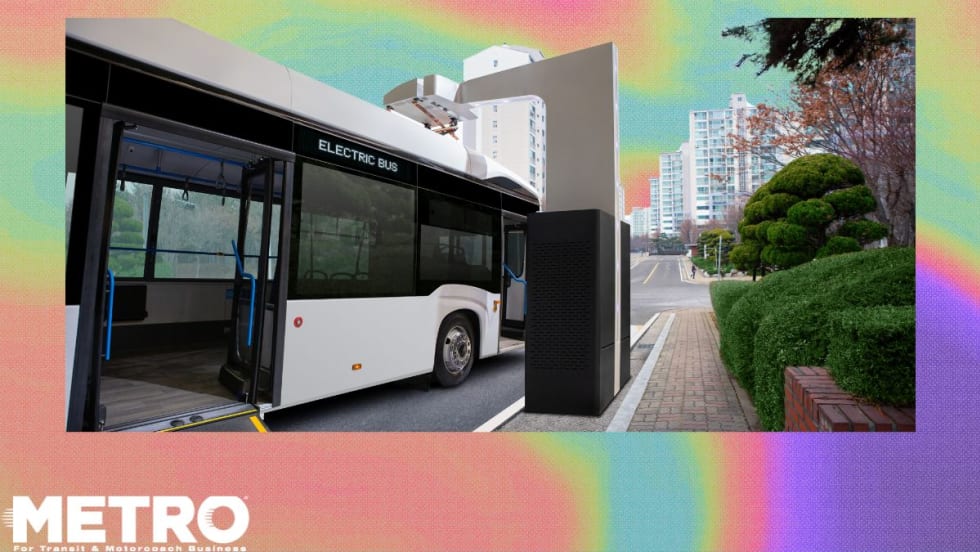
How Advances in Thermal Management Revolutionize Urban Mobility
In the daily hustle and bustle of city life, transit buses serve as the backbone of urban transportation, allowing millions of city dwellers to get from point A to point B each day reliably.
Read More →
The Evolution of Bus Design
Thirty years ago, drivers not only had to drive the bus and navigate heavy traffic, but they were also responsible for tasks like supervising passenger loading and unloading, selling tickets, and providing passengers with various kinds of information, all while sitting in an often ill-fitting workstation.
Read More →
What 'Transit Safety 101' Really Means
Safety, Safety, Safety. This word is used repeatedly, and in many contexts, without most people understanding what it actually means.
Read More →