



Final Day Bus Operator Candidate Qualification and Its Difficulty Level
A final day should mean exactly that, the end — no more — learning opportunities that had been available no longer exist. The clock has run out. Hopefully, there is a final day designated for trainees at your agency, a time where you draw the line and make a decision, because, as we all know, not everyone can operate a bus. For the trainee, the final day is the most pressure-packed day they will spend on the training bus. Any student entering their final day should be well-prepared and fully aware of what they are faced with, as all of the requirements should have been clearly covered as part of their first day orientation. Remember, no surprises!

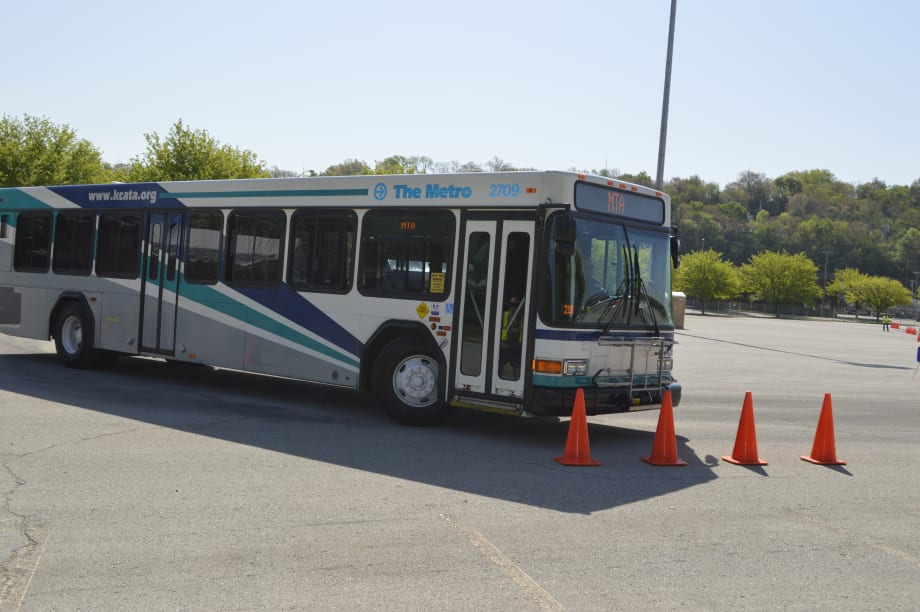

A final day should mean exactly that, the end — no more — learning opportunities that had been available no longer exist. The clock has run out. Hopefully, there is a final day designated for trainees at your agency, a time where you draw the line and make a decision, because, as we all know, not everyone can operate a bus.
For the trainee, the final day is the most pressure-packed day they will spend on the training bus. Any student entering their final day should be well-prepared and fully aware of what they are faced with, as all of the requirements should have been clearly covered as part of their first day orientation. Remember, no surprises!
On the other hand, the final day should not be as difficult for the instructor(s) performing this critical evaluation. This is particularly true if the instructor has maintained proper documentation (paper trail) throughout the entire training effort. This should be the norm. If clear and concise documentation has been compiled leading into the final day and if those "Automatic Disqualifiers" you've often heard me speak of are being utilized, the final day should provide a clear-cut answer regarding qualification. Perhaps a blog on "Effective Documentation" will be on my radar?
Silence is golden for the instructor on a final day. It's time to catch your breath, observe and evaluate. All required tasks have been covered, practiced and reinforced, beginning with baby food on Day One and progressively building the trainee up to digest solid foods. It's time for the trainee to prove to their instructor that they are worthy of moving forward, based on their satisfactory performance, or they will be forced to resign, due to an unsatisfactory performance.
The most important thing for a final day instructor to remember is NOT to crumble under the temptation to lessen the degree of difficulty to afford the trainee a better chance of qualifying for the job. The level of difficulty should not be softened ― qualification should occur under the most demanding conditions associated with the job. As for the trainee, let the chips fall where they may, their fate will be determined by their performance.
"Where" you take the trainee and under "What" conditions they will be asked to perform on their final day serves as crucial ingredients for getting the proper indicators regarding the true abilities of the trainee, on whether they can:
Safely operate in passenger service.
Deal with the most challenging traffic conditions.
Avoid being a risk to themselves, the public and the agency.
Unlike during basic skill development where the best locations to teach fundamental skills require open areas with very little traffic the final day is the complete opposite. It's "Show" time and the trainee is on Broadway. It's time to shine or allow the lights to go out for the last time.
As an instructor, if you don't utilize the busiest locations in your city to make your final day pass/fail determination, you are performing an injustice to the trainee and the property. Making a decision to qualify in anything less than the most challenging areas and preventing the trainee from experiencing these conditions until they mistakenly make it solo into passenger service, leads to a question you must ask yourself, "How do I sleep at night?!"
We wish that all of our trainees would have their best performance possible during final day evaluation. Those that simply "have it," according to the standards of their agency, will be easy to identify and deserve the opportunity to advance. There will be others that will show that they are not qualified to enter passenger service and must be released from the program. Reasons:
Not being able to perform the required skills necessary during the required training days.
By the simple act of conducting an "Automatic Disqualifier.”
Louie is the former director of training for the New York City Transit Dept. of Buses Safety & Training Division and 2003 NTI Fellow. Currently, he is sr. consultant/SME in transit training & bus simulation at L-3 D.P. Associates and independent consultant at "Bus Talk" Surface Transit Solutions.
Read our previous blog, "Caution When Passing Other Buses In "The Zone."
More Blog Posts

Improving Transit Accessibility by Offering Assistive Listening
Did you know that there are literally tens of millions of people worldwide with hearing loss, many of whom will use some form of public transit at some point?
Read More →
35 Years of the ADA, Making Travel Easier for Seniors
Thirty-five years after the passage of the Americans with Disabilities Act of 1990 (ADA), the impact of this landmark piece of civil rights legislation cannot be overstated.
Read More →
Driving Performance with Purpose: How I Lead One of Greyhound’s Top Teams
Safety, on-time performance, and customer experience are critical elements in intercity bus operations. But getting them right doesn’t come down to plans or protocols alone. It comes down to execution. How well your team performs on the ground, in real time, is what defines success.
Read More →
Navigating Emerging Privacy Laws: A Call to Action for Service Providers in Mass Transit
With Data Privacy Day Jan. 28, I want to spotlight a critical challenge faced by service providers in the mass transit sector: managing personal information responsibly in an era of rapidly evolving privacy regulations.
Read More →
Human Trafficking Awareness: What Public Transportation Can Do?
January is National Slavery and Human Trafficking Prevention Month in the U.S., and January 11 is National Human Trafficking Awareness Day.
Read More →
Want to Improve Transit Safety and Operations? Break Down the Silos
Retrieving and reviewing data and video can be a cumbersome process for fleet managers. Each system or tool provides a piece of the puzzle, but seeing the complete picture requires tedious manual synchronization.
Read More →
Ensuring Public Transit Cybersecurity Through Robust Protective Measures
In today’s highly connected world, cybersecurity is of utmost importance, particularly for transportation agencies overseeing transit bus systems that rely increasingly on sophisticated technologies, including the use of data analytics in traffic signal networks, to manage and operate their systems.
Read More →
How Advances in Thermal Management Revolutionize Urban Mobility
In the daily hustle and bustle of city life, transit buses serve as the backbone of urban transportation, allowing millions of city dwellers to get from point A to point B each day reliably.
Read More →
The Evolution of Bus Design
Thirty years ago, drivers not only had to drive the bus and navigate heavy traffic, but they were also responsible for tasks like supervising passenger loading and unloading, selling tickets, and providing passengers with various kinds of information, all while sitting in an often ill-fitting workstation.
Read More →
What 'Transit Safety 101' Really Means
Safety, Safety, Safety. This word is used repeatedly, and in many contexts, without most people understanding what it actually means.
Read More →