



How Fare Payment Innovations are Helping Bring Riders Back to Transit
Alongside discussions around safety measures, such as limiting or staggering ridership to better enable physical distancing, mandatory mask wearing, and the introduction of rules and changes enabling safe increases in system capacity, agencies have been accelerating operational changes that were already being examined pre-pandemic.

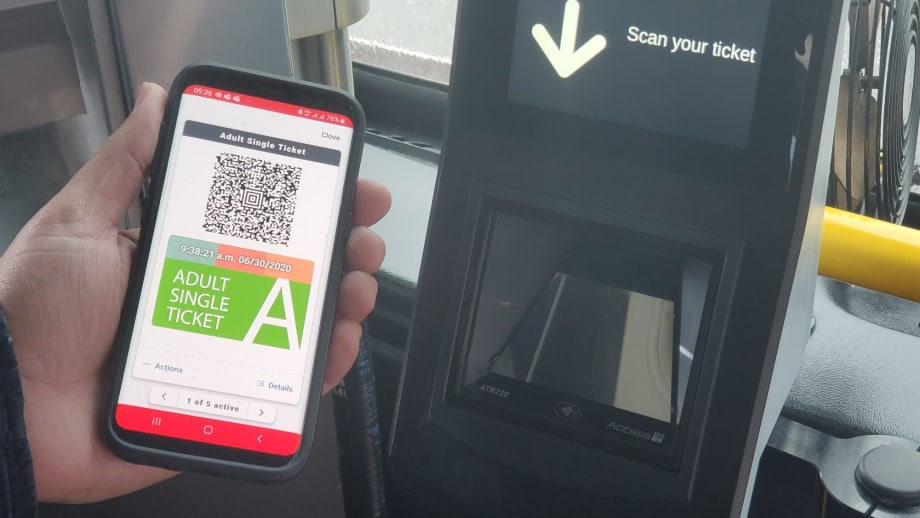
The last 12 months have seen all of us face unprecedented challenges that have transformed the way we go about our daily lives.
Masabi
The last 12 months have seen all of us face unprecedented challenges that have transformed the way we go about our daily lives. In a rapidly evolving situation, we have had to adapt to new ways of working, shopping, socializing, and traveling, all within the limits of state and government-mandated rolling lockdowns and “stay-at-home” orders. Public transit systems are particularly vulnerable to the disruption caused by events such as the pandemic due to the open and democratic nature of the mobility they provide, and data has shown that by the end of March 2020, commuter ridership (and fare revenue) in some U.S. cities had dropped by as much as 90% as industries either shuttered or companies began advocating work from home (WFH) policies for their employees where possible.
However, throughout the last year transit services have continued to operate, providing a critical service, ferrying key workers who provide essential services to our healthcare, economic, and retail systems. The onus fell on agencies to ensure that these journeys could be made as safe as possible, and to examine ways in which their operations could be adapted not just to protect riders and staff during the pandemic, but to reassure and encourage riders returning to networks as the pandemic abates, as well as ensure that transit networks can provide the flexibility required to support new travel habits and working hours.
The “new normal”
Alongside discussions around safety measures, such as limiting or staggering ridership to better enable physical distancing, mandatory mask wearing, and the introduction of rules and changes enabling safe increases in system capacity, agencies have been accelerating operational changes that were already being examined pre-pandemic. This includes prioritizing safe ways to pay using contactless ticketing technologies, such as Account-Based Ticketing (ABT), to provide riders with COVID-safe fare payment processes such as have been deployed in cities like Rochester, N.Y., and Dayton, Ohio, with many more set to follow their lead in 2021. However, with fare revenues down, innovation has been about more than just these technologies, and agencies have looked to new Fare Payments-as-a-Service (FPaaS) models to change the economics of contactless deployments.
With ABT, riders can simply and contactlessly tap a contactless bank card, mobile phone, or smart card on a validation device when boarding and the right to travel and fare calculations are then carried out automatically in the back office.
This ensures:
Social distancing. No more passengers standing in line to buy a ticket, or staff handling physical tickets and cash.
Convenience. No need to buy a ticket before traveling or understand which fare to choose.
Rewarding transit usage. Riders can benefit from monthly/daily/weekly passes, even when they might not be able to afford to purchase them up front. Instead, they simply tap and ride when they need to travel and the back office “caps” their fare — the more they travel the more they save, rewarding them the more they ride.
Fare flexibility. ABT gives agencies the ability to implement new fares quickly — which will be critical in attracting riders back in a world of new and potentially ever-changing work and commuting patterns.
Adopting ABT as part of an FPaaS model represents a better way of delivering COVID-safe and cost-effective ticketing systems to transit agencies and their riders. While cities have spent tens or hundreds of millions of dollars on bespoke systems, the technology now exists to quickly and cost-efficiently deploy all the capability with minimal lead time and expense. Instead of purchasing a bespoke Automatic Fare Collection (AFC) system, agencies can now sign up to a Fare Payments platform delivered as a service. This removes the cost, risk, and complexity of providing the latest fare payment innovations, with a platform which is constantly evolving and adding new features and functionality, allowing them to concentrate on operating safe, reliable, and convenient transit services to their riders.
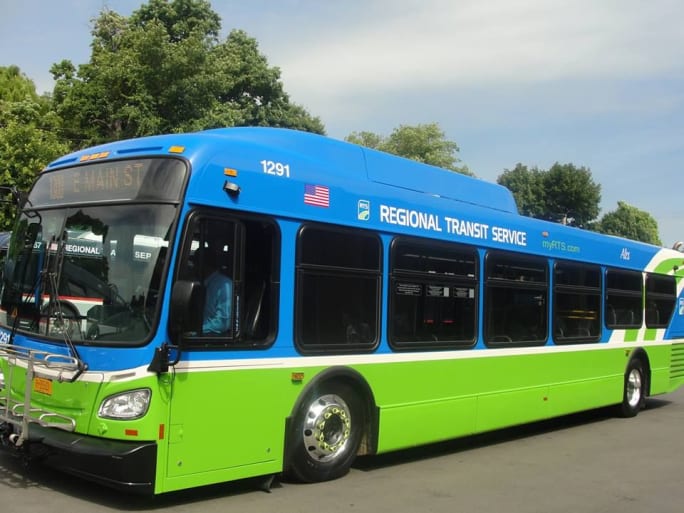
Account-Based Ticketing has been deployed in cities like Rochester, N.Y., and Dayton, Ohio, with many more set to follow their lead in 2021.
Via RTS
New cloud-based models
What makes FPaaS interesting for agencies is that it offers a personalized and cost-effective way of delivering the latest fare payment technology, with all the agencies using the service benefitting from regular updates; helping them keep up with the pace of technology change. Furthermore, the best fare payment platforms enable agencies to easily integrate their tickets into third party apps through APIs and SDKs into providers like Uber, Transit, and Moovit.
Agencies can also have access to unprecedented amounts of data on their ridership, allowing for management and safety measures and protocols to be developed to accommodate the maximum number of passengers safely and efficiently. Agencies can benefit hugely from using this technology to monitor demand and optimize scheduling, letting them better safeguard employees and riders.
With diminished fare revenues and constrained budgets during the pandemic, it is vital that technologies such as Fare Payments as a Service run on a Pay-As-You-Go basis, meaning agencies only pay only for what they use. Through FPaaS, agencies can reduce the cost of fare collection, deploy the latest fare payment technology, and enable MaaS.
However, despite all these innovations and technical developments — it remains critical that Transit access is universal and part of this is ensuring that unbanked or cash only riders can also access services. To this end we have seen the rollout of cash digitization alongside mobile and Account-Based Ticketing technologies in U.S. cities. Riders can now use local retailers to top up their account with tickets and stored value using cash. This means that access to a contactless mobile ticketing service is no longer limited only to those with debit or credit cards. This is important for agencies, and we expect this to continue.
The post-COVID future
Agencies envisage a full return of ridership numbers as vaccination programs are completed, with a significant increase throughout 2021 beginning in the spring or early summer. However, remote working may mean commuters stay away longer, and there may be an overall reduction in commuting as people work more flexibly.
Now, there is a light at the end of the tunnel, agencies are beginning to move from ensuring services are COVID-safe, to ask how they attract riders back to public transit by offering a convenient experience, new flexible fares, and safe ways to pay and travel. However, costs and funding are a big concern with agencies potentially needing to reduce costs and explore new revenue generation options, as well as needing more government support.
From a fare payments point of view the need to reduce costs while at the same time enabling contactless ways to pay, convenience, MaaS, and new flexible fares to bring riders back will see more agencies speed up transitions to a Fare Payments-as-a-Service delivery model to deploy Account-Based Ticketing using mobile phones, contactless bank cards, and smart cards. This, together with the delivery of cash-digitization with local retailers, will help ensure all riders can make use of these contactless services and benefit from MaaS rider experiences, helping agencies recover ridership.
More Blog Posts
Improving Transit Accessibility by Offering Assistive Listening
Did you know that there are literally tens of millions of people worldwide with hearing loss, many of whom will use some form of public transit at some point?
Read More →
35 Years of the ADA, Making Travel Easier for Seniors
Thirty-five years after the passage of the Americans with Disabilities Act of 1990 (ADA), the impact of this landmark piece of civil rights legislation cannot be overstated.
Read More →
Driving Performance with Purpose: How I Lead One of Greyhound’s Top Teams
Safety, on-time performance, and customer experience are critical elements in intercity bus operations. But getting them right doesn’t come down to plans or protocols alone. It comes down to execution. How well your team performs on the ground, in real time, is what defines success.
Read More →
Navigating Emerging Privacy Laws: A Call to Action for Service Providers in Mass Transit
With Data Privacy Day Jan. 28, I want to spotlight a critical challenge faced by service providers in the mass transit sector: managing personal information responsibly in an era of rapidly evolving privacy regulations.
Read More →
Human Trafficking Awareness: What Public Transportation Can Do?
January is National Slavery and Human Trafficking Prevention Month in the U.S., and January 11 is National Human Trafficking Awareness Day.
Read More →
Want to Improve Transit Safety and Operations? Break Down the Silos
Retrieving and reviewing data and video can be a cumbersome process for fleet managers. Each system or tool provides a piece of the puzzle, but seeing the complete picture requires tedious manual synchronization.
Read More →
Ensuring Public Transit Cybersecurity Through Robust Protective Measures
In today’s highly connected world, cybersecurity is of utmost importance, particularly for transportation agencies overseeing transit bus systems that rely increasingly on sophisticated technologies, including the use of data analytics in traffic signal networks, to manage and operate their systems.
Read More →
How Advances in Thermal Management Revolutionize Urban Mobility
In the daily hustle and bustle of city life, transit buses serve as the backbone of urban transportation, allowing millions of city dwellers to get from point A to point B each day reliably.
Read More →
The Evolution of Bus Design
Thirty years ago, drivers not only had to drive the bus and navigate heavy traffic, but they were also responsible for tasks like supervising passenger loading and unloading, selling tickets, and providing passengers with various kinds of information, all while sitting in an often ill-fitting workstation.
Read More →
What 'Transit Safety 101' Really Means
Safety, Safety, Safety. This word is used repeatedly, and in many contexts, without most people understanding what it actually means.
Read More →