




RELATED: Keeping Old School Practices in New Bus Operator Training
Key Steps to Managing Left-Turning Buses and Pedestrian Safety
Bus operators are not blindfolded. Operators are trained and required to identify potential hazards, based on their forward planning skills. With regard to left turns, these so called “blind spots” are really areas behind the left A-pillar/mirror that are “temporarily” obstructed to the operator, not blind to the operator. The key here is for the operators to utilize their observation and forward planning skills to minimize the time that their vision is temporarily obstructed. The pedestrian that regrettably becomes a victim of bus contact should be in the clear view of the operator long before arriving at the location where the contact occurred. Pedestrians are not “coming out of nowhere!"
November 23, 2015
7 min to read
First, allow me to express my condolences and deepest sympathies to those that were injured and to those family members who may have experienced the loss of a loved one as a result of being involved in a collision with a transit bus. I also express my concerns for the bus operators involved and hope that they have and will continue to remain of a sound mind and continue to perform their duties under the most difficult conditions.
Let’s take a moment to consider how Merriam Webster defines a blind spot:
"A blind spot is an area that is not seen by the naked eye, or in the equipment provided."
The "equipment provided" in the case of a bus operator are the mirrors. One would have to be either blindfolded or the object would have to be located in an area that cannot be seen by the naked eye or in the equipment provided to be considered a true blind spot.
Bus operators are not blindfolded. Operators are trained and required to identify potential hazards, based on their forward planning skills. With regard to left turns, these so called “blind spots” are really areas behind the left A-pillar/mirror that are “temporarily” obstructed to the operator, not blind to the operator. The key here is for the operators to utilize their observation and forward planning skills to minimize the time that their vision is temporarily obstructed. The pedestrian that regrettably becomes a victim of bus contact should be in the clear view of the operator long before arriving at the location where the contact occurred. Pedestrians are not “coming out of nowhere!" They were likely somewhere visible to the operator before contact occurred. If making pedestrians visible to the operator requires crunching forward, moving left or right in the operator seat, so be it.
Reverting to smaller mirrors and/or a repositioning of mirrors along with thinner A-pillars may play a role in minimizing bus — pedestrian contact when turning. It currently remains the responsibility of the training staff to determine which path to choose, regarding whether the operator minimizes their movement while turning and allow an object to remain hidden behind the obstructions until the final moment before contact occurs, or whether they crunch, bob, weave, rock or roll to bring pedestrians into view to avoid contact. Claiming an operator is not able to crunch forward or move right or left in the seat because of their height or weight raises another question. Let me ask you, is it time to implement weight and height requirements? Smaller steering wheels can put operators in a “feels just like a car mode" of turning which results in more speed when turning and less time to assess the area in front of and along the sides of the bus.
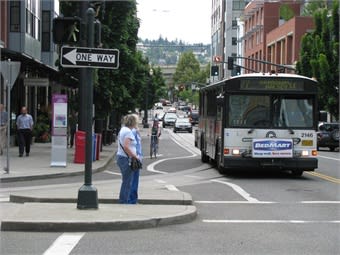
We must face the truth that not every candidate that comes through the door will pass the training to become a professional bus operator. There are some who simply can’t do it. That's reality. Think twice before blaming the inability to bring pedestrians into view because of the size of the steering wheel. Here is my bus, you drive it safely, you pass and you qualify, and if you can’t drive it safely, you don’t advance. Yes, it may be time to require certain weight and height requirements to be able to do the necessary things required to save lives during turns. If weight or size is preventing an operator from seeing all they should see, then this would be considered as the operator having an observation issue. Lack of observation skills alone is enough to disqualify a trainee from the training bus, regardless of the size of the steering wheel or bus operator, for that matter.
There are several other possible reasons that can contribute to these pedestrian knockdowns and fatalities. Some of them are:
Excessive speed when turning. Have you conducted a “safety blitz” on the speed of your buses when turning?
Angling rather than squaring off the left turn. Squaring the turn causes you to go deeper into the intersection which will provide more time for the pedestrian to clear the crosswalk and provides a wider view of the intersection to the bus operator. Also, I believe that every left turn should be made as if the operator was entering a bus stop immediately following the turn. Buses should be allowed to turn into the right lane for this reason and not follow regulations that require automobiles to turn left to left, and then move right when safe to do so. Conducting turns favoring the right lane, will also protect the right side of the bus from any vehicle attempting to move up the right side of the bus. Usually, collisions involving vehicles and buses, where the contact was made due to an unprotected right side of the bus was, in my opinion, should still be considered a preventable collision.
Meal trip, finish-up trip or when running without passengers before entering service. An increase in bus speed can occur in these situations. Who is monitoring this? Get out of your cubicle and hit the streets for a few days.
Multi-tasking decisionmaking by bus operator. Ensuring that sufficient clearance is available involving the vehicle approaching from the opposite direction. In an attempt to size up the clearance available before turning left, the operator may not have the latest snapshot of pedestrian activity in the crosswalk left to right. In attempt to avoid a collision with the approaching vehicle (who may have sped up to beat-the-bus,) the operator hastily turns left and makes contact with a pedestrian, etc.
Insufficient running times. Schedules must be realistic and provide enough time for the operator to operate safely. The 3 S’s of transportation should always dictate priority: Safety, Service and Schedule. In all my years in transit, I have never witnessed a training agency recognize operators for running on time. Operating safely, yes, on time, no. All that should be required is to make an honest attempt to run as close to schedule as possible. Safety first.
Hand-over-hand steering, rather than push/pull. Utilizing push/pull method of steering actually reduces the time it takes to pivot the bus, which provides more time to assess the pedestrian and traffic conditions and make situational adjustments.
Overcrowded operator compartments. The bus operator compartment resembles the cockpit of an airplane. We should be promoting more visibility but it appears we are not doing that, if you consider obstructions, including fare boxes, pillar posts, bike racks and monitors. Mirrors do not have to be as large as they are and may need a repositioning. Smaller might be better. With all these obstructions it may appear that pedestrians just came out of nowhere, but that is poor excuse. They don’t just pop up. Driving a bus is all about forward planning, driving not only for the current situation but what may be occurring in the future.
So as you can see, a mirror or a pillar post may not be the only causes for these knockdowns. We need to consider what I have listed as possible causes and think about the true explanation of a blind spot in every instance where a blind spot is mentioned to determine if it falls within the definition provided by Merriam Webster. I do believe that all of us have a common goal of providing operators all the necessary tools to provide a world class, safety-oriented bus operator.
There are some who have gone on record stating that "rocking and rolling is a naive statement and those who promote rocking and rolling are small-minded.” I refuse to even comment on a statement like that. It’s time to stop talking and for us to take action on getting to the bottom of these left turn knockdowns that are occurring so frequently across our country. When I say “us,” I mean management, unions, bus manufacturers, operators and trainers. Count me in for any future discussions.
I leave you with this...
Because some videos appear to show the pedestrian in clear view of the operator while turning, take a look at all of your left turn collisions involving buses and pedestrians. The pedestrian point of initial contact with the bus should determine how many pedestrians were actually struck in the vicinity of the left A-pillar and/or mirror (so called blind spot) that generate responses, such as “they came from nowhere.” The point of contact will determine the most effective corrective action. You need to determine:
Where was the point of contact on the bus involving the pedestrian?
Was the pedestrian moving left to right or right to left before being struck?
Go to the video and determine those operators (if any) that may have been using their phones at any point during the turn.
Determine what their eyes were looking at just before point of contact with pedestrian.
I would be interested in hearing your answers to the above questions.
Louie is the former director of training for the New York City Transit Dept. of Buses Safety & Training Division and 2003 NTI Fellow. Currently, he is sr. consultant/SME in transit training & bus simulation at L-3 D.P. Associates and independent consultant at "Bus Talk" Surface Transit Solutions.
In case you missed it...
Read our previous blog, "How Effective Scanning Helps Bus Operators See Potential Driving Hazards."
Subscribe to Our Newsletter
More Blog Posts
Improving Transit Accessibility by Offering Assistive Listening
Did you know that there are literally tens of millions of people worldwide with hearing loss, many of whom will use some form of public transit at some point?
Read More →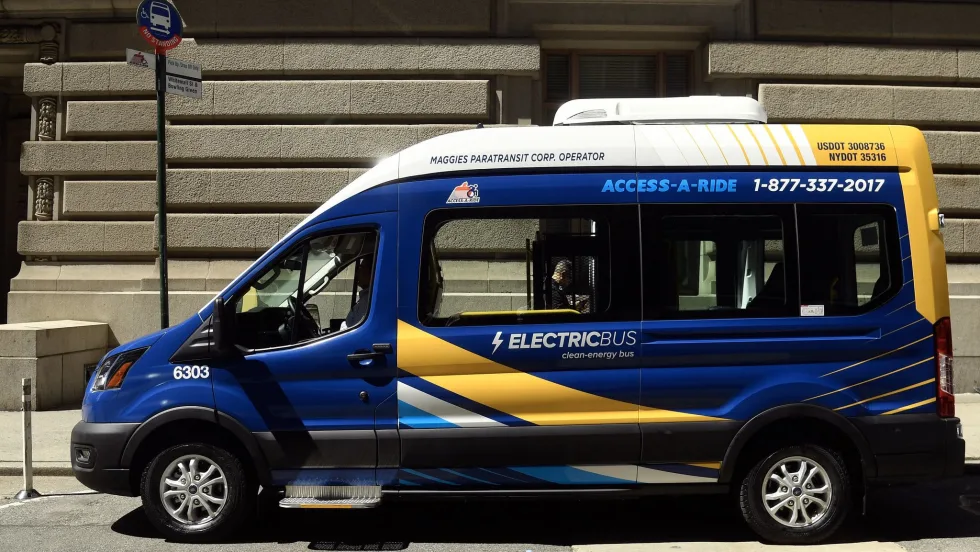
35 Years of the ADA, Making Travel Easier for Seniors
Thirty-five years after the passage of the Americans with Disabilities Act of 1990 (ADA), the impact of this landmark piece of civil rights legislation cannot be overstated.
Read More →
Driving Performance with Purpose: How I Lead One of Greyhound’s Top Teams
Safety, on-time performance, and customer experience are critical elements in intercity bus operations. But getting them right doesn’t come down to plans or protocols alone. It comes down to execution. How well your team performs on the ground, in real time, is what defines success.
Read More →
Navigating Emerging Privacy Laws: A Call to Action for Service Providers in Mass Transit
With Data Privacy Day Jan. 28, I want to spotlight a critical challenge faced by service providers in the mass transit sector: managing personal information responsibly in an era of rapidly evolving privacy regulations.
Read More →
Human Trafficking Awareness: What Public Transportation Can Do?
January is National Slavery and Human Trafficking Prevention Month in the U.S., and January 11 is National Human Trafficking Awareness Day.
Read More →
Want to Improve Transit Safety and Operations? Break Down the Silos
Retrieving and reviewing data and video can be a cumbersome process for fleet managers. Each system or tool provides a piece of the puzzle, but seeing the complete picture requires tedious manual synchronization.
Read More →
Ensuring Public Transit Cybersecurity Through Robust Protective Measures
In today’s highly connected world, cybersecurity is of utmost importance, particularly for transportation agencies overseeing transit bus systems that rely increasingly on sophisticated technologies, including the use of data analytics in traffic signal networks, to manage and operate their systems.
Read More →
How Advances in Thermal Management Revolutionize Urban Mobility
In the daily hustle and bustle of city life, transit buses serve as the backbone of urban transportation, allowing millions of city dwellers to get from point A to point B each day reliably.
Read More →
The Evolution of Bus Design
Thirty years ago, drivers not only had to drive the bus and navigate heavy traffic, but they were also responsible for tasks like supervising passenger loading and unloading, selling tickets, and providing passengers with various kinds of information, all while sitting in an often ill-fitting workstation.
Read More →
What 'Transit Safety 101' Really Means
Safety, Safety, Safety. This word is used repeatedly, and in many contexts, without most people understanding what it actually means.
Read More →