



Transit Emergency: What Can You Do to Stay Safe?
Recent national incidents have put increased attention on safe commuting and what passengers can do to protect themselves during a transit emergency. “The most important tip anyone can follow is to wait for the instructions of the crew,” said Scott Sauer, chief system safety officer for SEPTA. “Crews know the equipment best and have been trained to safely remove passengers from vehicles should the situation warrant evacuation...

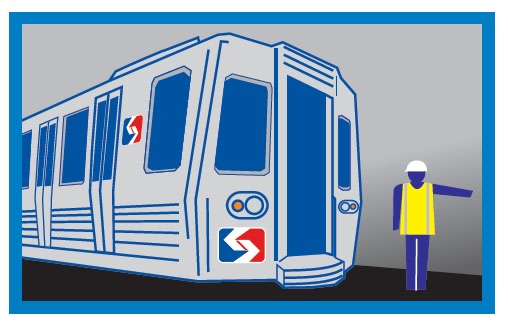
Recent national incidents have put increased attention on safe commuting and what passengers can do to protect themselves during a transit emergency.
“The most important tip anyone can follow is to wait for the instructions of the crew,” said Scott Sauer, chief system safety officer for the Southeastern Pennsylvania Transportation Authority (SEPTA). “Crews know the equipment best and have been trained to safely remove passengers from vehicles should the situation warrant evacuation. Employees are also in touch with their agencies’ Control Centers and can have emergency responders dispatched to the scene and, if needed, power cut from the electrified third rails.”
RELATED:Metrolink train collides with truck, derails
If the crew is unable to assist passengers, then riders will need to take action. “Railcar emergency exit doors and windows are clearly marked with directions on how to safely open them,” said Sauer.
If the incident is contained to one car, passengers should move to the next car. If at a station, passengers should evacuate to the platform. If the incident occurred in a tunnel, passengers need to walk to the nearest station or emergency exit and get above ground as soon as they can.
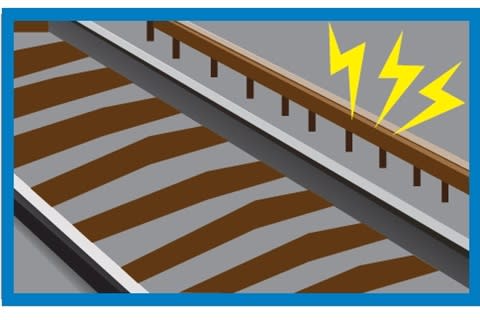
“It is possible that riders will have to exit into the track area, but they need to be aware that there could be adjacent tracks,” said Sauer. “Only after you have checked to make sure there is no oncoming train, should you carefully walk over the tracks and away from the train as quickly and safely as possible.”
In addition to tips for transit riders, there are precautions motorists should take when driving near train tracks and around grade crossings.
“When the warning signals sound and lights indicating that the gates are closing FLASH, drivers should not speed up and try to pass under the crossing gates,” said Sauer. “There are markers on the road that indicate the safest distance from the grade crossing vehicles should be stopped when the gates are down.”
Sauer advises that, if a driver does get stuck on the tracks and a train is coming, the first instinct should be to get out of the vehicle immediately and move from the auto at a 45-degree angle away from the tracks and in the direction the train is coming. This will avoid being hit by possible debris caused by an impact. “If the gates come down on top of a car, the driver should keep going, if possible,” said Sauer. “The gates will break off and allow a vehicle to get off of the tracks.”
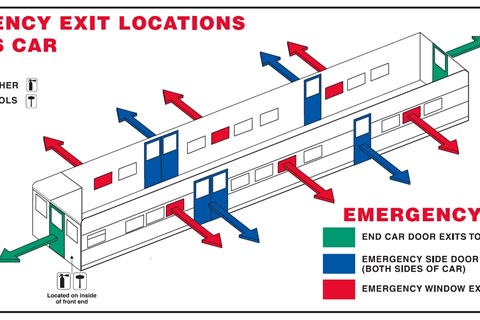
An example of SEPTA's emergency signage showing railcar emergency exits.
If car gets caught at a crossing and there is no train coming, drivers should get all passengers out of the vehicle and call the phone number found on the gates or in the area of the gates at every grade crossing in the country.
RELATED:Metro-North 'third rail' is a focus of crash inquiry
“The phone number will alert the transit agency to a vehicle being trapped on the tracks and allow crews to stop trains traveling in the area. Drivers can also call 9-1-1 to alert emergency responders to the situation so that rescue can be dispatched immediately,” said Sauer.
“By keeping these simple guidelines in mind when commuting on mass transit or traveling in the vicinity of train tracks, the public is taking an important step in protecting themselves and others,” Sauer added.
More Blog Posts
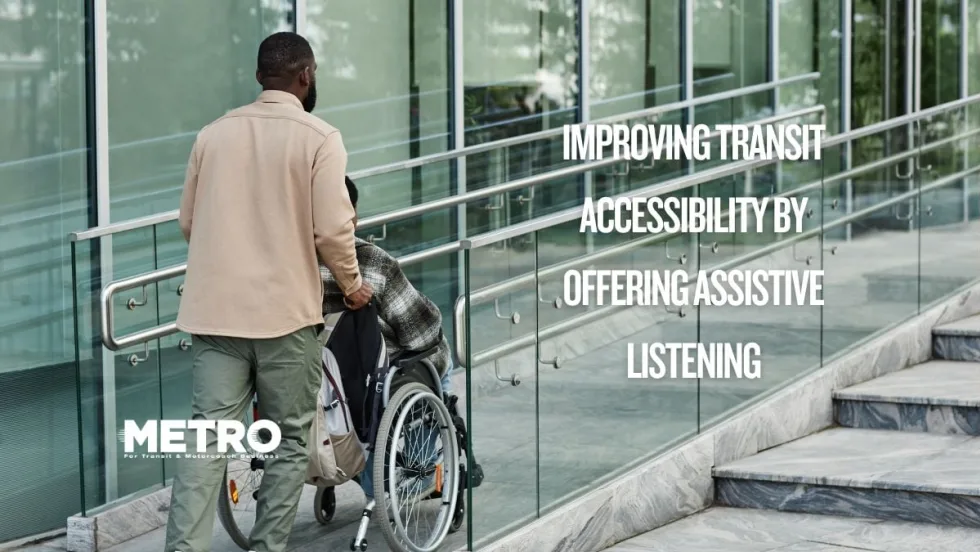
Improving Transit Accessibility by Offering Assistive Listening
Did you know that there are literally tens of millions of people worldwide with hearing loss, many of whom will use some form of public transit at some point?
Read More →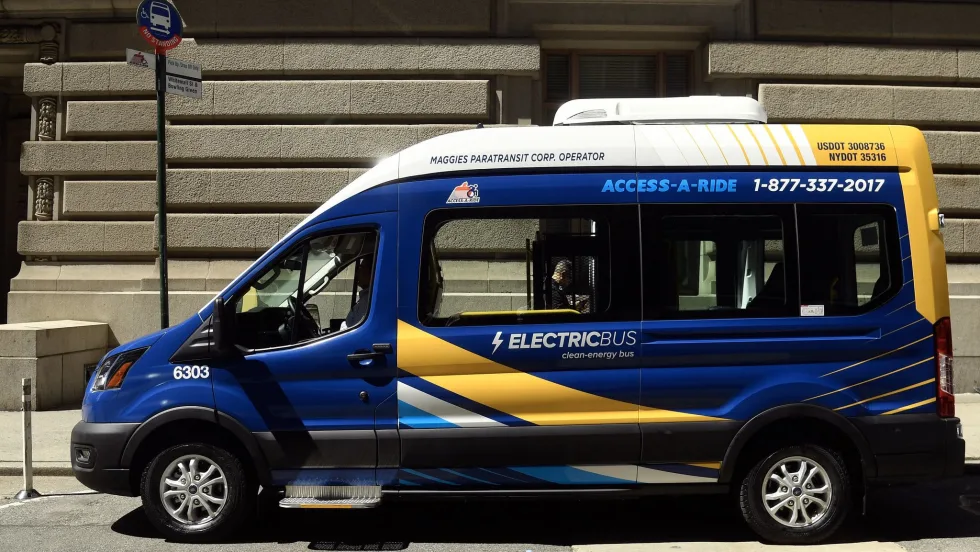
35 Years of the ADA, Making Travel Easier for Seniors
Thirty-five years after the passage of the Americans with Disabilities Act of 1990 (ADA), the impact of this landmark piece of civil rights legislation cannot be overstated.
Read More →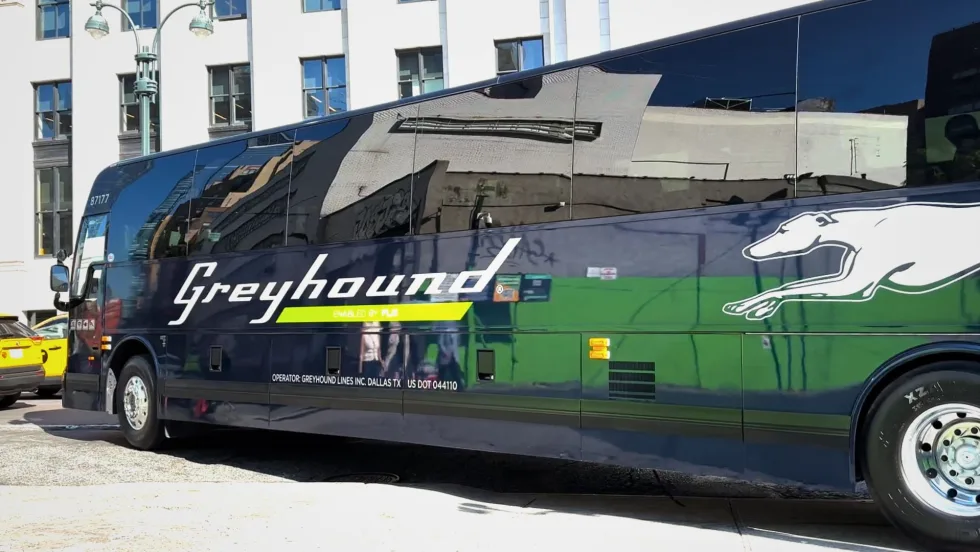
Driving Performance with Purpose: How I Lead One of Greyhound’s Top Teams
Safety, on-time performance, and customer experience are critical elements in intercity bus operations. But getting them right doesn’t come down to plans or protocols alone. It comes down to execution. How well your team performs on the ground, in real time, is what defines success.
Read More →
Navigating Emerging Privacy Laws: A Call to Action for Service Providers in Mass Transit
With Data Privacy Day Jan. 28, I want to spotlight a critical challenge faced by service providers in the mass transit sector: managing personal information responsibly in an era of rapidly evolving privacy regulations.
Read More →
Human Trafficking Awareness: What Public Transportation Can Do?
January is National Slavery and Human Trafficking Prevention Month in the U.S., and January 11 is National Human Trafficking Awareness Day.
Read More →
Want to Improve Transit Safety and Operations? Break Down the Silos
Retrieving and reviewing data and video can be a cumbersome process for fleet managers. Each system or tool provides a piece of the puzzle, but seeing the complete picture requires tedious manual synchronization.
Read More →
Ensuring Public Transit Cybersecurity Through Robust Protective Measures
In today’s highly connected world, cybersecurity is of utmost importance, particularly for transportation agencies overseeing transit bus systems that rely increasingly on sophisticated technologies, including the use of data analytics in traffic signal networks, to manage and operate their systems.
Read More →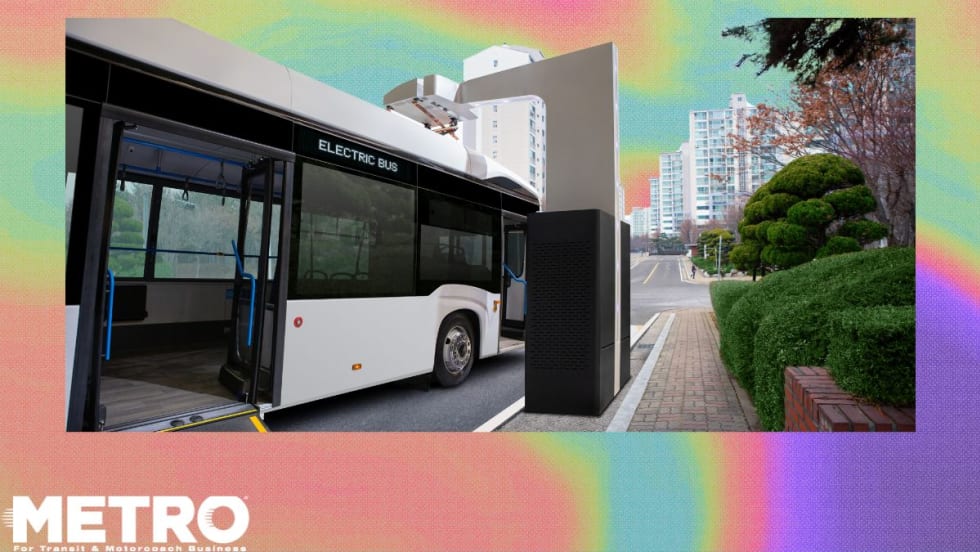
How Advances in Thermal Management Revolutionize Urban Mobility
In the daily hustle and bustle of city life, transit buses serve as the backbone of urban transportation, allowing millions of city dwellers to get from point A to point B each day reliably.
Read More →
The Evolution of Bus Design
Thirty years ago, drivers not only had to drive the bus and navigate heavy traffic, but they were also responsible for tasks like supervising passenger loading and unloading, selling tickets, and providing passengers with various kinds of information, all while sitting in an often ill-fitting workstation.
Read More →
What 'Transit Safety 101' Really Means
Safety, Safety, Safety. This word is used repeatedly, and in many contexts, without most people understanding what it actually means.
Read More →