



Torrance Transit marks 70 years with new gasoline-electric fleet
The agency hopes to have an all-hybrid bus fleet in place by FY2015/2016.
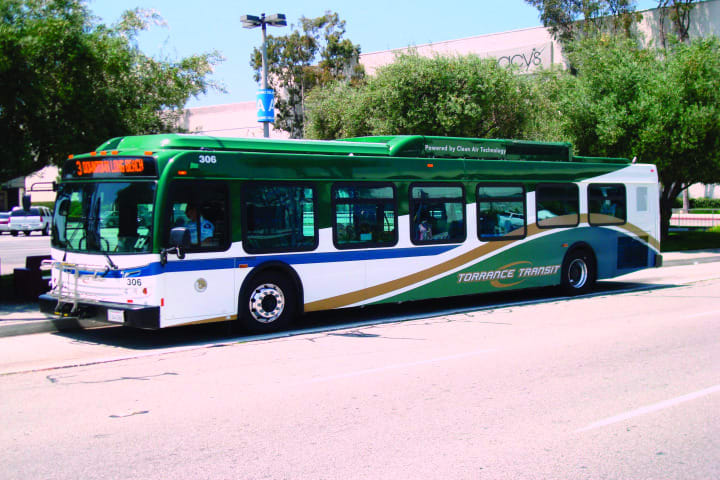
In June, Calif.-based Torrance Transit took delivery of 10 New Flyer gasoline-electric hybrid buses complete with new branding.
[IMAGE]Torrance.jpg[/IMAGE]Purchased as part of the Cooperative Procurement Pilot Program using ARRA funds, Torrance Transit recently rolled out the first of its New Flyer gasoline-elecric hybrid buses in June.
In June, Calif.-based Torrance Transit took delivery of 10 New Flyer gasoline-electric hybrid buses complete with new branding. The new buses are expected to usher in the future, as the agency celebrates its 70th year in operation.
"The year 2010 marks the 70th anniversary of Torrance Transit and, to celebrate this milestone, we elected to modernize our fleet, rebrand our image and kick it all off with the big event we held in June," Transit Director Kim Turner said. "We also have an ongoing marketing campaign to launch the 'new' Torrance Transit."
The 41-foot New Flyer buses, manufactured in St. Cloud, Minn., feature Ford V-10 Triton (gasoline) and ISE Hybrid Drive System (electric) propulsion; are ADA compliant; and seat 38 adult passengers with room for two wheelchairs.
"Our plan is to reduce our carbon footprint with the acquisition of these new buses powered by clean air technology and reduce preventive maintenance costs," Turner said.
The transit agency is currently pursuing an aggressive Fleet Modernization Project to transition its current all-diesel bus fleet - some of which are approaching nearly 18 years in age (and 600,000 miles of service life) - to more environmentally friendly hybrid-electric buses by FY 2015/2016.
In June 2009, Torrance Transit began Phase I of its Three-Phase Fleet Modernization Project. "The overall project cost is roughly $34 million, as gasoline-electric hybrids are approximately $650,000 per vehicle in FY 2010 dollars," Turner said.
In September 2006, Torrance Transit, along with several other transit agencies and cities, entered into a Cooperative Procurement Pilot Program (CPPP) with the City of Montebello to purchase alternative-fueled vehicles.
The CPPP allowed all participating agencies to buy buses at a discount price, requiring only a 10 percent local match, instead of the traditional 20 percent match mandated by the FTA.
"The goal was to take advantage of the economies of scale by creating a larger bidding process that would be more competitive and, ultimately, result in unit cost savings and better use of transit dollars," explained Turner, who added that the first 10 hybrid buses were purchased, in part, with funds from the American Recovery and Reinvestment Act of 2009.
Torrance Transit, which has a fleet of 52 buses, began bus service Jan. 15, 1940, with three leased 1931 Mack-33 buses. In 1986, it moved into a newly constructed 32,000-square-foot facility that houses Torrance Transit's fleet services, operations and administration divisions.
More Bus
LA Metro September Ridership Climbs 3.9%, Led by Rail Growth
The agency recorded more than 27.2 million boardings, with rail ridership increasing 12.4% year over year and the D Line posting the largest gains.
Read More →
Frontrunner Bus Group Introduces XF Low-Floor Bus with Enhanced Accessibility
The new mid-sized bus features a full flat-floor design, eight-inch curbside step-in height, and zero-entry rear ramp to improve passenger access and operational flexibility.
Read More →
Scenes from APTA TRANSform & EXPO 2026
Transit leaders, manufacturers, and industry professionals gathered in Chicago to explore new technologies, share ideas, and discuss the future of public transportation.
Read More →
More Than a Summer Job: Building the Next Generation of Transit Talent
The Delaware River Port Authority and PATCO have transformed their internship program into a hands-on professional development experience that introduces students to the breadth of transportation careers — and creates a pipeline for future employees.
Read More →
LA Metro Board Awards 220 Battery-Electric Bus Contract to ENC
The contract, which is the largest base award of battery-electric buses by a U.S. transit agency, will be built in Southern California, sustaining good jobs as LA prepares to welcome the world in 2028
Read More →
Public Transit Conference Returning to GFX in 2027, Call for Papers Now Open
The Call for Papers is now open, allowing transit agency professionals and industry experts to help shape the PTC educational program by submitting session ideas for consideration.
Read More →
Indian River Transit’s Community-Focused Approach Earns National Recognition
Named APTA’s 2026 Outstanding Public Transportation System in its size category, Florida’s Indian River County transit system continues to grow ridership through fare-free service and a focus on evolving community needs.
Read More →
ENC Lands MATA Contract and More in Biz Briefs
In this edition of Biz Briefs, we spotlight the latest developments shaping the future of mobility.
Read More →
From Surviving to Thriving: Building Stronger Transportation Organizations
Bus Business Consultants founder Brian Dickson shares lessons on leadership, organizational health, and creating options for long-term success in a changing transportation industry.
Read More →
Everett Transit, Community Transit Outline Consolidation Agreement
The proposed agreement calls for a 50% increase in bus service in Everett, a new microtransit zone, continued paratransit service, and the transfer of Everett Transit operations to Community Transit.
Read More →