




RELATED: Can Public Transportation Save the World From Climate Change
12 global cities commit to 2025 zero-emission bus plan
By signing the C40 Fossil-Fuel-Free Streets Declaration this week, the pioneering city leaders also pledged to ensure that a major area of their city is zero emission by 2030.
October 26, 2017
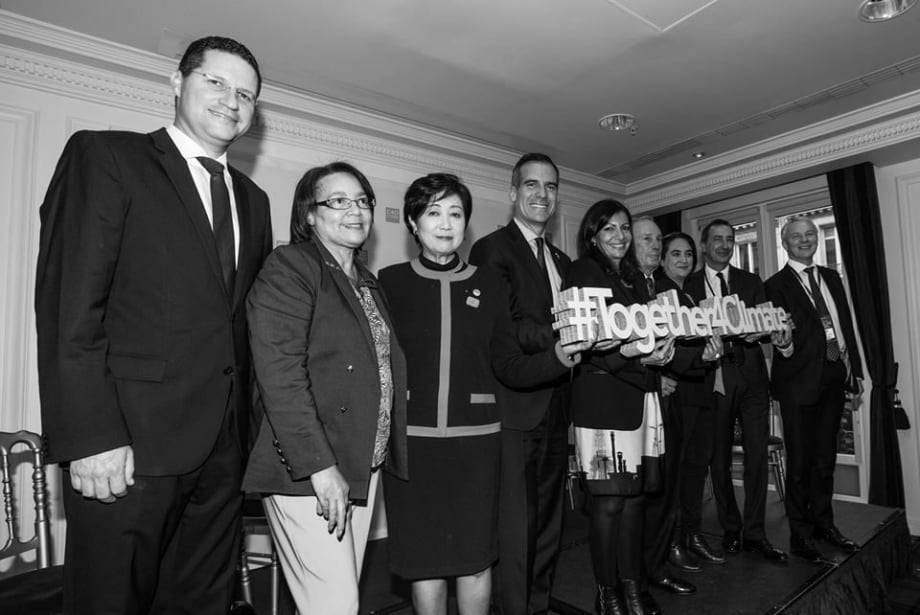
By signing the C40 Fossil-Fuel-Free Streets Declaration this week, the pioneering city leaders pledged to procure only zero-emission buses from 2025 and ensure that a major area of their city is zero emission by 2030. Photo: C40 Cities
5 min to read
By signing the C40 Fossil-Fuel-Free Streets Declaration this week, the pioneering city leaders pledged to procure only zero-emission buses from 2025 and ensure that a major area of their city is zero emission by 2030. Photo: C40 Cities
The mayors of London, Paris, Los Angeles, Copenhagen, Barcelona, Quito, Vancouver, Mexico City, Milan, Seattle, Auckland & Cape Town committed to a series of ambitious targets to make their cities greener, healthier and more prosperous. By signing the C40 Fossil-Fuel-Free Streets Declaration this week, the pioneering city leaders pledged to procure only zero-emission buses from 2025 and ensure that a major area of their city is zero emission by 2030. The policies are designed to fight air pollution, improve the quality of life for all citizens, and help tackle the global threat of climate change.
Signatories to the Declaration “envision a future where walking, cycling, and shared transport are how the majority of citizens move around our cities.”
The cities therefore commit to:
Increase rates of walking, cycling and the use of public and shared transport.
Reduce the number of polluting vehicles on city streets.
Lead by example by procuring zero emission vehicles for city fleets.
Collaborate with suppliers, fleet operators and businesses to accelerate the shift to zero emissions vehicles and reduce vehicle miles in cities.
Cities will report back every two years on the progress they are making towards the goals of the C40 Declaration.
“Air pollution caused by petrol and diesel vehicles is killing millions of people in cities around the world. The same emissions are also causing climate change,” said Anne Hidalgo, Mayor of Paris and C40 Chair. “In Paris we are taking bold action to prioritise the streets for pedestrians and cyclists. Working with citizens, businesses and mayors of these great cities we will create green and healthy streets for future generations to enjoy.”
“The largest sources of air pollution are also the largest sources of carbon emissions — and in many cities, transportation is the biggest culprit,” said UN Special Envoy for Cities and Climate Change and C40 Board President, Michael R. Bloomberg. “C40 Mayors understand thriving cities require clean air. By switching to cleaner vehicles, we can fight climate change and save many lives.”
“I am absolutely committed to tackling the deadly effects of toxic air on Londoners and making London a zero carbon city,” said Sadiq Khan, Mayor of London. “That’s why I am incredibly proud that today in London we have introduced the pioneering T-Charge, the toughest emission standard of any city in the world, which will help drive down the number of dirty vehicles polluting our roads and our lungs. We are leading the fight to clean up our filthy air and protect our citizens from the devastating consequences of climate change. “This is just the first step – we are introducing further world-leading restrictions on polluting vehicles over the next few years, as well as cleaning up our bus fleet and keeping our pledge not to buy a single new double decker diesel bus. We are also building brand new cycle lanes right across the city and focusing on reducing pollution around schools. I want to make London one of the greenest cities in the world – that’s why I’m putting walking, cycling and zero emission public transport right at the heart of Londoners’ day-to-day lives alongside energy efficient buildings, clean energy and increased recycling.”
“In Copenhagen we believe that citizens have a right to clean air. We therefore have the ambitious goal of becoming the world’s first C02 neutral capital by 2025 and continuously try to improve air quality,” said Frank Jensen, Lord Mayor of Copenhagen. “This is achieved through a green transition of our transportation, energy production and energy consumption. With this commitment we hope to inspire other cities to act.”
“Cities have to be the real protagonists in the fight against climate change, and to tackle this challenge it’s imperative to have greater powers and a bigger budget” said Ada Colau, Mayor of Barcelona. “Barcelona is working to gain 165 hectares of green space in the next few years, to triple the number of kilometres covered by bike lanes, to boost public transport, to cut journeys in private vehicles by 21%, and to implement the superblock plan and create more space for pedestrians. In Paris, we once again express our commitment to the climate, set out with over 800 city entities, to cut emissions by 40% and increase urban greenery by 1m2 per inhabitant”.
"Tacking climate change requires bold mobility policies in cities. The transport sector accounts 60% of CO2 emissions in Mexico City, and private vehicles represent 80% of the total fleet”, said Miguel Ángel Mancera, Mayor of Mexico City. “In Mexico City we are taking concrete actions to foster sustainable mobility with BRT corridors, cyclist infrastructure and friendly streets for pedestrians”.
"Responding to climate change's threat requires big thinking and bold action,” said Tim Burgess, Mayor of Seattle. “By reaffirming our commitment to a zero-emission transportation system, Seattle is proud to join our friends around the world in demonstrating the power of cities to lead on climate."
"We need structural measures to fight air pollution and its impact on the health of citizens – said Mayor of Milan, Giuseppe Sala. More than ever before, as mayors of the world cities most committed to tackle environmental challenges, we must set ambitious targets. Milan invests in a better mobility, in particular by strenghthening public transportation and by expanding car, bike and motorbike sharing opportunities. We want cities without polluting vehicles and with much cleaner air. We owe this to our citizens".
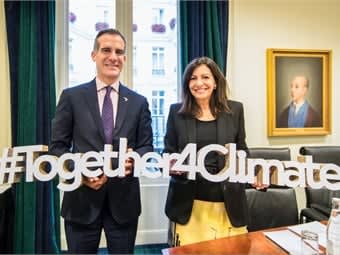
Los Angeles Mayor Eric Garcetti and Paris Mayor Anne Hidalgo were signatories of the C40 pledge. Photo: C40 Cities
"This is the time for cities to take bold action towards fossil fuel free future,” said Mauricio Rodas, Mayor of Quito. “Quito is ready to lead the way and committed to provide a better more resilient, low carbon and sustainable local development for all our citizens."
“In Auckland, our largest single contributor to greenhouse gas emissions is from transport – around 40%, so signing this declaration signals how serious we are about tackling climate change,” said Phil Goff, Mayor of Auckland. “With more than one-third of New Zealand’s population and the majority of its growth, Auckland has a key leadership role to play and we are committed to transforming the way our people move and delivering a clean, green city for all.”
“Los Angeles is already leading the way with our landmark program to build the largest municipal electric vehicle fleet in America,” said Los Angeles Mayor Eric Garcetti. “This pledge expands that effort, and affirms our commitment to building cleaner, healthier communities across our city.”
More Technology

From Hardware to Digital Partner: Luminator Charts Its Next Chapter
CEO Magnus Friberg discusses Luminator’s shift toward becoming a digital partner, the growing importance of software and interoperability, and how AI can help agencies improve operations and passenger experience.
Read More →
Beyond the Checklist: A Structured Approach to Transit Maintenance
Reliability-Centered Maintenance helps transit agencies move beyond routine checklists to focus limited resources on the assets and failures that have the greatest impact on safety, reliability, and service.
Read More →
NJ TRANSIT Advances Bus Technology Upgrades Across Statewide Fleet
More than 1,500 buses now feature upgraded technology designed to improve arrival predictions and provide free Wi-Fi, with deployment expected to reach nearly 2,000 buses by the end of 2026.
Read More →

Building a Flexible Path to Transit Electrification
John Hroncich discusses BAE Systems’ modular and scalable approach, lessons learned from decades of real-world operations, and how agencies can identify electrification strategies that fit their fleets.
Read More →
Biz Briefs: Alstom Lands Canadian Contract, LYT to Supply California TSP, and More
In METRO's latest installment, we take a look at recent news from Complete Coach Works, Beep, FlixBus, and more partnerships making headlines across the transportation sector.
Read More →
Sponsored•September 8, 2026
From Legacy Silos to Conversational Intelligence
What if transit leaders could ask any operational question and get a trusted answer in seconds? Conversational AI is transforming how agencies use their data.
Read More →
USDOT Announces Rail Vehicle Replacement Grants, Chattanooga AV Shuttle Funding
More than $191 million in federal funding will help three transit agencies replace aging rail vehicles and support a new autonomous shuttle service in Chattanooga.
Read More →
Bus Tech Talk: Keeping Transit Technicians Ahead of the Technology Curve
LA Metro’s Obed Mejia discusses technician training, evolving maintenance technology, fleet replacement, and strategies for getting the most out of today’s transit fleets.
Read More →
Biz Briefs: RIPTA Unveils New Frontrunners, Clevland RTA Adds New Siemens, and More
In METRO's latest installment, we take a look at recent news from Siemens, Prevost, Dodge, and more partnerships making headlines across the transportation sector.
Read More →
Why Simulating Pedestrian Movement Has Become Essential for Modern Rail Stations
Pedestrian microsimulation is helping rail planners identify bottlenecks, test station designs, and prepare complex transit hubs for growing passenger volumes.
Read More →