



Alexander Dennis lands Berlin double-decker bus contract
The Enviro500 for Berlin will be approximately 45 feet long with three doors, two staircases, and 80 seats.


In a further step, BVG’s current plans envisage a fleet of 200 Enviro500 on the streets of Berlin in the near term.
Photos courtesy Alexander Dennis
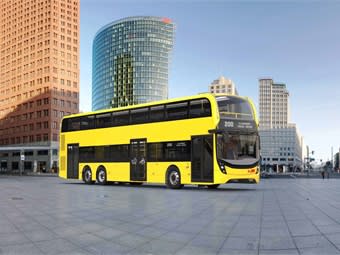
In a further step, BVG’s current plans envisage a fleet of 200 Enviro500 on the streets of Berlin in the near term.
Photos courtesy Alexander Dennis
Berliner Verkehrsbetriebe (BVG) awarded Alexander Dennis a contract to supply Enviro500 three-axle double-deck buses.
The Enviro500 for Berlin will be approximately 45-feet long with three doors, two staircases, and 80 seats. They will be comprehensively tailored to the requirements of operation in Berlin, and will enhance passengers’ journey experience through new specification features. The first new buses are due to arrive in Berlin in 2020.
An initial delivery of two pre-series vehicles has been agreed upon. After successful tests and trial operation, the acceptance of a minimum of 70 vehicles is guaranteed. In a further step, BVG’s current plans envisage a fleet of 200 Enviro500 on the streets of Berlin in the near term. The present decision of BVG’s supervisory board allows the order of up to 430 buses from the framework contract. The maximum investment volume of the contract is approximately $252 million.
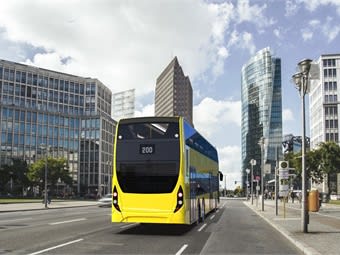
Alexander Dennis’s Enviro500 vehicles are the world’s leading three-axle double deck buses, offering fuel efficiency thanks to a lightweight aluminum body structure.
BVG operates around 1,500 buses, which last year alone transported 441 million passengers. More than 400 double deckers are used on BVG services in Berlin. This is the largest fleet of its kind in continental Europe and one of the largest in the world.
Alexander Dennis’s Enviro500 vehicles are the world’s leading three-axle double deck buses, offering fuel efficiency thanks to a lightweight aluminum body structure. An Enviro500 double decker was trialed in service in Berlin in October 2015. Alexander Dennis subsequently participated in BVG’s multi-stage tender process, as a result of which the company has been chosen to supply the new double decker fleet for Berlin.
More Bus
Biz Briefs: New Flyer Delivers in Columbus, Houston, Beep and Freebee Merge, and More
In this edition of Biz Briefs, we spotlight the latest developments shaping the future of mobility.
Read More →
People Movement: Dan Dipert Coaches Adds Third-Generation Leader, Keolis Names New Valley Metro VP/GM, and More
In this edition, we also cover recent appointments and announcements at the Wabtec, SilverRide, HNTB, and more, showcasing the individuals helping to shape the future of transportation.
Read More →
New York MTA Plans Largest Bus Fleet Upgrade in More Than a Decade
The agency is seeking manufacturers for 650 new CNG buses to replace aging vehicles, improve reliability, and advance its broader fleet modernization strategy.
Read More →
Building a Flexible Path to Transit Electrification
John Hroncich discusses BAE Systems’ modular and scalable approach, lessons learned from decades of real-world operations, and how agencies can identify electrification strategies that fit their fleets.
Read More →
Bus Tech Talk: Keeping Transit Technicians Ahead of the Technology Curve
LA Metro’s Obed Mejia discusses technician training, evolving maintenance technology, fleet replacement, and strategies for getting the most out of today’s transit fleets.
Read More →
Biz Briefs: RIPTA Unveils New Frontrunners, Clevland RTA Adds New Siemens, and More
In METRO's latest installment, we take a look at recent news from Siemens, Prevost, Dodge, and more partnerships making headlines across the transportation sector.
Read More →
People Movement: Holly Arnold Joins Transdev and More
In this edition, we also cover recent appointments and announcements at Pace, CamTran, MCI, and more, showcasing the individuals helping to shape the future of transportation.
Read More →
The High Cost of Transit Buses: Industry Leaders Look to Procurement Reform
Transit leaders and policymakers examine how standardized bus designs, streamlined procurement, and predictable funding could help agencies stretch budgets and deliver better service.
Read More →
The Business Voice Behind Public Transportation
As chair of APTA’s Business Members Board of Governors, Ray Melleady explains how more than 850 business members are partnering with transit agencies to advance funding, innovation, and industry-wide collaboration.
Read More →
From Surviving to Thriving: Building Stronger Transportation Organizations
Bus Business Consultants founder Brian Dickson shares lessons on leadership, organizational health, and creating options for long-term success in a changing transportation industry.
Read More →