




RELATED: New Flyer opens innovation lab for advanced bus tech
All New Flyer facilities now capable of building battery-electric buses
The Anniston, Ala., facility now joins all other New Flyer locations with capability to manufacture the Xcelsior CHARGE™ battery-electric bus, including Winnipeg, Manitoba, and Crookston and St. Cloud, Minn.
January 4, 2018
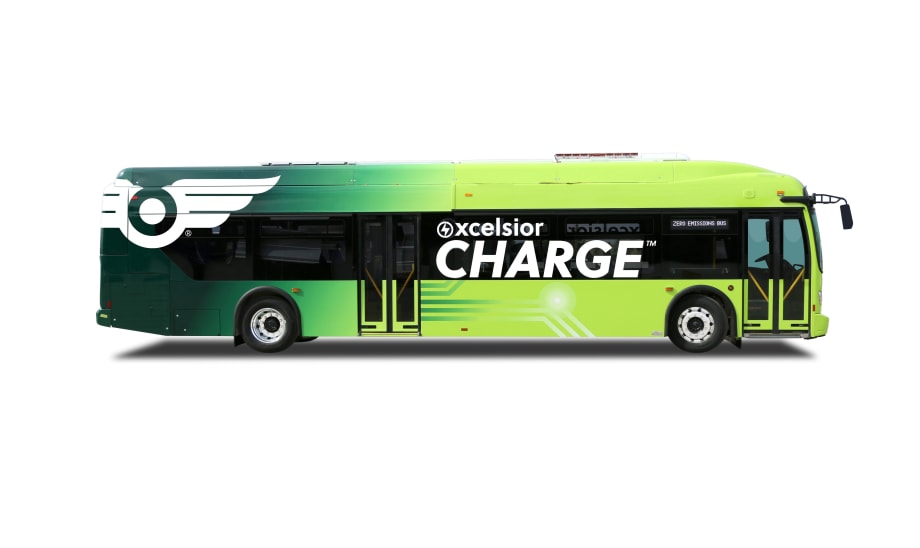
The Xcelsior CHARGE™, New Flyer’s next-generation battery-electric bus, debuted at the triennial APTA EXPO in October 2017 in Atlanta.
3 min to read
The Xcelsior CHARGE™, New Flyer’s next-generation battery-electric bus, debuted at the triennial APTA EXPO in October 2017 in Atlanta.
New Flyer of America Inc. (New Flyer) announced that its Anniston, Ala. facility has successfully completed its first full build of an Xcelsior CHARGE™ zero-emission, battery-electric, heavy-duty transit bus.
The Anniston facility now joins all other New Flyer locations with capability to manufacture the Xcelsior CHARGE™ battery-electric bus, including Winnipeg, Manitoba, and Crookston and St. Cloud, Minn. New Flyer’s Anniston facility is also home to the Vehicle Innovation Center, opened in October 2017 and dedicated to advancing bus and coach technology, specifically in electric and autonomous propulsions. It is the first and only innovation lab of its kind in North America.
The Xcelsior CHARGE™, New Flyer’s next-generation battery-electric bus, debuted at the triennial APTA EXPO in October 2017 in Atlanta. It features the Xcelsior transit bus platform with enhancements of extended-range batteries (made with U.S.-based technology and manufacturing), hill-climbing ability, the highest passenger load-carrying capacity, and ability to recharge with interoperable equipment available from globally recognized charging system suppliers, according to the company. The Xcelsior CHARGE™ is available in 35-, 40-, and 60-foot bus rapid transit articulated models.
“The completion of our first zero-emission, battery-electric Xcelsior CHARGE™ transit bus produced start-to-finish at our Anniston facility, is yet another major accomplishment for New Flyer,” said Kevin Wood, sr. VP, manufacturing and facilities, New Flyer of America. “Over the past two years, we invested significantly to establish Anniston as a leader in American bus manufacturing and advanced vehicle innovation. We are proud to bring electrification into the fold, and look forward to growing our footprint of zero-emission, innovative transportation that helps power America’s communities forward, on a safe and environmentally sustainable basis.”
Following the September announcement of a $25 million investment in renovations and expansions at the Anniston facility, and subsequent groundbreaking event commemorated by Alabama Governor Kay Ivey, New Flyer opened its Vehicle Innovation Center onsite in October 2017 to mark its evolution in and commitment to battery-electric bus manufacturing in Anniston.
The Vehicle Innovation Center is dedicated to the exploration and advancement of bus and coach technology and serves to:
Explore and advance bus and coach technology through sustainable research and development, fresh innovation, progressive manufacturing, and bold thinking.
Foster dialogue through discussion, education, and training on the latest zero-emission and autonomous driving vehicle technologies.
Engage learning through current and interactive exhibits, simulation and hands-on experiences, and observations.
Generate energy and commitment to clean air quality, safety, and economic benefits for people, communities, and business.
Harness the positive influence of collaboration, environmental stewardship, and social change to advance mobility solutions.
The New Flyer Anniston facility (formerly North American Bus Industries), was acquired by New Flyer in 2013 and consists of five buildings that manufacture transit buses from part fabrication, to high-strength frame welding, to final assembly. In 2015, New Flyer invested $20 million to transform the campus to a world-class LEAN manufacturing site capable of producing New Flyer’s Xcelsior® heavy-duty bus platform.
New Flyer currently employs 610 people in Alabama, and is expected to add approximately 60 people to the Anniston team in 2018. The NFI Group has over 50 years of experience in manufacturing zero-emission buses, and employs more American workers than any other U.S. bus manufacturer.
More Bus

New York MTA Plans Largest Bus Fleet Upgrade in More Than a Decade
The agency is seeking manufacturers for 650 new CNG buses to replace aging vehicles, improve reliability, and advance its broader fleet modernization strategy.
Read More →
Building a Flexible Path to Transit Electrification
John Hroncich discusses BAE Systems’ modular and scalable approach, lessons learned from decades of real-world operations, and how agencies can identify electrification strategies that fit their fleets.
Read More →
Bus Tech Talk: Keeping Transit Technicians Ahead of the Technology Curve
LA Metro’s Obed Mejia discusses technician training, evolving maintenance technology, fleet replacement, and strategies for getting the most out of today’s transit fleets.
Read More →
Biz Briefs: RIPTA Unveils New Frontrunners, Clevland RTA Adds New Siemens, and More
In METRO's latest installment, we take a look at recent news from Siemens, Prevost, Dodge, and more partnerships making headlines across the transportation sector.
Read More →
People Movement: Holly Arnold Joins Transdev and More
In this edition, we also cover recent appointments and announcements at Pace, CamTran, MCI, and more, showcasing the individuals helping to shape the future of transportation.
Read More →
The High Cost of Transit Buses: Industry Leaders Look to Procurement Reform
Transit leaders and policymakers examine how standardized bus designs, streamlined procurement, and predictable funding could help agencies stretch budgets and deliver better service.
Read More →
The Business Voice Behind Public Transportation
As chair of APTA’s Business Members Board of Governors, Ray Melleady explains how more than 850 business members are partnering with transit agencies to advance funding, innovation, and industry-wide collaboration.
Read More →
From Surviving to Thriving: Building Stronger Transportation Organizations
Bus Business Consultants founder Brian Dickson shares lessons on leadership, organizational health, and creating options for long-term success in a changing transportation industry.
Read More →
Finding the ‘Happy Medium’: Optimizing Maintenance Without Sacrificing Reliability
The key to maintenance optimization isn’t doing less work—it’s doing the right work at the right time on the right assets.
Read More →
LA Metro, City of West Hollywood, and Partners Advance Smarter Bus Lane Enforcement
The award-winning partnership combines AI-powered detection with human oversight to improve bus reliability, accessibility, and enforcement efficiency.
Read More →