




Related: Alstom Citadis tramway for Dubai
Alstom launches Attractis and SRS at UITP World Congress
Able to carry from 4,000 to up to 14,000 passengers per hour and per direction, Attractis can be easily adjusted to the level of ridership. Meanwhile, SRS is a breakthrough ground-based power charging system for all types of tramways, including the non-Alstom built.
June 8, 2015
SRS
4 min to read
All photos courtesy Alstom
Alstom launched two major innovative urban solutions at the UITP World Congress 2015, in Milan: Attractis, an integrated tramway system for growing cities, and SRS, a new ground-based static charging system for both trams and electrical buses.
“The Alstom’s strategy is driven by continuous innovation to develop and provide sustainable solutions, at an affordable cost, in order to respond to urban mobility needs. This is illustrated by the innovations launched at UITP. With these new solutions, Alstom reinforces its collaboration with cities to help them solve the economic and environmental challenges they are facing”, said Henri Poupart-Lafarge, Alstom Transport president.
Attractis
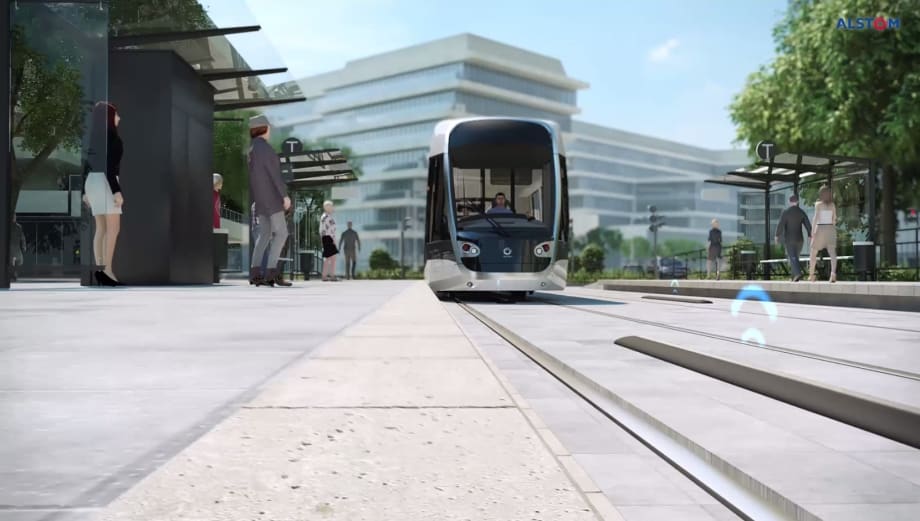
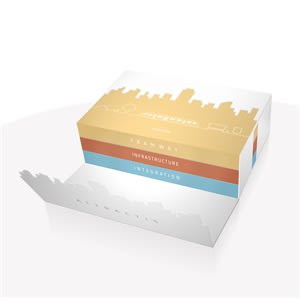
Attractis is an integrated tramway designed for fast growing cities with high population density but not yet equipped with a tram system. It integrates Alstom’s proven know-how and expertise and includes the manufacturing of the Alstom’s Citadis tramways, building the infrastructure and maintaining the entire tram system. In partnership with a civil works company, Alstom builds all the necessary infrastructure and ensures the testing and commissioning of the entire line working with the operator.
Able to carry from 4,000 to up to 14,000 passengers per hour and per direction, Attractis can be easily adjusted to the level of ridership. The footprint of a two-way Attractis line is comparable to that of a bus rapid transit (BRT). Should ridership increase, the capacity of Attractis can easily be adapted using the same dedicated lane, whereas the footprint of a BRT lane needs to be doubled.
To ensure the availability of Attractis in the record time of 30 months, Alstom developed an optimized construction methodology involving intelligent section-by-section scheduling of civil and electromechanical works to minimize construction time, disturbance and costs. The Attractis package also includes a 3D driving simulator, enabling drivers to practice during the construction period, further optimizing the timing of the project.
Attractis is also the first rail system to adopt ITxPT (Information Technology for Public Transport), an open IT architecture designed to improve interoperability between IT systems and decrease costs related to multiple equipment. With this new norm, the integration of multimodal urban transport systems (tram, bus, electric car sharing services etc.) is synchronized, allowing transport authorities to offer passengers innovative information solutions, journey planners and e-ticketing systems.
Designed to optimize acquisition costs and the total cost of ownership, Attractis offers up to 20% savings in investment compared to a traditional tramway system. Alstom can also provide project financing support to customers, including Public-Private Partnership schemes. An eco-friendly mode of transportation, the tramway generates at least three to 10 times less greenhouse gas emissions than car per passenger.km travelled and even less in countries using low-carbon electricity.
New infrastructure solutions with an extended use to road transportation
SRS
Autonomy and energy efficiency are important criteria in urban transport. With continued focus on ensuring the proper architectural integration of trams into city centers, Alstom expanded its range of catenary-free solutions with SRS, a breakthrough ground-based power charging system for all types of tramways, including the non-Alstom built. SRS allows vehicles to run autonomously between stops without the use of catenary, offering the best adapted response to preserve the cityscape. It is also designed to address the road market by supplying power to electrical buses through ground-based charging slots at stations. It can be used by a large range of electrical buses.
SRS is based on the technology and safety principles of the proven Alstom APS solution used by Citadis trams. Whereas APS supplies power to the tram while it is still running, SRS store energy recharged during tram stations stops in less than 20 seconds. Electrical power comes from compact power supply cabinets that are smoothly and easily integrated into stations. Collector shoes (contact blocks), fitted under the tram, make contact with the conductor rail, providing electric traction power to the tram. Supercapacitors installed on the roof of the tram store energy via a ground-based conductive rail which provides traction power to the vehicle through the collector shoes.
Alstom is the only manufacturer with the broadest and most reliable range of catenary-free solutions including APS, on-board batteries, supercapacitors and SRS, to ensure the proper architectural integration of trams into city centers, according to a company press release. For improved efficiency, these different technologies can be combined, as will be the case for the Citadis tram system of Rio, Brazil, which will run 80% on APS and 20% on supercapacitor.
More Rail

New York MTA Advances Final Contract for Second Avenue Subway Expansion
Contract Four is the largest in the Second Avenue Subway Phase 2 project and includes construction of station infrastructure, tracks, and signals for the subway expansion, MTA officials said. Work on Contract Four will begin in 2027.
Read More →
San Diego MTS Breaks Monthly Trolley Ridership Record
Agency officials said July’s ridership indicates MTS’s continued recovery from the pandemic.
Read More →
Report Examines NJ TRANSIT Reliability, Funding Challenges
The Garden State Initiative analysis examines the roles of Amtrak infrastructure, fleet management, and agency operations while recommending a more performance-based approach to improving reliability.
Read More →
Stadler, CapMetro Sign Long-Term Rail Fleet Support Agreement
Beginning in 2027, Stadler will provide on-site technical expertise, spare parts support, training, and obsolescence management to help extend the reliability and longevity of CapMetro’s GTW fleet.
Read More →
Biz Briefs: Alstom Lands Canadian Contract, LYT to Supply California TSP, and More
In METRO's latest installment, we take a look at recent news from Complete Coach Works, Beep, FlixBus, and more partnerships making headlines across the transportation sector.
Read More →
CATS Gold Line Marks 5 Years of Service, 2.8M Passenger Trips
With a six-mile expansion planned, the Charlotte streetcar is positioned to connect more neighborhoods and major transit hubs across the region.
Read More →
Why Simulating Pedestrian Movement Has Become Essential for Modern Rail Stations
Pedestrian microsimulation is helping rail planners identify bottlenecks, test station designs, and prepare complex transit hubs for growing passenger volumes.
Read More →
Amtrak Begins Major Construction at New York’s Sunnyside Yard
The new maintenance facility will support Amtrak’s Airo trainsets while improving maintenance efficiency and turnaround times in New York.
Read More →
Chicago Leaders Unveil Plans for O’Hare Airport Express Train
The privately developed project would offer a 15-minute trip between downtown and O’Hare’s Terminal 2, with trains operating every 15 minutes on a dedicated track. The service would use battery-electric trains and three existing freight rail rights-of-way.
Read More →
OCTA Maps Out 30-Year Strategy to Protect Coastal Rail Corridor
The draft feasibility report identifies strategies to protect the coastal rail line for decades as the agency continues near-term stabilization and sand placement efforts.
Read More →