



Amtrak Pacifc Surfliner, MLB team up for rail safety awareness
Partners with San Diego Padres, Los Angeles Angels and California Operation Lifesaver to highlight the importance of safety around train tracks.


The Pacific Surfliner travels along a 351-mile coastal rail route through San Diego, Orange, Los Angeles, Ventura, Santa Barbara and San Luis Obispo counties, serving 29 stations. Photo: Amtrak Pacific Surfliner
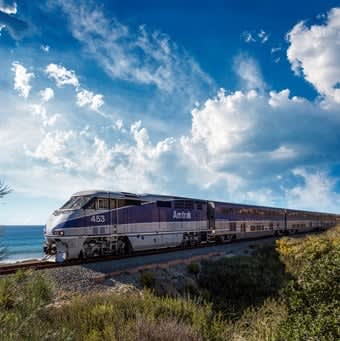
The Pacific Surfliner travels along a 351-mile coastal rail route through San Diego, Orange, Los Angeles, Ventura, Santa Barbara and San Luis Obispo counties, serving 29 stations. Photo: Amtrak Pacific Surfliner
In recognition of September Rail Safety Month and U.S. Rail Safety Week, the Amtrak® Pacific Surfliner® will highlight the importance of safety around train tracks with public education and outreach events in collaboration with California Operation Lifesaver (CAOL) and two Southern California Major League Baseball teams: the San Diego Padres and the Los Angeles Angels.
The Pacific Surfliner will host educational events featuring rail safety experts from CAOL on the dates listed below. Attendees will learn valuable tips for staying safe around railroad tracks, including those used by the Pacific Surfliner between San Diego, Orange County, Los Angeles, Ventura, Santa Barbara and San Luis Obispo counties.
Sunday, Sept. 16 at Angel Stadium, prior to the Angels game against the Seattle Mariners
Monday, Sept. 17 at Petco Park, prior to the Padres game against the San Francisco Giants
September is Rail Safety Month in California and Sept. 23 – 29, 2018 is U.S. Rail Safety Week across the nation. California leads the nation in annual rail fatalities for the most highway-rail grade and trespassing casualties, according to CAOL and the Federal Railroad Administration. Amtrak Pacific Surfliner and CAOL seek to reduce collisions, injuries and fatalities at rail grade crossings and on railroad rights-of-way through education, engineering, and enforcement.
“It’s critical that we work together to educate the public on ways to keep themselves and their loved ones safe around train tracks,” said Bryan MacDonald, chairman of the Los Angeles – San Diego – San Luis Obispo Rail Corridor Agency, which oversees the Pacific Surfliner service. “Walking, jogging, and taking pictures on or near railroad tracks are all illegal activities that are extremely dangerous and should always be avoided.”
Andrew Heaney, a starting pitcher for the Angels, recently recorded a rail safety radio spot encouraging fans to follow simple safety rules. “In baseball, you always have to run to first base and stay within the lines,” Heaney says in the radio spot. “It’s the same with trains. Remember to cross train tracks only at designated pedestrian or roadway crossings, and obey all posted warning signs and signals.”
Most accidents and incidents on railroad tracks are preventable by following these safety rules. Pedestrians are also urged to never walk on train tracks, and remember that trains always have the right of way and cannot stop quickly to avoid obstacles.
For more information or to request a free rail safety presentation, visit http://www.pacificsurfliner.com/safety/, http://www.caol.us/, or https://oli.org/
More Rail
Amtrak, CN Reach Agreements to Strengthen Passenger Rail Service, Safety
The agreement resolves a more than decade-long proceeding before the Surface Transportation Board concerning the terms and conditions for Amtrak services, such as the City of New Orleans, Illini/Saluki, and Wolverine.
Read More →
New York MTA Advances Final Contract for Second Avenue Subway Expansion
Contract Four is the largest in the Second Avenue Subway Phase 2 project and includes construction of station infrastructure, tracks, and signals for the subway expansion, MTA officials said. Work on Contract Four will begin in 2027.
Read More →
San Diego MTS Breaks Monthly Trolley Ridership Record
Agency officials said July’s ridership indicates MTS’s continued recovery from the pandemic.
Read More →
Report Examines NJ TRANSIT Reliability, Funding Challenges
The Garden State Initiative analysis examines the roles of Amtrak infrastructure, fleet management, and agency operations while recommending a more performance-based approach to improving reliability.
Read More →
Stadler, CapMetro Sign Long-Term Rail Fleet Support Agreement
Beginning in 2027, Stadler will provide on-site technical expertise, spare parts support, training, and obsolescence management to help extend the reliability and longevity of CapMetro’s GTW fleet.
Read More →
Biz Briefs: Alstom Lands Canadian Contract, LYT to Supply California TSP, and More
In METRO's latest installment, we take a look at recent news from Complete Coach Works, Beep, FlixBus, and more partnerships making headlines across the transportation sector.
Read More →
CATS Gold Line Marks 5 Years of Service, 2.8M Passenger Trips
With a six-mile expansion planned, the Charlotte streetcar is positioned to connect more neighborhoods and major transit hubs across the region.
Read More →
Why Simulating Pedestrian Movement Has Become Essential for Modern Rail Stations
Pedestrian microsimulation is helping rail planners identify bottlenecks, test station designs, and prepare complex transit hubs for growing passenger volumes.
Read More →
Amtrak Begins Major Construction at New York’s Sunnyside Yard
The new maintenance facility will support Amtrak’s Airo trainsets while improving maintenance efficiency and turnaround times in New York.
Read More →
Chicago Leaders Unveil Plans for O’Hare Airport Express Train
The privately developed project would offer a 15-minute trip between downtown and O’Hare’s Terminal 2, with trains operating every 15 minutes on a dedicated track. The service would use battery-electric trains and three existing freight rail rights-of-way.
Read More →