



APTA recognizes TheRide, Calif.'s VTA for sustainability accomplishments
First started in 2009, 133 public transit agencies and businesses have signed on to the APTA Sustainability Commitment. Currently, 38 signatories have received recognition.

The American Public Transportation Association (APTA) recognized six organizations for their outstanding achievements in sustainability. Public transit agencies and businesses voluntarily participate in the APTA Sustainability Commitment program and pledge to implement processes and actions that create continuous improvements in environmental, social and economic sustainability.
Based on specific measurable achievements, organizations are given Platinum, Gold, Silver and Bronze Level recognition.
The two public transit systems receiving Gold Level recognition are Ann Arbor Area Transportation Authority (Ann Arbor, Mich.) and the Santa Clara Valley Transportation Authority (San Jose, Calif.).
The two Silver Level recipients are Oakland, Calif.’s Bay Area Rapid Transit and the Calif.-based Santa Monica's Big Blue Bus. The two Bronze Level recipients are St. Petersburg, Fla.’s Pinellas Suncoast Transit Authority Cincinnati’s Southwest Ohio Regional Transit Authority.
First started in 2009, 133 public transit agencies and businesses have signed on to the APTA Sustainability Commitment. Currently, 38 signatories have received recognition.
"Sustainability is not only good for the environment but also makes good business sense," said Richard A. White, American Public Transportation Association acting president/CEO. "Congratulations to these six public transportation systems for being leaders in sustainability. They are making their communities more sustainable and serving as models for the public transit industry."
GOLD Level:
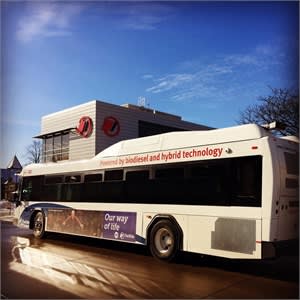
TheRide reduced its water usage by 43% over the last five years, in part, by using graywater instead of fresh, potable water in its bus washer. In addition, electricity usage was reduced by 18%. Through continued investment in upgrading its bus fleet to include 60% electric hybrid buses, TheRide also realized reductions in criteria air pollutants by one-third and cut fuel consumption by 15%. In 2014, TheRide rebuilt its Blake Transit Center to LEED Gold for BD+C standards featuring a snowmelt system to reduce the use of salt during the winter months and graywater collection for use in the facility's non-potable water needs in the facility. Additionally, TheRide has increased bus services and collaborated extensively with numerous partners in the greater Ann Arbor and Ypsilanti community, including the University of Michigan, to encourage greater public transit use and improve first/last mile connections to public transit stations.
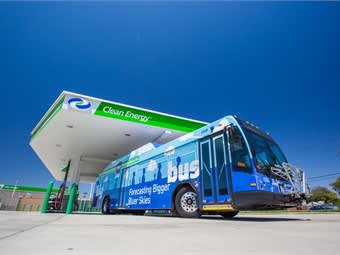
VTA reduced water usage by nearly 39% compared to the 2008 baseline year through an increase in drought-resistant landscaping, recycled water for bus washing, reduced irrigation levels, and an overall retrofit to its irrigation equipment and plumbing fixtures. Compared to 2008, the agency realized an impressive 57% reduction in waste production and a 27% increase in recycling rates, in part, through composting at one of its cafeterias and an expansion of its recycling program. VTA also installed numerous on-site solar panels at various facilities and participated in a residential solar group share program for its employees. VTA was a founding signatory of the APTA Sustainability Commitment in 2009.
Scott Sporleder
SILVER Level:
BART is committed to using more renewable power. BART has installed solar photo voltaic systems at two of its maintenance shops (250 and 267 kW) and at the Union City station bus canopy (150 kW) and has plans for more throughout the system. The agency has also reduced electricity demand by implementing lighting retrofits at its facilities. The agency is committed to transit-oriented development and is engaged in a total of 18 development projects with eight completed and many others under development. In response to stormwater quality issues, BART is incorporating bioretention areas at stations and parking lots to capture and treat runoff. The agency extensively promotes riding BART and provides a carbon calculator for riders to estimate the greenhouse gas savings realized by riding BART over driving. BART was a founding signatory of the APTA Sustainability Commitment in 2009.
Big Blue Bus received Silver Level recognition this year for its commitment to greening its fleet through alternative fuel vehicles. In 2013, Big Blue Bus retired the last of its diesel vehicles from its fleet, and now uses Renewable Natural Gas (RNG), a bio-gas derived from harvested landfill methane, to fuel its natural gas fleet. Big Blue Bus also installed 70 kw of solar photovoltaics at its bus facility and incorporated solar power at many of its bus stops.
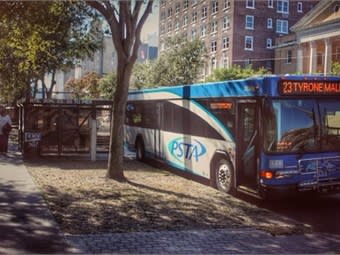
BRONZE Level:
PSTA upgraded its reporting system that tracks the agency's utilities and other key sustainability indicators on a monthly basis. The agency also expanded its transportation disadvantaged program to help reduce the cost of transportation for low income residents in Pinellas County, increasing participation from 2,000 to 5,800 riders per month. PSTA was a founding signatory of the APTA Sustainability Commitment in 2009.
SORTA has initiated audits of solid waste and energy at its facilities. The agency is pursuing investments to bale cardboard that saves the agency money through fewer recycling pick-ups while generating income from bale sales. As a result of its extensive recycling program, employees diverted 47,600 pounds of waste from the landfill in just eight months. The agency has plans to install LED lighting upgrades at two facilities. SORTA also engages employees around sustainability through its employee orientation program and quarterly outreach events.
More Technology

From Hardware to Digital Partner: Luminator Charts Its Next Chapter
CEO Magnus Friberg discusses Luminator’s shift toward becoming a digital partner, the growing importance of software and interoperability, and how AI can help agencies improve operations and passenger experience.
Read More →
Beyond the Checklist: A Structured Approach to Transit Maintenance
Reliability-Centered Maintenance helps transit agencies move beyond routine checklists to focus limited resources on the assets and failures that have the greatest impact on safety, reliability, and service.
Read More →
NJ TRANSIT Advances Bus Technology Upgrades Across Statewide Fleet
More than 1,500 buses now feature upgraded technology designed to improve arrival predictions and provide free Wi-Fi, with deployment expected to reach nearly 2,000 buses by the end of 2026.
Read More →

Building a Flexible Path to Transit Electrification
John Hroncich discusses BAE Systems’ modular and scalable approach, lessons learned from decades of real-world operations, and how agencies can identify electrification strategies that fit their fleets.
Read More →
Biz Briefs: Alstom Lands Canadian Contract, LYT to Supply California TSP, and More
In METRO's latest installment, we take a look at recent news from Complete Coach Works, Beep, FlixBus, and more partnerships making headlines across the transportation sector.
Read More →
From Legacy Silos to Conversational Intelligence
What if transit leaders could ask any operational question and get a trusted answer in seconds? Conversational AI is transforming how agencies use their data.
Read More →
USDOT Announces Rail Vehicle Replacement Grants, Chattanooga AV Shuttle Funding
More than $191 million in federal funding will help three transit agencies replace aging rail vehicles and support a new autonomous shuttle service in Chattanooga.
Read More →
Bus Tech Talk: Keeping Transit Technicians Ahead of the Technology Curve
LA Metro’s Obed Mejia discusses technician training, evolving maintenance technology, fleet replacement, and strategies for getting the most out of today’s transit fleets.
Read More →
Biz Briefs: RIPTA Unveils New Frontrunners, Clevland RTA Adds New Siemens, and More
In METRO's latest installment, we take a look at recent news from Siemens, Prevost, Dodge, and more partnerships making headlines across the transportation sector.
Read More →
Why Simulating Pedestrian Movement Has Become Essential for Modern Rail Stations
Pedestrian microsimulation is helping rail planners identify bottlenecks, test station designs, and prepare complex transit hubs for growing passenger volumes.
Read More →