



Armed With New Local Powers, Scotland Plots Public Transport Investments
Thanks to powers enjoyed by no other place in the United Kingdom, Scotland has stepped up investments in public transport. Both bus and rail upgrades are in the works and more are being contemplated.

Thanks to powers enjoyed by no other place in the United Kingdom, Scotland has stepped up investments in public transport. Both bus and rail upgrades are in the works and more are being contemplated. The political landscape has changed hugely in Scotland since the Labour Party won the UK 1997 General Election. Scotland now has its own Parliament in Edinburgh for the first time since 1707 and receives its funding by block grant from the UK parliament in London. It also enjoys similar taxation and spending powers to that exercised by a state government in the United States. A Scottish newspaper The Herald reported, "Public transport investment in both Glasgow and Edinburgh will depend on the future of possible revenue-raising such as charging employers for parking spaces in Glasgow or a road users' tariff in Edinburgh. Scottish Transport Minister Sarah Boyack has already decreed that the money raised from such schemes will be hypothecated for at least 10 years on public transport expansion." But some investment is already underway in the nation’s capital. Plans for a light rail project costing £500 million (US $750 million) foundered a number of years ago but guided buses will come to Edinburgh by 2002. The new project is being funded by a public-private partnership involving Edinburgh City Council, the Scottish Executive and the private sector. In addition, commuter services in the city have been given a boost by a new Crossrail project, which will extend local passenger services across the Scottish capital and possibly open up rail links to southeast Scotland. The scheme is being funded by an £8 million award from the Scottish government. New funding from the U.K. Strategic Rail Authority will also cover the initial operating costs. It is around 40 years since the last trams stopped running in Glasgow and Edinburgh. If you want to see one now, it is necessary to make a visit to the Glasgow Museum of Transport at Kelvinhall. But in the next 10 years light rail could make a comeback to both cities. As mentioned earlier, whether that happens or not is really down to the public purse in the case of Glasgow and revenue from road charging tolls in Edinburgh. Scotland’s two main cities have both considered light rail systems in recent years – with mixed fortunes. Glasgow’s public transit authority, the Strathclyde Passenger Transportation Authority (SPTA) is the largest in the UK outside of London. The city has an underground metro system, which was completely overhauled in the late 1970s and has had new rolling stock added since. Edinburgh has prepared initial plans for toll charges and could have a system up and running by the end of 2003, bringing in perhaps as much as £30 million to £50 million a year ($45-75 million). And this money will be redirected into mass transit. Glasgow, which is a less affluent city, is unlikely to follow suit where 65% of the city's population already travel by public transport. The city and its suburbs also have a well-developed commuter rail network and a number of bus operators run services throughout the same area. All in all, it has one of the best integrated transit systems of any city in the UK, but like the others it does suffer from traffic congestion during peak use. Glasgow was the last British city to get rid of its trams in 1962 and sentiment about them let alone strong feelings about their practicality has remained part of the city’s popular imagination ever since. In fact, just four years ago Glasgow had a planned £170 million tram system vetoed by four Parliamentary Commissioners, much to the displeasure of the city fathers. Any future plans are likely to involve joint running of light transit vehicles on heavy rail track. Unfortunately the Scottish Transport Bill published in the middle of this year failed to offer a pot of gold for light rail projects in either Glasgow and Edinburgh but it did pave the way for local authorities to levy charges for road congestion. It now looks as if Edinburgh will be the first city to take advantage of the new road-charging powers. The Scots have traditionally been heavy users of public transit but increasing affluence and a booming Scottish economy has meant that fewer Scots are travelling by bus and more are taking to their cars than ever before. The latest Scottish Transport Statistics show passenger bus journeys falling by 6% to 438 million. Rail travel meanwhile has increased by the same percentage, to nearly 58 million passenger journeys.
More Management
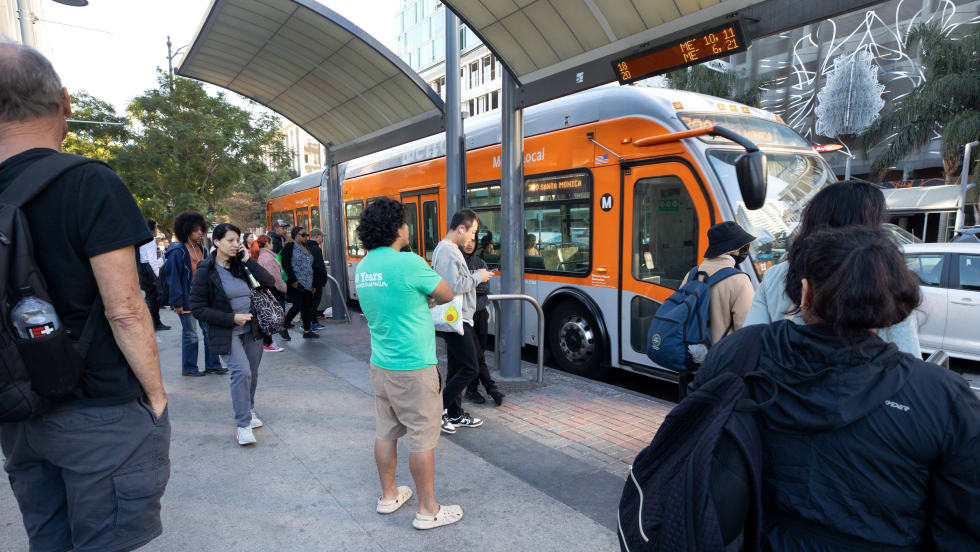
LA Metro Ridership Continues Growth as Rail Gains Accelerate
New rail connections and major events help drive continued ridership gains, with Metro recording its eighth consecutive month of year-over-year rail growth.
Read More →
TransDASH Summit Focuses on Measuring What Matters in Transit
Transit agencies unveil a national performance platform designed to benchmark customer experience, safety, community value, and other outcomes.
Read More →
Jacksonville’s NAVI Project Charts a New Course for Autonomous Public Transportation
Through its NAVI program, JTA is showing how autonomous vehicles, intelligent infrastructure, and coordinated operations can work together to deliver everyday public transportation.
Read More →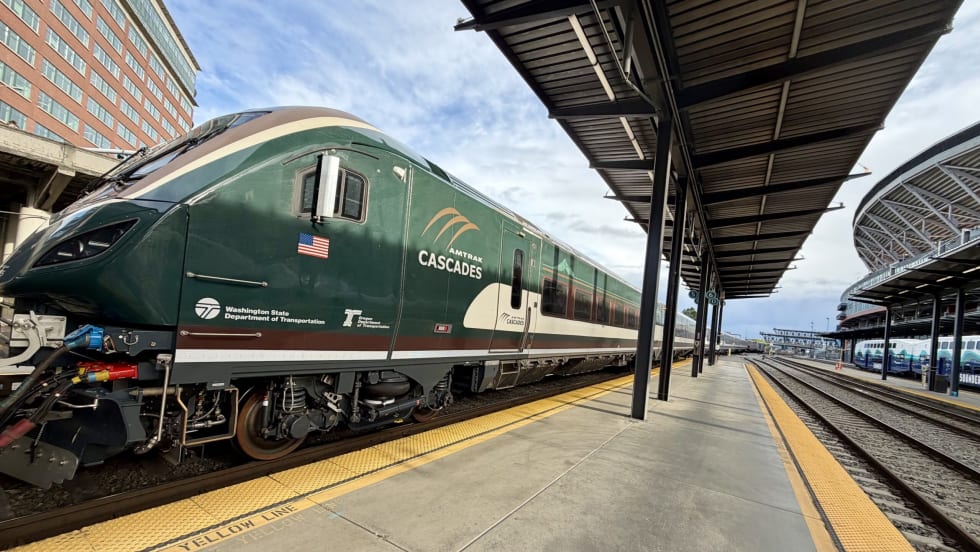
FRA Announces $5.3B in Rail Investments, Including $2B for Amtrak
Funding will support grade-crossing improvements, infrastructure upgrades, and new Amtrak equipment in 23 states.
Read More →
Finding the ‘Happy Medium’: Optimizing Maintenance Without Sacrificing Reliability
The key to maintenance optimization isn’t doing less work—it’s doing the right work at the right time on the right assets.
Read More →
People Movement: MARTA Drops Interim Tag on GM/CEO Hunt and More
In this edition, METRO covers recent appointments and announcements at the FMCSA, HDR, SilverRide, and more, showcasing the individuals helping to shape the future of transportation.
Read More →
VIA Metropolitan Transit Reports 2 Million More Passenger Trips as Better Bus Plan Gains Momentum
San Antonio's transit agency said accelerated service improvements are driving ridership growth, offering another example of how increased frequency and workforce investments can translate into stronger transit performance.
Read More →
ABAF Study Reveals Growing Insurance Crisis for Motorcoach Operators
Preliminary findings show 98% of operators faced premium increases over the past five years, while shrinking insurer participation is putting added pressure on businesses and customers.
Read More →
PSTA Modernizes Workforce Management with Digital Bidding System
The award-winning Workforce Transit Modernization project replaced paper bidding with a transparent digital platform, cutting administrative effort while improving access for operators.
Read More →
Chicago to Host Public Transportation's Biggest Gathering at APTA TRANSform & EXPO 2026
North America’s largest public transportation gathering returns to Chicago, connecting transit decision-makers with the technologies, ideas, and partnerships driving the industry forward.
Read More →