



Toronto Transit uses unique system to keep buses clean
The agency took advantage of a partnership between Westmatic and igus Canada to ensure its fleet is clean and ready for service.
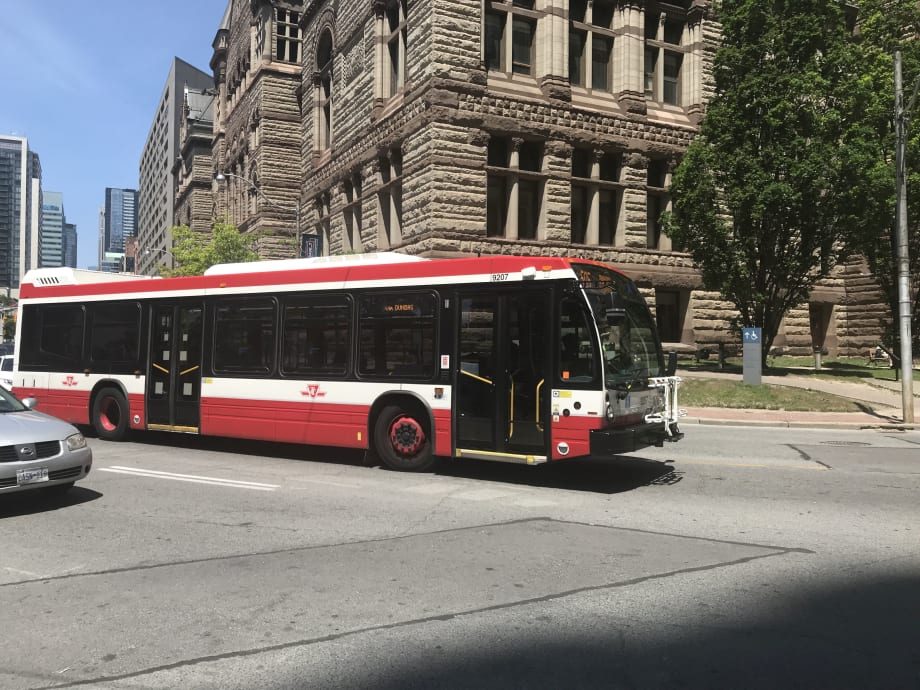
The mass transit system is the most heavily used transit system in Canada, and the third largest in North America.
Janna Starcic
The mass transit system is the most heavily used transit system in Canada, and the third largest in North America.
Janna Starcic
Buses are a big deal in Toronto. The Toronto Transit Commission (TTC) has more than 149 bus routes, and on an average weekday, 1.69 million passengers made 2.76 million trips on TTC subways, streetcars, and buses. The mass transit system is the most heavily used transit system in Canada, and the third largest in North America.
Therefore, it’s imperative for the TTC to keep its buses clean and in good working order. It relies on Westmatic, an international company based in Sweden with sales and service offices in Toronto, Buffalo, Torrance, Calif., and Sweden (Arvika) and manufacturing plants in Buffalo and Sweden, to wash as many as 350 buses every day.
Over the past few years, Westmatic faced challenges with hoses within the assembly that were deteriorating due to lack of upkeep. In a high-volume system that requires only 90 seconds per wash, Westmatic could not afford to have a breakdown of components. It turned to igus, a Germany-based manufacturer of motion plastics, to install an 87-foot energy chain that solved the problem.
“We came up with two other ideas that we determined would be temporary issues and didn’t address the problem at the root,’’ said Andrew Yoannis, project manager for Westmatic. “The energy chain has allowed us much more control over the movement of our hoses to preserve their life.”
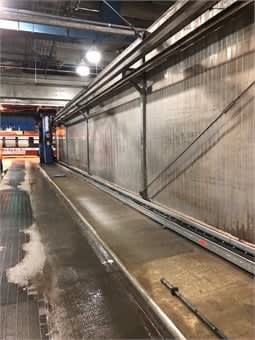
Over the past few years, Westmatic faced challenges with hoses within the assembly that were deteriorating due to lack of upkeep.
Westmatic
Sophisticated Cleaning Process
Westmatic’s large vehicle wash systems combine ultra-compact design and revolutionary operational concepts. The system is capable of washing buses, tractor-trailers, school buses, motorcoaches, and even cars. Brushes overlap on the front and rear of the vehicle, and brush pressure is monitored electronically.
The system sits within a small footprint, and can be retrofitted into existing wash bays. Westmatic washes incorporate an LCD touchscreen wash program selector, step-by-step self-diagnostics and troubleshooting, and wireless remoting into the equipment to help diagnose and program.
But for all of its sophisticated components, systems are simple to operate and maintain. The units require less than 30 minutes of preventative maintenance and mechanical adjustments each month. Drivers are guided through the wash by traffic lights, and vehicles are cleaned with overlapping brush movements through a consistent, controlled wash process. The company’s systems use less water and electricity, and fewer chemicals.
Westmatic systems have been used in hundreds of facilities, including Calgary, where the city’s 700 buses go through the bus wash. The system recycles 95% of the wastewater used to clean the fleet, saving the city 2.2 million liters of water every year by using a centrifuge to remove solids from the wastewater so that it can be used repeatedly.
Wearing Out Hoses
With such a heavily-used system, Westmatic found straps on the festoon system used to guide the buses were impacting the outer jacket of hoses and cables. They worked with igus to install an 87-foot energy chain with the company’s Chainflex cables and hoses.
“We had been pursuing a solution for several years," Yoannis said. “The hoses needed to be reinforced with a stronger solution to ensure that they could travel back and forth with our gantries without deteriorating.”
The energy chain manufactured by igus, which runs its North American operations out of Providence, R.I., includes a “rol-e-link” design that allows for fewer drag forces and less wear on the chain due to wheels. The chain is specifically recommended for use in environments where there is a lot of water, dirt, and debris.
Energy chains from igus require infrequent maintenance, cables, and hoses are easier to swap out and protect hoses much better than a festoon system. The energy chains are frequently used in automation machinery and robotic seventh axis applications. The chains roll, instead of glide, which results in a reduction of drive force needed and a smoother, quieter, and lower vibration travel when in operation.
“The energy chain provided a clean solution that kept hoses from rubbing on each other and controlled their movement to make sure they did not exceed their physical limitations,’’ Yoannnis said.
The energy chain includes separators that allowed Westmatic to isolate each major hose from each other so that they are not rubbing on each other and causing premature wear. “The energy chain was designed so that the bend radius was appropriate for each hose, and allows them to operate under optimal dynamic loading,’’ Yoannis said.
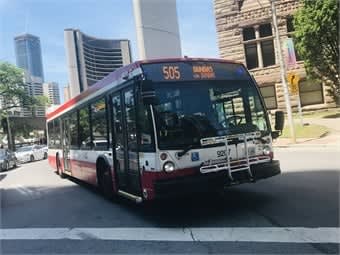
While Westmatic has hundreds of applications, Toronto is among its most critical.
Janna Starcic
Reliability and Dependability
One of Westmatic’s key distinguishing characteristics from competitors is its reliability. In an environment with water and dirt, and the critical nature to keep Toronto’s bus fleet operational, there is no margin for extended downtime due to breakdowns at the bus wash terminal.
“The energy chain saves the customer time and money, and gives them peace of mind that there is one less thing that they have to worry about in regard to the operation of the bus wash,’’ Yoannis said.
While Westmatic has hundreds of applications, Toronto is among its most critical. Redfin ranks the Toronto public transportation system the best in the nation, and its fleet includes more than 2,000 buses — the largest in Canada and trailing only New York and Los Angeles in North America. Reliable equipment in washing the buses is essential for Westmatic, and the TTC.
“This product allows a clean and aesthetically pleasing solution to controlled movement of cables and hoses and preserves the life of the product,’’ Yoannis said. “It is an efficient and reliable method to keep critical components intact and an effective method of transporting cables and hoses.”
Scott Parker is the Energy Chain Product Manager for igus Canada.
More Management

METRO Opens Submissions for 2026 Motorcoach Awards
Nominations are now being accepted for METRO Magazine’s Operator of the Year and Innovative Operator of the Year awards.
Read More →
New York MTA Advances Final Contract for Second Avenue Subway Expansion
Contract Four is the largest in the Second Avenue Subway Phase 2 project and includes construction of station infrastructure, tracks, and signals for the subway expansion, MTA officials said. Work on Contract Four will begin in 2027.
Read More →
Transit Agencies Highlight Safety Gains at National Summit
Leaders from 15 major transit systems shared crime-reduction results and safety initiatives while discussing the role of continued federal support.
Read More →

NITA Names New Leadership, Expands Reduced-Fare Program at First Board Meeting
The new regional transit authority appointed its first board chair and interim executive director while extending reduced fares across CTA, Metra, and Pace for eligible riders.
Read More →
Beyond the Checklist: A Structured Approach to Transit Maintenance
Reliability-Centered Maintenance helps transit agencies move beyond routine checklists to focus limited resources on the assets and failures that have the greatest impact on safety, reliability, and service.
Read More →
APTA 2026 Nominating Committee Selects Leadership Slate, Names Chair and Vice Chair Nominees
Leadership changes will help shape the association’s priorities and its representation of the transportation industry during the 2026–2027 term.
Read More →
DART Launches Major Security, Fare Enforcement Initiative
The 90-day demonstration will deploy coordinated security teams at five light rail stations while testing controlled access and gathering data to guide future investments.
Read More →
Advancing Fare Collection Through Technology and Innovation
Learn about delivering 1300 gates at 91 stations while managing fare evasion. Explore the large scale deployment, solution customization and real-world results that affect the region. Prepare for deployment in your region now.
Read More →
Game Day in Motion: Moving Millions During the 2026 World Cup
Between packed transit stations and team motorcoaches, see how agencies and operators across North America tackled the transportation demands of the 2026 FIFA World Cup.
Read More →
Surface Transportation Extension Averts Shutdown, Leaves Transit Funding Gap
The stopgap keeps federal transportation programs moving, but missing advance funding could complicate the transit and rail projects agencies are planning next.
Read More →