



MBTA Wraps Up 2025 with Strong Improvements Across the System
From more frequent service to accessibility upgrades to safety progress, and more, the agency now heads into 2026 with continued momentum in its charge to deliver a quality public transit experience for the general riding public.

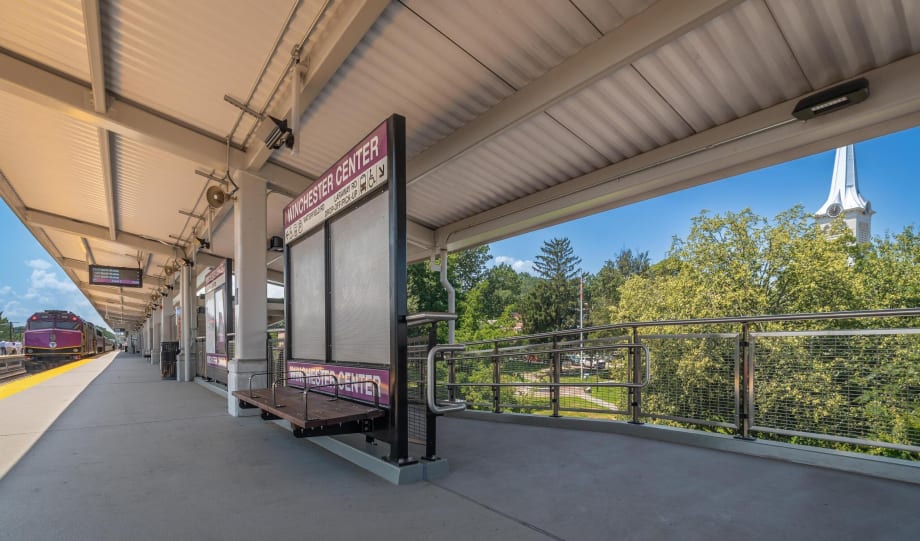
Under the leadership of the Healey-Driscoll Administration and Interim MassDOT Secretary/MBTA GM Phillip Eng, the MBTA said it has accelerated critical investments to rebuild aging infrastructure, modernize system operations, and more.
Credit: MBTA
Boston’s Massachusetts Bay Transportation Authority (MBTA) reflected on 2025 improvements across the system, from more frequent service to accessibility upgrades, to safety progress, and new innovative technology, as the agency heads into 2026 with continued momentum in its charge to deliver a quality public transit experience for the general riding public.
Under the leadership of the Healey-Driscoll Administration and Interim MassDOT Secretary/MBTA GM Phillip Eng, the MBTA said it has accelerated critical investments to rebuild aging infrastructure, modernize system operations, expand service, strengthen the workforce, attract talented professionals, and serve the communities that rely on the MBTA daily across the Commonwealth.
“With the support of the Legislature, partners across all levels of government, public transit advocates, community leaders, and most of all, the riding public, we are committed to continuous improvement, delivering meaningful projects and service most cost-effectively and efficiently,” said Eng. “I’m honored to work side by side with our dedicated workforce of over 8,000 employees and our industry partners as we head into 2026 and beyond.”
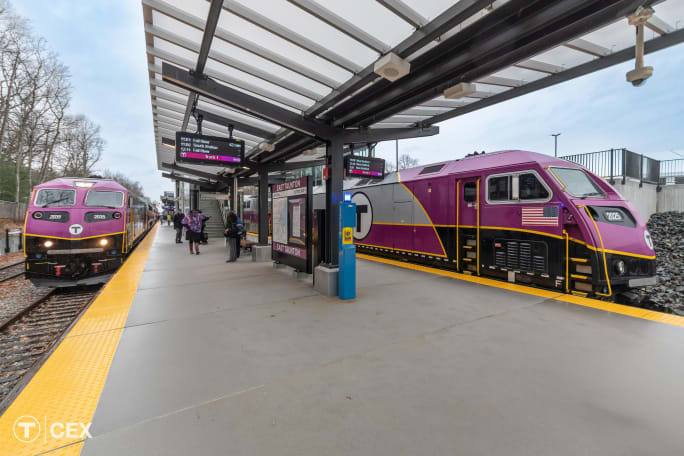
In September, Fare Engagement Representatives began issuing formal warnings and citations to riders who failed to tap at a fare gate or farebox at downtown stations and on board vehicles.
Credit: MBTA
Key 2025 Highlights
Key highlights for the MBTA included:
Major Commuter Rail Service Expansions to Southeastern Massachusetts: Passenger service on SCR began on March 24, 2025. The over $1 billion project brought passenger service to the communities of Taunton, Freetown, New Bedford, Middleboro, and Fall River for the first time in 65 years on the Fall River/New Bedford Commuter Rail Line.
Resetting High Speeds on the Red and Orange lines: Red Line Braintree Branch speeds were restored to 50 MPH for the first time in 20 years in March 2025, following the unprecedented work of the MBTA’s Maintenance of Way Department. Orange Line trains began traveling at their maximum speed of 55 MPH (up from 40 MPH) between Oak Grove and Assembly Station for the first time in August 2025, following the restoration of track in this area.
Permanent Later Subway and Bus Service: All subway lines and eight frequent bus routes now offer extended service on Fridays and Saturdays, with five of the MBTA’s most frequent bus routes with the highest number of later riders offering extended service every day of the week. Trip end times for these lines and routes are about one hour later compared to past service end times.
Enhancing Fare Collection with Fare Checks: In September, Fare Engagement Representatives began issuing formal warnings and citations to riders who failed to tap at a fare gate or farebox at downtown stations and on board vehicles. Fare Engagement Representatives expanded to more stations this winter, focusing on those with high ridership and transfer points.
Improving Safety with Green Line Train Protection System (GLTPS) Installation: Last June 2025, the MBTA awarded the GLTPS contract to Piper Networks following their successful completion of “demonstration phase testing.” Since then and throughout 2025, crews have been installing GLTPS equipment along Green Line tracks, with Phase 1 of the project on track to be operational in summer 2026.
Rebuilding the Workforce: Since the beginning of the Healey-Driscoll Administration, the MBTA has expanded its workforce, hiring over 1,900 employees; it now stands at over 8,200. Thanks to the Administration and the Legislature, the MBTA will continue to upgrade its workforce to deliver even safer, more robust service.
Critical Accessibility Milestones: After 19 years of steady improvements to the accessibility of its system, the MBTA has fulfilled a substantial amount of its obligations under the 2006 Joanne Daniels-Finegold, et al. v. Massachusetts Bay Transportation Authority Settlement Agreement. As a result, in December 2025, the court-appointed independent monitor, Judge Patrick King, concluded his oversight role.
Expanding Access to Income-Eligible Reduced Fares: Since its launch in September 2024, the income-eligible reduced fare program has made MBTA travel more affordable for over 38,000 riders. About 70% of riders have enrolled through an automated verification process that takes under five minutes to complete, thanks to partnerships with the Registry of Motor Vehicles and the Executive Office of Health and Human Services. This streamlined approach has enabled rapid program growth and lays the groundwork for similar improvements to other reduced-fare programs in the near future.
Industry Recognition: The MBTA welcomed the American Public Transportation Association’s (APTA) annual TRANSform Conference to Boston in September 2025. APTA TRANSform is the flagship event for public transportation professionals to engage in workshops, attend technical tours, and exchange best practices.
More Management

METRO Opens Submissions for 2026 Motorcoach Awards
Nominations are now being accepted for METRO Magazine’s Operator of the Year and Innovative Operator of the Year awards.
Read More →
New York MTA Advances Final Contract for Second Avenue Subway Expansion
Contract Four is the largest in the Second Avenue Subway Phase 2 project and includes construction of station infrastructure, tracks, and signals for the subway expansion, MTA officials said. Work on Contract Four will begin in 2027.
Read More →
Transit Agencies Highlight Safety Gains at National Summit
Leaders from 15 major transit systems shared crime-reduction results and safety initiatives while discussing the role of continued federal support.
Read More →

NITA Names New Leadership, Expands Reduced-Fare Program at First Board Meeting
The new regional transit authority appointed its first board chair and interim executive director while extending reduced fares across CTA, Metra, and Pace for eligible riders.
Read More →
Beyond the Checklist: A Structured Approach to Transit Maintenance
Reliability-Centered Maintenance helps transit agencies move beyond routine checklists to focus limited resources on the assets and failures that have the greatest impact on safety, reliability, and service.
Read More →
APTA 2026 Nominating Committee Selects Leadership Slate, Names Chair and Vice Chair Nominees
Leadership changes will help shape the association’s priorities and its representation of the transportation industry during the 2026–2027 term.
Read More →
DART Launches Major Security, Fare Enforcement Initiative
The 90-day demonstration will deploy coordinated security teams at five light rail stations while testing controlled access and gathering data to guide future investments.
Read More →
Advancing Fare Collection Through Technology and Innovation
Learn about delivering 1300 gates at 91 stations while managing fare evasion. Explore the large scale deployment, solution customization and real-world results that affect the region. Prepare for deployment in your region now.
Read More →
Game Day in Motion: Moving Millions During the 2026 World Cup
Between packed transit stations and team motorcoaches, see how agencies and operators across North America tackled the transportation demands of the 2026 FIFA World Cup.
Read More →
Surface Transportation Extension Averts Shutdown, Leaves Transit Funding Gap
The stopgap keeps federal transportation programs moving, but missing advance funding could complicate the transit and rail projects agencies are planning next.
Read More →