



Calif.’s LOSSAN Teams with Icomera to Upgrade Onboard Connectivity
The Pacific Surfliner travels along a 351-mile coastal rail route through San Diego, Orange, Los Angeles, Ventura, Santa Barbara, and San Luis Obispo counties, serving 27 stations.
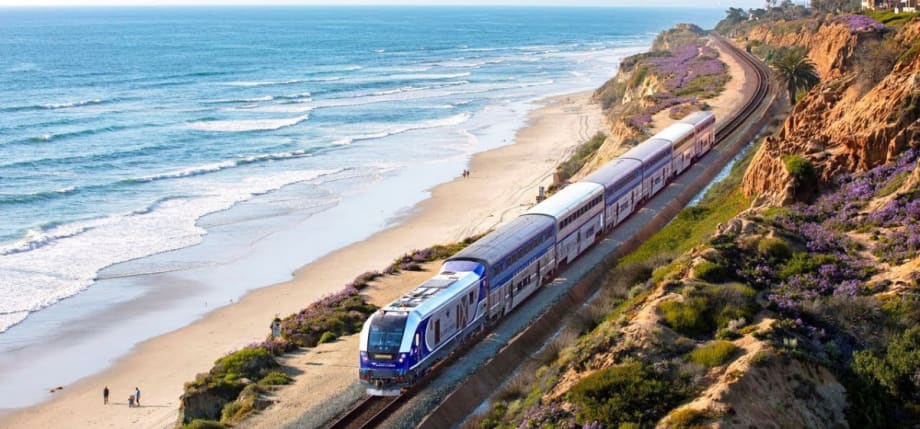
Over the years, Wi-Fi service has proven to be a popular passenger amenity.
Icomera/LOSSAN
EQUANS, through its subsidiary Icomera, is delivering next-generation connectivity to the Los Angeles – San Diego – San Luis Obispo (LOSSAN) Rail Corridor Agency, providing the Pacific Surfliner service with the highest quality passenger Wi-Fi.
The Pacific Surfliner travels along a 351-mile coastal rail route through San Diego, Orange, Los Angeles, Ventura, Santa Barbara, and San Luis Obispo counties, serving 27 stations. It is the busiest state-supported intercity passenger rail route in the U.S. with 26 daily trains and pre-pandemic annual ridership of nearly 3 million.
This investment is just one of LOSSAN’s strategies for enhancing passenger amenities. As noted in the LOSSAN Business Plan, key priorities include “Wi-Fi improvement, along with customer communications, train status information, and passenger information and station improvements.”
“We know the importance of providing stable Wi-Fi for our passengers,” said Donna DeMartino, LOSSAN agency managing director. “Whatever the purpose of their travel, the ability to stay connected truly is invaluable.”
Over the years, Wi-Fi service has proven to be a popular passenger amenity. To answer passenger demands, LOSSAN has partnered with Icomera, by way of Amtrak, to improve the speed and reliability of the onboard Wi-Fi service to raise the overall travel experience. In a post-COVID world, LOSSAN is reaffirming the ability to entertain the leisure travelers with increased reserved seating service and Wi-Fi.
Pacific Surfliner passengers will experience reliable Internet connectivity by way of Icomera’s X-Series Mobile Gateway, delivering a significantly improved operator and passenger experience for a Connected Journey. Based on the historic performance of similar passenger Wi-Fi upgrades across intercity fleets, the upgrades will allow 35% to 52% more devices to connect to the onboard network, delivering 34% to 48% more data per trip.
The Pacific Surfliner is funded by the state of California through the California Department of Transportation (Caltrans) and is managed by the LOSSAN Rail Corridor Agency.
More Technology

From Hardware to Digital Partner: Luminator Charts Its Next Chapter
CEO Magnus Friberg discusses Luminator’s shift toward becoming a digital partner, the growing importance of software and interoperability, and how AI can help agencies improve operations and passenger experience.
Read More →
Beyond the Checklist: A Structured Approach to Transit Maintenance
Reliability-Centered Maintenance helps transit agencies move beyond routine checklists to focus limited resources on the assets and failures that have the greatest impact on safety, reliability, and service.
Read More →
NJ TRANSIT Advances Bus Technology Upgrades Across Statewide Fleet
More than 1,500 buses now feature upgraded technology designed to improve arrival predictions and provide free Wi-Fi, with deployment expected to reach nearly 2,000 buses by the end of 2026.
Read More →

Building a Flexible Path to Transit Electrification
John Hroncich discusses BAE Systems’ modular and scalable approach, lessons learned from decades of real-world operations, and how agencies can identify electrification strategies that fit their fleets.
Read More →
Biz Briefs: Alstom Lands Canadian Contract, LYT to Supply California TSP, and More
In METRO's latest installment, we take a look at recent news from Complete Coach Works, Beep, FlixBus, and more partnerships making headlines across the transportation sector.
Read More →
From Legacy Silos to Conversational Intelligence
What if transit leaders could ask any operational question and get a trusted answer in seconds? Conversational AI is transforming how agencies use their data.
Read More →
USDOT Announces Rail Vehicle Replacement Grants, Chattanooga AV Shuttle Funding
More than $191 million in federal funding will help three transit agencies replace aging rail vehicles and support a new autonomous shuttle service in Chattanooga.
Read More →
Bus Tech Talk: Keeping Transit Technicians Ahead of the Technology Curve
LA Metro’s Obed Mejia discusses technician training, evolving maintenance technology, fleet replacement, and strategies for getting the most out of today’s transit fleets.
Read More →
Biz Briefs: RIPTA Unveils New Frontrunners, Clevland RTA Adds New Siemens, and More
In METRO's latest installment, we take a look at recent news from Siemens, Prevost, Dodge, and more partnerships making headlines across the transportation sector.
Read More →
Why Simulating Pedestrian Movement Has Become Essential for Modern Rail Stations
Pedestrian microsimulation is helping rail planners identify bottlenecks, test station designs, and prepare complex transit hubs for growing passenger volumes.
Read More →