




Read More: Buttigieg, Members Of Congress Voice Support For New High-Speed Rail Funding
California HSR Sparks Major Economic Benefit, New Data Shows
The Authority’s 2023 Economic Impact Analysis Report shows the California high-speed rail project continues to be a proven job creator that bolsters the local economy, particularly disadvantaged communities.
January 22, 2024

4 min to read
The California High-Speed Rail Authority released new data that shows investments in the project are continuing to provide billions in economic benefit to the state.
The Authority’s 2023 Economic Impact Analysis Report shows the California high-speed rail project continues to be a proven job creator that bolsters the local economy, particularly disadvantaged communities.
“High-speed rail is leading the way toward the Golden State’s sustainable transportation future,” said Authority CFO Brian Annis. “With our continued partnership with the federal government and our local partners, investment in high-speed rail creates good-paying union jobs and generates income to some of California’s most vulnerable people and their communities.”
High-Speed Rail Progress
Ninety-nine percent of the project’s 2022-23 fiscal year expenditures have gone to California businesses and workers, with two of every three of those dollars going to disadvantaged communities, driving economic activity in these areas.
To close out 2023, the Authority marked an important milestone, announcing the creation of more than 12,000 construction jobs since the start of project construction. Most of these jobs have gone to Central Valley residents. These numbers together are the result of the project’s total investment of more than $11.2 billion since 2006 in its planning and construction.
The Authority estimates the project has created a total of 92,000 job-years of employment, spurring $7 billion in total direct labor income earned by workers on the project and $18 billion in total economic activity.
In 2023, the Authority posted a record-high number of job-years contributing to the total, nearly 2,000 more than any other year since the project began.
The Authority estimates completing the initial 171-mile Merced to Bakersfield passenger service would, in addition to cutting existing trip times in half, add to these numbers, resulting in a total of 333,000 job-years of employment and total economic activity of $70.3 billion.
Estimates show the complete build-out of the 494-mile Phase 1 System between San Francisco to Los Angeles/Anaheim, via the underway Central Valley section, would cumulatively create a total of 945,000 job-years of employment, and total economic activity of $203.6 billion.
As of December 2023, more than 810 certified small businesses in California are also helping build high-speed rail; $1.47 billion has been earned by certified Small Businesses, Disadvantaged Business Enterprises, and Disabled Veteran Business Enterprises for their work.
This pace is maintained courtesy of the nearly $3.1 billion in Federal-State Partnership grant funds awarded to the Authority by the U.S. Department of Transportation through the Infrastructure Investment and Jobs Act.
The Authority has begun work to extend the 119 miles currently under construction to 171 miles of future electrified high-speed rail from Merced to Bakersfield.
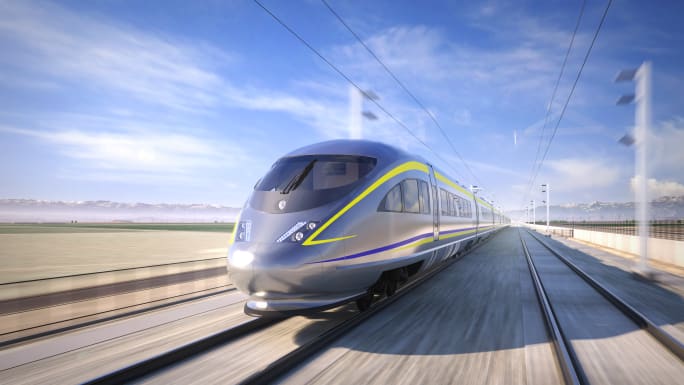
Photo: California High-Speed Rail Authority
More Benefits of High-Speed Rail
The Mineta Transportation Institute (MTI) released a perspective in October 2023, “The Economic and Environmental Potential of High-Speed Rail,” which outlined the potential economic and environmental benefits of high-speed rail (HSR) in the U.S.
According to MTI, the benefits of HSR include:
Domestic Manufacturing - As of 2015, it was estimated that the rail manufacturing industry supports 90,000 jobs and that more than 750 companies in at least 39 states manufactured components for passenger rail and transit.
Station Area Development, Regional Connectivity, and Smart Growth - Multiple studies show that HSR in the U.S. could connect megaregions, forming the corridors of housing, employment, and recreation in more densely populated areas of the country.
Greenhouse Gas (GHG) Emissions Reduction - One study estimates high-speed rail in the U.S. can save up to 800 million tons of CO2 emissions over a 40-year period, or approximately 2 trillion miles traveled in a typical 22 MPG gas-based car.
Cost Savings Associated with Foregone Infrastructure Improvements - One study found that it would cost an estimated $122-199 billion to provide the equivalent highway and airport capacity that the San Francisco to Los Angeles high-speed rail network would provide.
Sally Librera, Americas Transit Market Leader/Sr. VP at AECOM, also spoke with METRO about high-speed rail, stating that HSR "has tremendous potential to connect communities, address affordable housing challenges, spur economic growth, and achieve huge gains in reducing congestion and enhancing sustainability."
More Rail
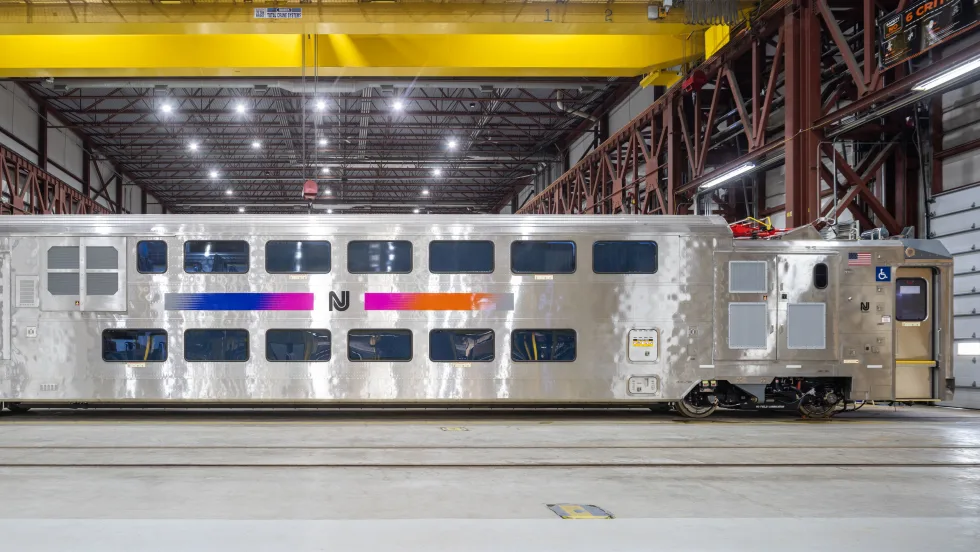
NJ TRANSIT Approves $65.6M for Hudson-Bergen Light Rail Improvements
The funding marks the first phase of a planned $250 million investment over five years to modernize stations, overhaul vehicles, and improve system reliability and passenger safety.
Read More →
STraffic Expands North American Presence with Fare Collection Technology
John Moon, Associate Director, Product Strategy at STraffic, discusses the company's growth in North America, its efforts to reduce fare evasion, and more.
Read More →
Study: Denver RTD Generates $2.1 Billion in Annual Economic Activity
An economic impact study finds the agency supports approximately 17,500 jobs, delivers $1.6 billion in annual community and mobility benefits, and generates $2.42 in economic value for every dollar invested.
Read More →
Mark Aesch Nominated to Lead Federal Transit Administration
The former Rochester transit chief and TransPro founder, who has also contributed to METRO Magazine, brings decades of industry experience and a focus on performance, accountability, and financial sustainability to the nomination.
Read More →
Transit Expands Agency Partnerships, Reaching 200 Official App Partners
COO Jake Sion discusses Transit’s growth, the success of its Transit Royale program, and how technology is helping agencies improve the rider experience.
Read More →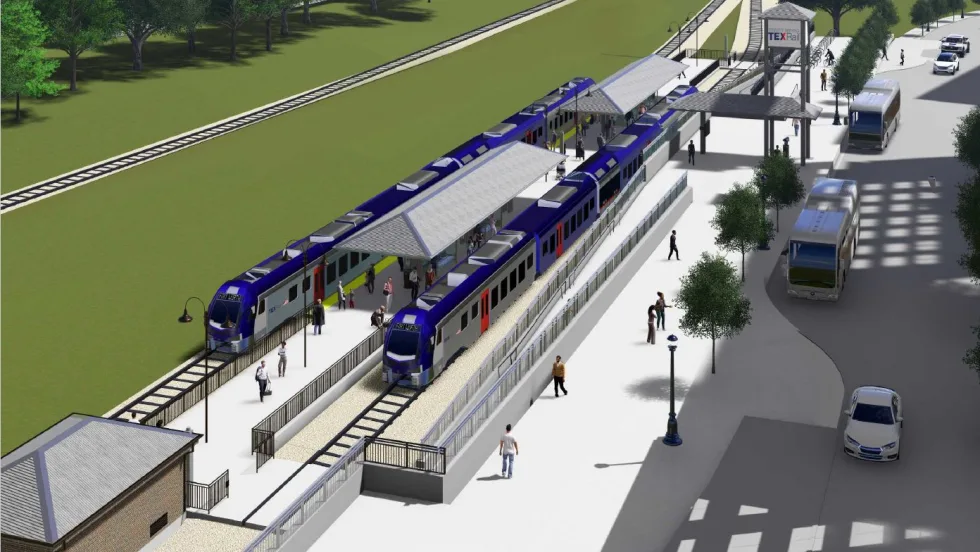
Trinity Metro Breaks Ground on $270M TEXRail Extension
The 2.1-mile extension will connect Fort Worth’s Medical District and Near Southside to downtown, surrounding communities, and Dallas-Fort Worth International Airport.
Read More →
Bringing Austin’s First Light Rail System to Life
Austin Transit Partnership CEO Greg Canally discusses the city's nearly 10-mile light rail project, its collaborative approach to project delivery, the importance of community engagement, and the milestones ahead as construction approaches in 2027.
Read More →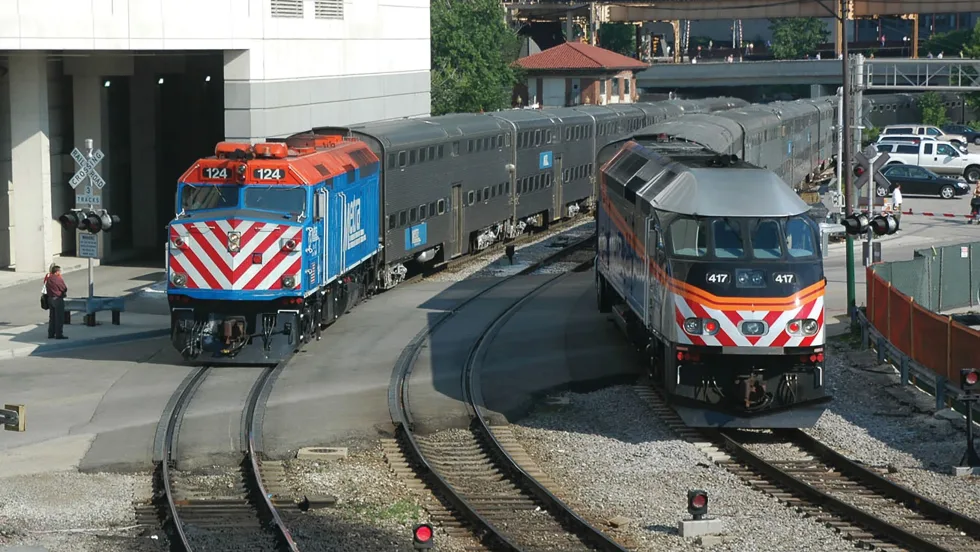
Metra Draft Plan Outlines Costs, Service Improvements for Regional Rail
The Systemwide Network Plan identifies infrastructure needs and potential investments to expand all-day, bidirectional rail service across the Chicago region.
Read More →
Amtrak Completes First Street Tunnel Upgrades, Restores Service
The nine-day construction project included replacing aging track infrastructure and modernizing switch systems near Washington Union Station.
Read More →
FRA Announces $2.3B for Passenger, Freight Rail Projects Nationwide
The CRISI Grant Program funding will support rail infrastructure improvements, safety upgrades, and projects aimed at improving freight and passenger rail service across 45 states and Washington, D.C.
Read More →