



California's Big Blue Bus Unveil 'Brighter Blue' Plan
The five-year plan will improve service by providing riders with fast, sustainable, and reliable access to jobs, healthcare, education, and other essential services.

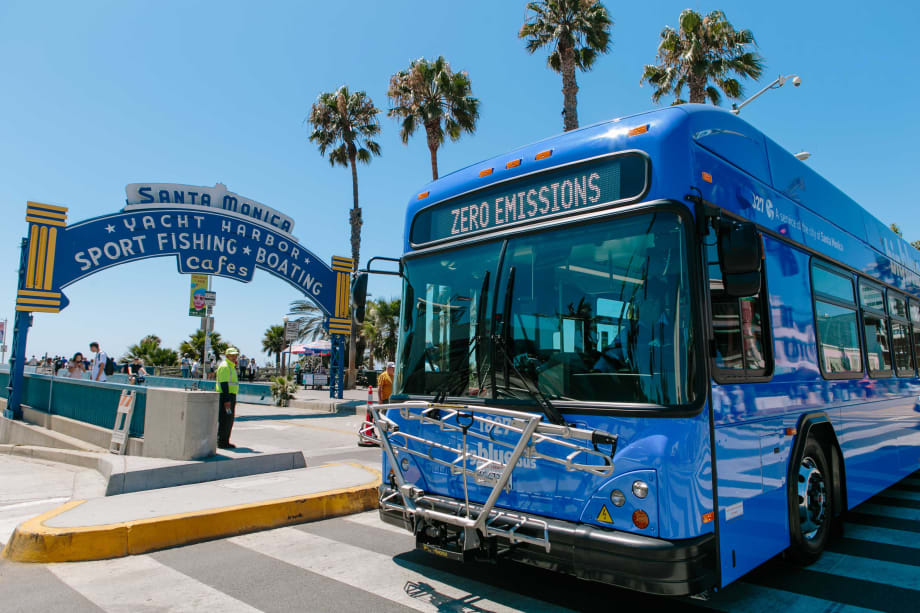
Informed by a comprehensive analysis of BBB’s current services and an extensive 18-month community and stakeholder outreach effort, riders can anticipate several service enhancements under the Brighter Blue scheme.
Photo: Big Blue Bus
At its recent meeting, California’s Santa Monica City Council adopted Brighter Blue, a five-year plan to improve Big Blue Bus (BBB) service by providing riders with fast, sustainable, and reliable access to jobs, healthcare, education, and other essential services, and providing a world-class transit experience for major events, including the 2026 FIFA World Cup and 2028 Summer Olympics.
Brighter Blue was developed in response to post-pandemic travel behavior changes and a rapidly growing regional rail network.
Brighter Blue
Informed by a comprehensive analysis of BBB’s current services and an extensive 18-month community and stakeholder outreach effort, riders can anticipate the following service enhancements under Brighter Blue:
More frequent service on most routes, including a high frequency network with weekday service every 10 minutes or better on select corridors during peak hours.
Expanded operating hours so that most routes start earlier in the day, end later at night, and operate on weekends.
Improved connectivity to key destinations, such as the LAX/Metro Transit Center, Culver City Transit Center, and the Metro Rail D Line extension.
“While travel patterns have changed post-pandemic, the fundamentals of high-quality transit remain the same,” said Santa Monica Department of Transportation Director Anuj Gupta. “Service needs to be fast, frequent, safe, and reliable to serve as an effective transportation mode. Concentrating investments on key high-frequency routes will create a stronger foundation for our overall network, making Big Blue Bus’s service more attractive and convenient, reducing wait times, and providing more flexibility to current and future riders planning their trips.”
Enhancing the Rider Experience
Brighter Blue is among several Department of Transportation initiatives that seek to provide an enhanced rider experience:
Zero-Emission Bus Fleet: BBB is an industry leader in sustainability and environmentally-friendly practices. The agency is on pace to achieve a complete zero-emission, battery-electric bus fleet by 2030.
Safety Officer Program: The Department of Transportation launched a Transit Safety Officer Program in March 2024 to enhance safety for riders and employees. The program deploys unarmed security guards across the system wherever data shows their services are most needed.
Automated Bus Lane Enforcement: Last summer, BBB conducted a successful pilot of automated bus lane enforcement technology. Staff will present a recommendation for a permanent program to City Council for approval in FY2024-25.
Communications System Upgrade: Big Blue Bus is upgrading its fleet communications system to provide better real-time bus arrival predictions and minimize service delays and disruptions.
Better Blue Bus Stops: BBB will continue to improve bus stops throughout its service area. Improvements include upgraded lighting, increased shade, larger boarding areas, and more seating options.
Implementation of the Brighter Blue service plan advances the City Council’s strategic priorities of Sustainable & Connected and Justice, Equity, & Diversity.
More Bus

New York MTA Plans Largest Bus Fleet Upgrade in More Than a Decade
The agency is seeking manufacturers for 650 new CNG buses to replace aging vehicles, improve reliability, and advance its broader fleet modernization strategy.
Read More →
Building a Flexible Path to Transit Electrification
John Hroncich discusses BAE Systems’ modular and scalable approach, lessons learned from decades of real-world operations, and how agencies can identify electrification strategies that fit their fleets.
Read More →
Bus Tech Talk: Keeping Transit Technicians Ahead of the Technology Curve
LA Metro’s Obed Mejia discusses technician training, evolving maintenance technology, fleet replacement, and strategies for getting the most out of today’s transit fleets.
Read More →
Biz Briefs: RIPTA Unveils New Frontrunners, Clevland RTA Adds New Siemens, and More
In METRO's latest installment, we take a look at recent news from Siemens, Prevost, Dodge, and more partnerships making headlines across the transportation sector.
Read More →
People Movement: Holly Arnold Joins Transdev and More
In this edition, we also cover recent appointments and announcements at Pace, CamTran, MCI, and more, showcasing the individuals helping to shape the future of transportation.
Read More →
The High Cost of Transit Buses: Industry Leaders Look to Procurement Reform
Transit leaders and policymakers examine how standardized bus designs, streamlined procurement, and predictable funding could help agencies stretch budgets and deliver better service.
Read More →
The Business Voice Behind Public Transportation
As chair of APTA’s Business Members Board of Governors, Ray Melleady explains how more than 850 business members are partnering with transit agencies to advance funding, innovation, and industry-wide collaboration.
Read More →
From Surviving to Thriving: Building Stronger Transportation Organizations
Bus Business Consultants founder Brian Dickson shares lessons on leadership, organizational health, and creating options for long-term success in a changing transportation industry.
Read More →
Finding the ‘Happy Medium’: Optimizing Maintenance Without Sacrificing Reliability
The key to maintenance optimization isn’t doing less work—it’s doing the right work at the right time on the right assets.
Read More →
LA Metro, City of West Hollywood, and Partners Advance Smarter Bus Lane Enforcement
The award-winning partnership combines AI-powered detection with human oversight to improve bus reliability, accessibility, and enforcement efficiency.
Read More →