



Cap Metro completes tech savvy bus stop sign install
Capital Metro is also implementing tobacco-free bus stops, a continuation of its emphasis on creating healthier transit facilities. The passenger boarding areas of Capital Metro’s park & rides and MetroRail stations are already designated tobacco-free.

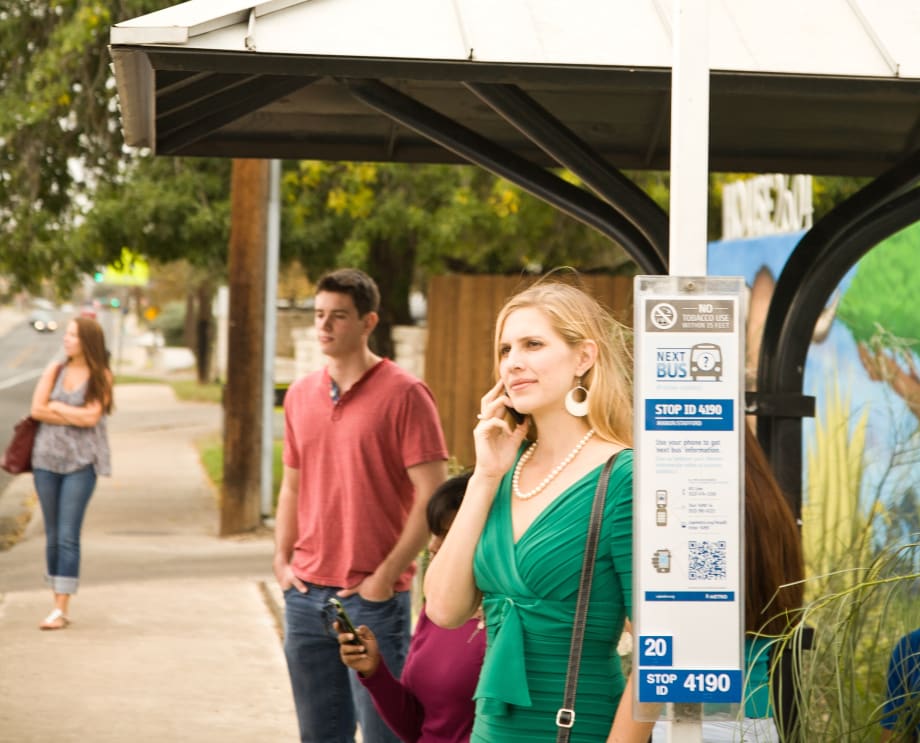
Photo courtesy Capital Metro.

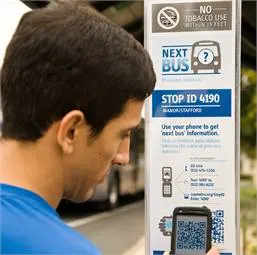
Photo courtesy Capital Metro.
Austin, Texas-based Capital Metro has completed installation of new bus stop signs at all of its 2,700+ stops that make it easy to get specific schedule information on the go using a cell phone. The new signage also furthers Capital Metro’s commitment to creating a healthy environment for riders and employees by prohibiting tobacco use within 15 feet of a Capital Metro bus stop.
Use of DadnabTM, the free schedule-via-text messaging service, has increased phenomenally since the signs started going up at bus stops, according to the transit system. In February, users sent text queries more than 100,000 times, and people are scanning the QR codes available at each bus stop an average of 1,200 times per day.
“Part of our customer service focus is being responsive to our riders’ needs. What do people want to know when they approach the bus stop? They want to know when the next bus will come,” said Capital Metro President/CEO Linda S. Watson.
As fewer than 50 percent of bus stops had posted schedule information before the project began, the new system greatly expands the usability of the transit system. Capital Metro also expects to save thousands in materials and labor costs because the signs will not need to be replaced when routes and frequencies change. Braille components will be added to the signs later this summer.
With the complete installation of the new signage, Capital Metro is also implementing tobacco-free bus stops, a continuation of its emphasis on creating healthier transit facilities. The passenger boarding areas of Capital Metro’s park & rides and MetroRail stations are already designated tobacco-free.
The signage was made possible through a grant from the city of Austin and the national Communities Putting Prevention to Work program.
Information Features
The new signage outlines four easy methods for getting specific next scheduled bus information by using a cell phone and inputting the unique bus stop ID number:
1. Text: Text the bus stop ID number to DadnabTM at (512) 981-6221, and receive an immediate reply text with the next scheduled bus arrival times for the buses that serve that stop.
2. QR Code: Scan the square barcode on the sign using a QR reader app (many free readers are available from your phone’s apps marketplace), and next bus times and a route map will be displayed on your smartphone.
3. Mobile site: Open capmetro.org/stopid/ from your phone and input your bus stop ID number to pull up a mobile-friendly website with the next bus arrivals.
4. Call the Go Line at 512-474-1200. Use the automated voice system 24 hours/day or talk to a real person weekdays, 7 a.m. to 8 p.m., and on weekends, 8 a.m. to 5 p.m.
More Bus

New York MTA Plans Largest Bus Fleet Upgrade in More Than a Decade
The agency is seeking manufacturers for 650 new CNG buses to replace aging vehicles, improve reliability, and advance its broader fleet modernization strategy.
Read More →
Building a Flexible Path to Transit Electrification
John Hroncich discusses BAE Systems’ modular and scalable approach, lessons learned from decades of real-world operations, and how agencies can identify electrification strategies that fit their fleets.
Read More →
Bus Tech Talk: Keeping Transit Technicians Ahead of the Technology Curve
LA Metro’s Obed Mejia discusses technician training, evolving maintenance technology, fleet replacement, and strategies for getting the most out of today’s transit fleets.
Read More →
Biz Briefs: RIPTA Unveils New Frontrunners, Clevland RTA Adds New Siemens, and More
In METRO's latest installment, we take a look at recent news from Siemens, Prevost, Dodge, and more partnerships making headlines across the transportation sector.
Read More →
People Movement: Holly Arnold Joins Transdev and More
In this edition, we also cover recent appointments and announcements at Pace, CamTran, MCI, and more, showcasing the individuals helping to shape the future of transportation.
Read More →
The High Cost of Transit Buses: Industry Leaders Look to Procurement Reform
Transit leaders and policymakers examine how standardized bus designs, streamlined procurement, and predictable funding could help agencies stretch budgets and deliver better service.
Read More →
The Business Voice Behind Public Transportation
As chair of APTA’s Business Members Board of Governors, Ray Melleady explains how more than 850 business members are partnering with transit agencies to advance funding, innovation, and industry-wide collaboration.
Read More →
From Surviving to Thriving: Building Stronger Transportation Organizations
Bus Business Consultants founder Brian Dickson shares lessons on leadership, organizational health, and creating options for long-term success in a changing transportation industry.
Read More →
Finding the ‘Happy Medium’: Optimizing Maintenance Without Sacrificing Reliability
The key to maintenance optimization isn’t doing less work—it’s doing the right work at the right time on the right assets.
Read More →
LA Metro, City of West Hollywood, and Partners Advance Smarter Bus Lane Enforcement
The award-winning partnership combines AI-powered detection with human oversight to improve bus reliability, accessibility, and enforcement efficiency.
Read More →