



CapMetro Taps WSP, Partners to Automate Bus Yard
The $1.26 million project is partly funded by a nearly $950,000 grant provided through the FTA’s ADAS for Transit Buses Demonstration and Automated Transit Bus Maintenance and Yard Operations Demonstration Program, with CapMetro funding the remaining costs.

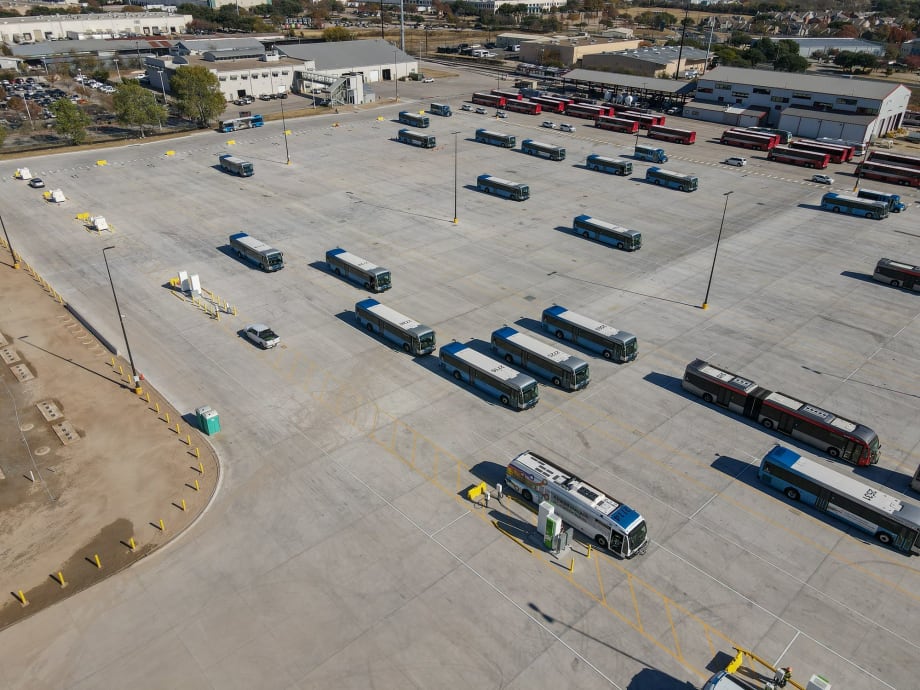
Automated bus yard operations, a crucial component of modern transit systems, will revolutionize how buses are stored, operated, and charged.
Photo: CapMetro
WSP’s partnership with Perrone Robotics, Texas A&M Transportation Institute (TTI), and Clever Devices will automate (Level 4) a 40-foot battery-electric bus for Austin, Texas’ Capital Metropolitan Transportation Authority (CapMetro).
The $1.26 million project is partly funded by a nearly $950,000 grant provided through the Federal Transit Administration’s (FTA’s) Advanced Driver Assistance Systems (ADAS) for Transit Buses Demonstration and Automated Transit Bus Maintenance and Yard Operations Demonstration Program, with CapMetro funding the remaining costs.
The Transit Automation Movement
As urban mobility evolves at an unprecedented pace, this first-ever venture of its kind, automating a heavy-duty battery bus in an active transit bus yard, represents a significant step toward enhancing the efficiency and safety of bus operations for all major metropolitan areas.
Automated bus yard operations, a crucial component of modern transit systems, will revolutionize how buses are stored, operated, and charged. WSP is partnering with TTI to develop a market-first automation workforce analysis. Based on previous Transit Cooperative Research Program-funded research, the analysis will address how bus yard automation could impact existing roles and create demand for new positions.
The project’s goal is to demonstrate how automated fleet technology can streamline bus yard operations, which would improve yard capacity by 20% to 25%, reduce costs, enhance safety, and shave an average of 15 minutes off daily pull-ins and pull outs for each trip amounting to tens of thousands of hours saved per bus depot, depending on fleet sizes and schedule requirements.
“WSP is committed to shaping the future of zero-emission transportation,” said Severin Skolrud, VP, emerging technology, transit, and rail, at WSP. “New technology needs bold innovators to push boundaries and test the capabilities and challenges that are necessary for more scalable solutions, and CapMetro is taking that role head-on.”
The Automated Bus Project
Throughout the initial phase, WSP will provide vital engineering support throughout.
Phase 2 of the FTA deployment program may include retrofitting multiple heavy-duty battery-electric buses (BEBs) — instead of a single heavy-duty BEB for phase 1 — and developing the automated fleet dispatch software to remotely manage bus yard maneuvers.
“While phase 1 will yield important results and provide valuable lessons, phase 2 will be the true test for retrofitting multiple automated electric buses and will yield more relatable results for transit operators to determine the technology’s ability to provide daily operational and safety benefits within the bus yard,” said Skolrud.
The project is set to commence in the fourth quarter of 2023 and will be conducted at CapMetro’s North Ops facility.
The results of this innovative pilot are expected to have far-reaching implications for the future of public transportation on a global scale. By pioneering automated yard operations, WSP, CapMetro, Perrone Robotics, Clever Devices, and TTI are paving the way for a more efficient, sustainable, and customer-centric transit system in Austin and beyond.
More Technology

From Hardware to Digital Partner: Luminator Charts Its Next Chapter
CEO Magnus Friberg discusses Luminator’s shift toward becoming a digital partner, the growing importance of software and interoperability, and how AI can help agencies improve operations and passenger experience.
Read More →
Beyond the Checklist: A Structured Approach to Transit Maintenance
Reliability-Centered Maintenance helps transit agencies move beyond routine checklists to focus limited resources on the assets and failures that have the greatest impact on safety, reliability, and service.
Read More →
NJ TRANSIT Advances Bus Technology Upgrades Across Statewide Fleet
More than 1,500 buses now feature upgraded technology designed to improve arrival predictions and provide free Wi-Fi, with deployment expected to reach nearly 2,000 buses by the end of 2026.
Read More →

Building a Flexible Path to Transit Electrification
John Hroncich discusses BAE Systems’ modular and scalable approach, lessons learned from decades of real-world operations, and how agencies can identify electrification strategies that fit their fleets.
Read More →
Biz Briefs: Alstom Lands Canadian Contract, LYT to Supply California TSP, and More
In METRO's latest installment, we take a look at recent news from Complete Coach Works, Beep, FlixBus, and more partnerships making headlines across the transportation sector.
Read More →
From Legacy Silos to Conversational Intelligence
What if transit leaders could ask any operational question and get a trusted answer in seconds? Conversational AI is transforming how agencies use their data.
Read More →
USDOT Announces Rail Vehicle Replacement Grants, Chattanooga AV Shuttle Funding
More than $191 million in federal funding will help three transit agencies replace aging rail vehicles and support a new autonomous shuttle service in Chattanooga.
Read More →
Bus Tech Talk: Keeping Transit Technicians Ahead of the Technology Curve
LA Metro’s Obed Mejia discusses technician training, evolving maintenance technology, fleet replacement, and strategies for getting the most out of today’s transit fleets.
Read More →
Biz Briefs: RIPTA Unveils New Frontrunners, Clevland RTA Adds New Siemens, and More
In METRO's latest installment, we take a look at recent news from Siemens, Prevost, Dodge, and more partnerships making headlines across the transportation sector.
Read More →
Why Simulating Pedestrian Movement Has Become Essential for Modern Rail Stations
Pedestrian microsimulation is helping rail planners identify bottlenecks, test station designs, and prepare complex transit hubs for growing passenger volumes.
Read More →