



Chicago Launches New Innovation Studio
Through the studio, the agency kicks off a long-term effort to partner with private sector entities to explore leading-edge ideas to improve system safety, develop a new solution for asset management, and expand real-time info.

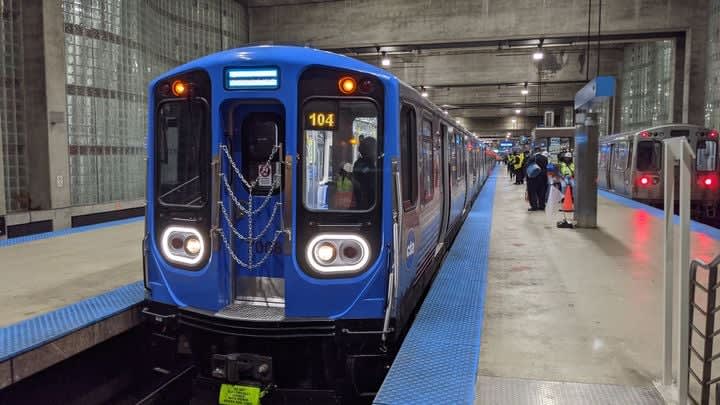
With the launch of the new Innovation Studio, CTA also outlined its first set of problem statements, which will be released in the first quarter annually.
Photo: CTA
The Chicago Transit Authority (CTA) released the first challenge statements for 2024 to launch its Innovation Studio.
Through Innovation Studio, the CTA kicks off a long-term effort to partner with private sector entities to explore leading-edge ideas to improve system safety, develop a new solution for bus stop asset management, and expand real-time information to its largest ridership base — bus riders.
“The Innovation Studio provides a means of accelerating our efforts to address a variety of challenges affecting our day-to-day operations, ranging from our number one priority of safety to the customer experience and operational efficiencies,” said CTA President Dorval R. Carter. Jr. “And, the first operational efficiency we are realizing with the launch of this program is the reduction of time it will take for us to begin real-world testing of cutting-edge technologies, which otherwise would take us months or years to bring to a reality.”
Addressing “Problems”
With the launch of the new Innovation Studio, CTA also outlined its first set of problem statements, which will be released in the first quarter annually.
CTA’s problem statements for 2024 seek proposals from innovators that address the following issues:
Rail Safety: Automatic detection of people or large objects on train tracks to avoid collision, and either reduce or eliminate service delays.
Asset Management: Automate the process of having personnel manually survey the conditions and use of physical assets at more than 10,000 bus stops systemwide.
Real-time Information: Improve the customer experience through the expansion of real-time arrival and service alert information at bus stops (sheltered and unsheltered) throughout the system.
“The challenge that CTA and other transit agencies face is that no two system are alike. Each has its own, unique set of circumstances that cannot be replicated outside of the actual transit system, which has historically made the testing of solutions cumbersome and costly,” said Molly Poppe, CTA’s chief planning & innovation officer. “This approach to soliciting proposals allows CTA to be more agile and iterative, which in turn allows us to demonstrate the value of a solution before committing to a full-scale deployment.”
Next Steps
The three problem statements selected for 2024 are based on a variety of inputs, including, but not limited to, the CTA’s advisory boards and committees to everyday rider feedback. CTA is currently accepting proposals for innovative pilots or proof of concepts (POCs) addressing the problem statements now through April 15, 2024.
An internal review panel consisting of representatives from a variety of CTA departments will evaluate the proposals for responsiveness, feasibility, and timeline. Once the pilots and POCs are selected, CTA will collaborate closely with the vendors to develop and launch pilots and POCs on the transit system for up to one year. The first of the pilots are expected to launch later this year.
Based on the successful completion of the various pilots and pilot evaluation, CTA will determine next steps, potentially including issuing a formal procurement to deploy the technology on a wider scale.
More Technology

From Hardware to Digital Partner: Luminator Charts Its Next Chapter
CEO Magnus Friberg discusses Luminator’s shift toward becoming a digital partner, the growing importance of software and interoperability, and how AI can help agencies improve operations and passenger experience.
Read More →
Beyond the Checklist: A Structured Approach to Transit Maintenance
Reliability-Centered Maintenance helps transit agencies move beyond routine checklists to focus limited resources on the assets and failures that have the greatest impact on safety, reliability, and service.
Read More →
NJ TRANSIT Advances Bus Technology Upgrades Across Statewide Fleet
More than 1,500 buses now feature upgraded technology designed to improve arrival predictions and provide free Wi-Fi, with deployment expected to reach nearly 2,000 buses by the end of 2026.
Read More →

Building a Flexible Path to Transit Electrification
John Hroncich discusses BAE Systems’ modular and scalable approach, lessons learned from decades of real-world operations, and how agencies can identify electrification strategies that fit their fleets.
Read More →
Biz Briefs: Alstom Lands Canadian Contract, LYT to Supply California TSP, and More
In METRO's latest installment, we take a look at recent news from Complete Coach Works, Beep, FlixBus, and more partnerships making headlines across the transportation sector.
Read More →
From Legacy Silos to Conversational Intelligence
What if transit leaders could ask any operational question and get a trusted answer in seconds? Conversational AI is transforming how agencies use their data.
Read More →
USDOT Announces Rail Vehicle Replacement Grants, Chattanooga AV Shuttle Funding
More than $191 million in federal funding will help three transit agencies replace aging rail vehicles and support a new autonomous shuttle service in Chattanooga.
Read More →
Bus Tech Talk: Keeping Transit Technicians Ahead of the Technology Curve
LA Metro’s Obed Mejia discusses technician training, evolving maintenance technology, fleet replacement, and strategies for getting the most out of today’s transit fleets.
Read More →
Biz Briefs: RIPTA Unveils New Frontrunners, Clevland RTA Adds New Siemens, and More
In METRO's latest installment, we take a look at recent news from Siemens, Prevost, Dodge, and more partnerships making headlines across the transportation sector.
Read More →
Why Simulating Pedestrian Movement Has Become Essential for Modern Rail Stations
Pedestrian microsimulation is helping rail planners identify bottlenecks, test station designs, and prepare complex transit hubs for growing passenger volumes.
Read More →