



Chicago launches the Loop Link
The new configuration will improve reliability and speed for six CTA bus routes that travel the corridor and extend benefits to neighborhoods throughout the city where these routes originate.

Chicago RTA
Chicago RTA
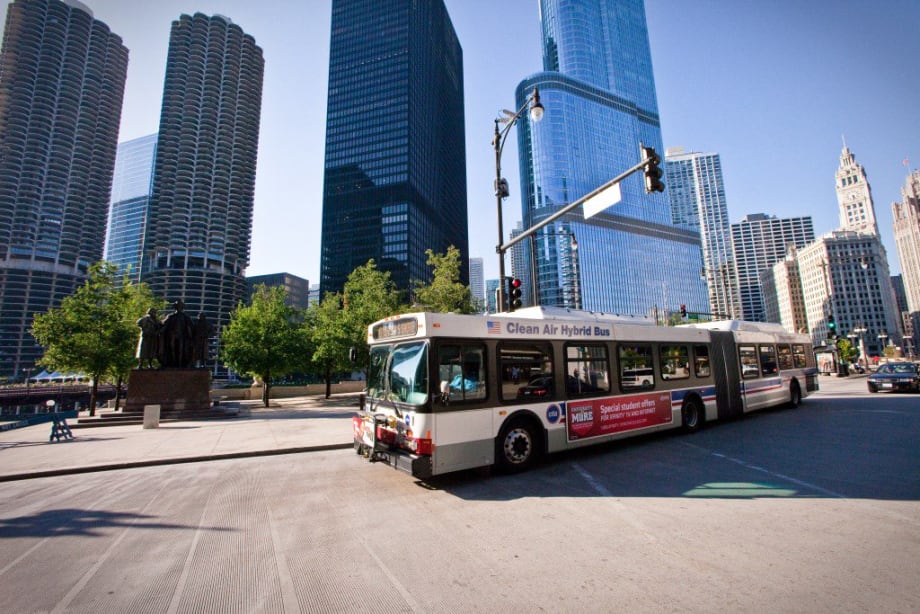
Starting this week, commuting around Chicago just got easier with the launch of the Loop Link, a major modernization of the downtown transportation network that will make it easier, safer and more reliable for commuters to travel to and through the downtown area.
Loop Link will provide a balanced separation of Chicago Transit Authority (CTA) bus, bike and regular traffic with dedicated lanes on Washington, Madison, Clinton and Canal. The new configuration will improve reliability and speed for six CTA bus routes that travel the corridor and extend benefits to neighborhoods throughout the city where these routes originate.
CDOT, the CTA and Loop Link stakeholders created an outreach and education campaign this week ahead of the launch to familiarize transit riders, bicyclists, motorists and pedestrians with the features of Loop Link.
“Loop Link will provide quicker and more reliable bus service to CTA customers,” said CTA President Dorval R. Carter, Jr. “This project will improve their transit experience and may attract new customers who want an affordable, convenient way to get downtown and across the Loop.”
Improvements for bus customers
Loop Link features a number of improvements for CTA bus customers, including red bus-only lanes, enhanced signage clearly delineating the CTA bus lanes and early traffic signals for buses at key intersections, all of which improve bus speeds and service efficiency and eliminate bottlenecks at congested portions of the Loop.
The project also provides distinctive, more comfortable bus stations with large canopies for improved weather protection, raised platforms for easier boarding, CTA Bus Tracker screens and more seating for customers.
Buses using Loop Link provide critical connections to multiple Chicago neighborhoods, Union Station, Ogilvie Transportation Center, CTA subways and Navy Pier. More than 1,000 CTA bus trips will traverse the Loop Link corridor each day.
Improving service reliability downtown is expected to have a positive ripple effect on the portions of these routes outside downtown, benefiting neighborhoods throughout the city.
Benefits for bicycle commuters
Loop Link features protected bike lanes on Washington and Clinton for easier, safer bicycle commutes, including an eastbound bike lane against the southern curb on Washington that is protected from auto and bus traffic. A two-way bike lane has been installed on Clinton, similar to what currently exists on Dearborn Street. A westbound protected bike lane will be installed on Randolph in 2016. City officials advise bicyclists to pay close attention to the bicycle signals, pavement markings and new safety signage on the new green bike lanes. Bicyclists are required to yield to pedestrians who are crossing the bike lane.
Improved environment for pedestrians
Loop Link provides a more comfortable walking environment for pedestrians. Removing bus stations from sidewalks provides people with more room to walk, and 19 crosswalks have been shortened to make it safer and easier to cross streets. City officials urge pedestrians to avoid walking or standing in the green bike lanes and to obey signals when crossing at intersections for their own safety and to respect the dedicated turn signals for cars.
More New Mobility

From Hardware to Digital Partner: Luminator Charts Its Next Chapter
CEO Magnus Friberg discusses Luminator’s shift toward becoming a digital partner, the growing importance of software and interoperability, and how AI can help agencies improve operations and passenger experience.
Read More →
Biz Briefs: Alstom Lands Canadian Contract, LYT to Supply California TSP, and More
In METRO's latest installment, we take a look at recent news from Complete Coach Works, Beep, FlixBus, and more partnerships making headlines across the transportation sector.
Read More →
CharterUP’s Armir Harris on Technology, AI, and the Future of Group Mobility
In a recent episode of METROspectives, CharterUP Founder/CEO Armir Harris discussed the company’s evolution from an online charter bus marketplace into a technology platform supporting public- and private-sector mobility and much more.
Read More →
Jacksonville’s NAVI Project Charts a New Course for Autonomous Public Transportation
Through its NAVI program, JTA is showing how autonomous vehicles, intelligent infrastructure, and coordinated operations can work together to deliver everyday public transportation.
Read More →
Biz Briefs: Luminator Marks Milestone and More
From manufacturers and suppliers to transit agencies and motorcoach operators, these updates offer a snapshot of the projects, partnerships and business moves driving the industry forward.
Read More →
New Tricks for Old Bureaucracies: Joshua Schank on Making Transit Innovation Stick
Former LA Metro Chief Innovation Officer Joshua Schank discusses why good ideas aren't enough, how transit agencies can overcome resistance to change, and why today's challenges demand more innovation.
Read More →
How DART's GoPass Is Redefining Regional Mobility
Serving 14 transit agencies, GoPass simplifies multimodal travel by allowing riders to plan, pay for, and manage an entire trip through one app.
Read More →
Biz Briefs: OCTA Taps Clean Energy for Hydrogen Station, Stadler to Supply Via Rail Vehicles, and More
From manufacturers and suppliers to transit agencies and motorcoach operators, these updates offer a snapshot of the projects, partnerships and business moves driving the industry forward.
Read More →CharterUP Expands Into New Mobility and Autonomous Transportation
Vice President of New Mobility Stephen Joos discusses how CharterUP is leveraging its nationwide transportation network, technology platform, and autonomous vehicle partnerships to expand into workforce mobility, campus shuttles, and transit solutions.
Read More →
METRO Magazine Announces 2026 Innovative Solutions Awards Winners
Projects Recognized for Advancing Mobility Through Technology, Accessibility, Workforce Innovation, and Operational Excellence
Read More →