



Chicago Transit Approves 2026 Budget
The budget passed includes measurable progress on key investments and reflects feedback CTA received from thousands of riders who participated in new agency outreach events.

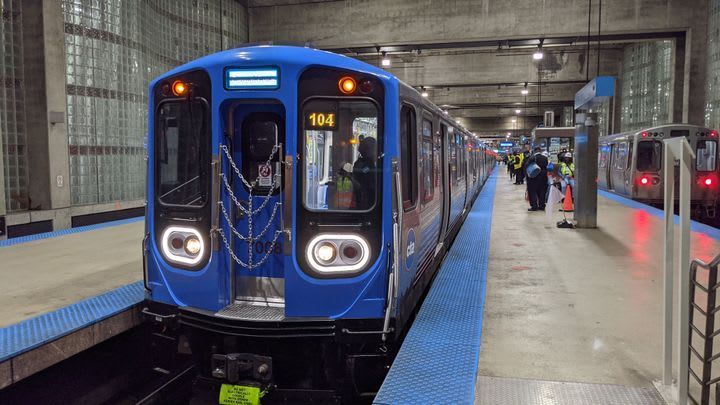
With an amended budget that recognizes the additional transit funding for the region, the CTA plans to build on these investments and will also implement immediate service enhancements, including expanded 24/7 rail service and the addition of the Frequent Bus Network, officials said.
Photo: CTA
The Chicago Transit Board unanimously approved a balanced $2.23 billion operating budget for the Chicago Transit Authority (CTA), which holds the line on fares, avoids layoffs, enhances existing services, expands vehicle cleaning measures, and more. The operating budget is $75 million — or 3.2% — more than the 2025 budget.
“This budget builds upon the tremendous progress we’ve made over the past year, and sets us on a path toward continued growth,” said CTA Acting President Nora Leerhsen. “Getting to this point is the culmination of our commitment to delivering the kind of transformational public transit service that our region has never experienced before. I want to thank our dedicated workforce, our community of riders and transit advocates, and state and local elected officials for their support, and I look forward to working together as we chart a vibrant transit future in the years to come.”
Selecting “Budget A”
Due to the funding uncertainty earlier this fall, CTA developed and proposed three funding scenarios:
Budget A – Baseline: This budget assumes typical state funding levels that address the existing structural funding gap solely.
Budget B – Growth budget that fixes the funding disparity and allows CTA to close its budget gap, plus makes significant investments to deliver services being requested by riders.
Budget C – Reduced budget that has no additional funding to address the structural funding gap, resulting in a significant cut to service.
These scenarios were developed based on the potential funding CTA could receive pending the outcome of ongoing legislative efforts in Springfield last month. With the passage of SB 2111 and guidance from the Regional Transit Authority (RTA), the CTA approved Budget A, also known as the Baseline budget, which fills the current operating budget gap for 2026.
CTA is seeking an amended budget for all service boards in the region to recognize the additional funding from SB2111 and enable transit in the area to begin delivering now on the key investments riders have been seeking.
Highlights of the Budget
The budget passed includes measurable progress on key investments and reflects feedback CTA received from thousands of riders who participated in new agency outreach events, including more than a dozen “CTA Chats” pop-up events this summer, three Budget Town Hall meetings this fall, the 2026 budget hearing, and multiple surveys.
Among the projects and initiatives CTA riders can expect in 2026, with the current budget, include:
Service Enhancements: Ongoing service adjustments to better align and connect bus and rail services to offer more one-seat rides and enhanced transit connections.
Strengthened Security: CTA will increase the budget allocated for CPD to enhance further police resources assigned to work on the system. CTA will also launch new Safe Ride Ambassador models, which were created with input from law enforcement, other security experts, transit advocates, mental health and social service professionals, and community-based organizations. These response models will be designed to assist people on CTA in visible crises with support services and de-escalate potentially troubling situations.
Enhanced Customer Experience: A) Refresh & Renew: The cyclical CTA facility improvement program will include additional customer-friendly enhancements, such as landscaping, benches designed for children, and more station art; and B) ChatBot Phase 2: Reporting non-emergency matters and accessing real-time information via the CTA Chatbot will be easier and more personalized through additional AI investments that will enable the Chatbot to understand customer reports, requiring fewer follow-up questions and providing more accurate responses. It would also collect more details about incidents to increase resolution rates and provide more information on services.
Enhanced Cleaning Measures: Building on the expansion of cleaning personnel added over the last couple of years, in 2026, CTA will pilot the deployment of mid-line railcar cleaning to address cleanliness issues that occur after trains have been in service for several hours. This will complement an already robust cleaning regimen that includes daily cleanings of every vehicle and station, as well as monthly deep cleans and power washing.
Expanded Accessibility Initiatives and Outreach: To further expand initiatives that increase accessibility to transit and the experience of riders with disabilities, CTA will add a position to focus on this critical work, including expansion of front-line employee training on accessibility and supporting disabled riders; strengthening existing partnerships and building new ones among disability community advocates.
Focus on ETOD and Transit Policy: To aid efforts in redefining CTA’s role in driving more large-scale, Equitable transit-oriented development (ETOD) around transit hubs, CTA will create two new positions focused solely on driving strategy for critical cross-agency transit policy strategies, initiatives, and community-based partnerships that promote and leverage transit to connect people to opportunities that improve their lives.
With an amended budget that recognizes the additional transit funding for the region, the CTA plans to build on these investments and will also implement immediate service enhancements, including expanded 24/7 rail service and the addition of the Frequent Bus Network, officials said.
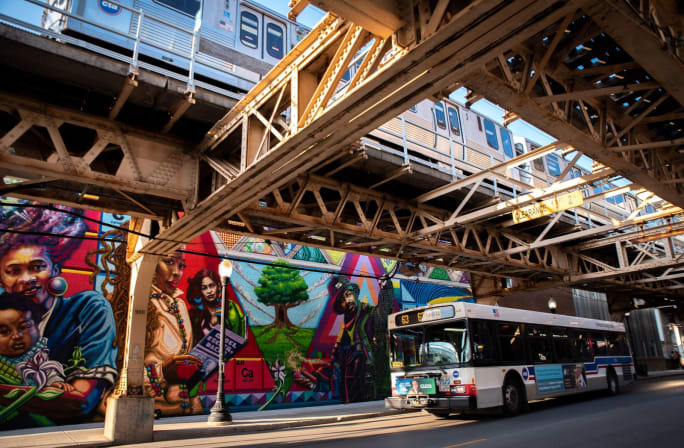
Although a new state funding bill has passed, the CTA remains steadfast in maintaining its status as one of the most efficient transit agencies in the country, the agency said.
Photo: CTA/RTA
CIP Also Approved
Also approved by the Chicago Transit Board was the agency’s $6.75 billion five-year (2026-2030) Capital Improvement Program (CIP), which prioritizes projects that focus on improving safety, reliability, accessibility, equity, and meeting regulatory requirements.
This includes several projects and initiatives, including:
Red Line Extension: Start of work to extend the line from 95th to 130th Street.
All Stations Accessibility Plan (ASAP): Design and construction for the next series of rail stations to enhance accessibility.
Elevator and Escalator Replacements: Upgrading aged elevators and escalators throughout the system.
Bus Facility Conversions: Initial construction efforts for converting bus facilities to entirely electric or other zero-emissions technologies.
Rail Heavy Maintenance Facility Renovations: Upgrades to enhance facilities where heavy repair and overhaul work is performed on CTA series railcars.
New Vehicle Purchases: Acquisition of up to 446 new railcars as planned under options for the 7000-Series railcar contract. The purchase of over 200 new buses, electric or other zero-emission buses.
Fleet Overhauls: Overhauling approximately half of the existing rail fleet and over a quarter of the bus fleet.
Although a new state funding bill has passed, the CTA remains steadfast in maintaining its status as one of the most efficient transit agencies in the country, the agency said.
Officials added that the agency will continue to seek savings and revenue growth wherever possible through efficiencies such as investments in technology, procurement management programs, labor efficiencies, fare collection enhancements, fuel and power advanced purchases, and growing ancillary revenue, among others.
More Management

METRO Opens Submissions for 2026 Motorcoach Awards
Nominations are now being accepted for METRO Magazine’s Operator of the Year and Innovative Operator of the Year awards.
Read More →
New York MTA Advances Final Contract for Second Avenue Subway Expansion
Contract Four is the largest in the Second Avenue Subway Phase 2 project and includes construction of station infrastructure, tracks, and signals for the subway expansion, MTA officials said. Work on Contract Four will begin in 2027.
Read More →
Transit Agencies Highlight Safety Gains at National Summit
Leaders from 15 major transit systems shared crime-reduction results and safety initiatives while discussing the role of continued federal support.
Read More →

NITA Names New Leadership, Expands Reduced-Fare Program at First Board Meeting
The new regional transit authority appointed its first board chair and interim executive director while extending reduced fares across CTA, Metra, and Pace for eligible riders.
Read More →
Beyond the Checklist: A Structured Approach to Transit Maintenance
Reliability-Centered Maintenance helps transit agencies move beyond routine checklists to focus limited resources on the assets and failures that have the greatest impact on safety, reliability, and service.
Read More →
APTA 2026 Nominating Committee Selects Leadership Slate, Names Chair and Vice Chair Nominees
Leadership changes will help shape the association’s priorities and its representation of the transportation industry during the 2026–2027 term.
Read More →
DART Launches Major Security, Fare Enforcement Initiative
The 90-day demonstration will deploy coordinated security teams at five light rail stations while testing controlled access and gathering data to guide future investments.
Read More →
Advancing Fare Collection Through Technology and Innovation
Learn about delivering 1300 gates at 91 stations while managing fare evasion. Explore the large scale deployment, solution customization and real-world results that affect the region. Prepare for deployment in your region now.
Read More →
Game Day in Motion: Moving Millions During the 2026 World Cup
Between packed transit stations and team motorcoaches, see how agencies and operators across North America tackled the transportation demands of the 2026 FIFA World Cup.
Read More →
Surface Transportation Extension Averts Shutdown, Leaves Transit Funding Gap
The stopgap keeps federal transportation programs moving, but missing advance funding could complicate the transit and rail projects agencies are planning next.
Read More →