



Chicago Takes Next Step Toward Automatic Bus Lane Enforcement
Hayden AI is responsible for performing a manual review of violations data before transferring data to the City of Chicago for final determination and violation issuance.

The two-year pilot program, initiated by Chicago City Council ordinance, authorized mail-in ticketing for bus and bike lane parking violations captured by city cameras in a designated pilot area downtown.
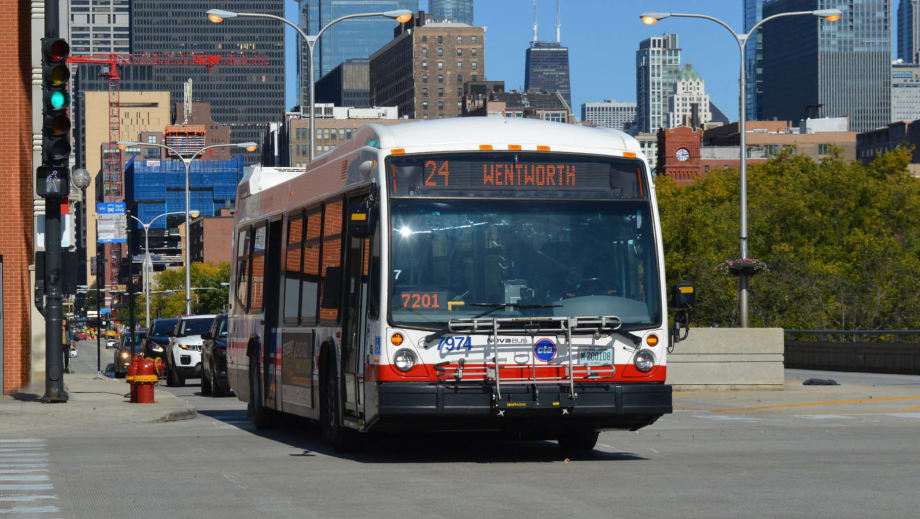
Photo: CTA/Nova Bus
The Chicago Transit Board approved the award of a contract to Hayden AI to deploy Automated Bus Lane Enforcement (ABLE) systems on six CTA buses as part of the Smart Streets (Opens in a new window) pilot program, which began last November.
Launched by the City of Chicago, the Smart Streets pilot program is an initiative with the Chicago Department of Transportation (CDOT) to use camera technology to automatically enforce parking and standing violations in bus and bike lanes, as well as bus stops.
“We believe this technology will help buses move more quickly and consistently across the city, keeping bus stops and lanes clear for our service systemwide,” said CTA Acting President Nora Leerhsen. “This pilot is expected to provide us with the necessary information to help CTA improve bus speed and service reliability.”
Chicago’s ABLE Pilot Program
The two-year pilot program, initiated by Chicago City Council ordinance, authorized mail-in ticketing for bus and bike lane parking violations captured by city cameras in a designated pilot area downtown.
Implementation began Nov. 4, with the installation of ABLE cameras on eight CDOT and Dept. of Finance vehicles. Through the end of February, the City issued more than 11,000 warnings and nearly 1,400 violations. Drivers receive a warning notice for their first offense, with subsequent violations resulting in fines.
This is the first time the program will deploy CTA buses with ABLE systems. Th move ensures a variety of routes that serve the pilot area are covered while prioritizing routes that utilize Loop Link and other corridors with bus lanes, bike lanes, and bus stops that see a high number of violations.
Working with Hayden AI
The ABLE systems will be installed on buses later this year. Each system will include an on-board processor, along with two windshield-mounted cameras that allow the ABLE system to identify and record data capturing violations in bus lanes, bike lanes, and bus stops.
Hayden AI is responsible for performing a manual review of violations data before transferring data to the City of Chicago for final determination and violation issuance. The CTA is not involved in reviewing potential violations or issuing tickets.
Hayden AI’s ABLE system technology has been utilized by transit agencies both nationally and internationally, including the New York’s Metropolitan Transportation Authority, Southeastern Pennsylvania Transportation Authority, and Washington Metropolitan Area Transit Authority.
The cost to deploy the system on the first six buses is $315,852 including equipment and ongoing services; the contract includes the option to purchase up to 94 additional cameras.
Based on the availability of funding, the performance of the first six camera systems and the overall progress of the Smart Streets Pilot, CTA may opt to add additional camera systems through the duration of the contract.
The CDOT and Chicago Department of Finance will submit a report to City Council assessing the performance of the pilot, including the results of cameras deployed on CTA buses. That report will include a recommendation on the future of the Smart Streets program. City Council will then be responsible for deciding if the program should be made permanent and/or expanded to other parts of the city.
More Technology

From Hardware to Digital Partner: Luminator Charts Its Next Chapter
CEO Magnus Friberg discusses Luminator’s shift toward becoming a digital partner, the growing importance of software and interoperability, and how AI can help agencies improve operations and passenger experience.
Read More →
Beyond the Checklist: A Structured Approach to Transit Maintenance
Reliability-Centered Maintenance helps transit agencies move beyond routine checklists to focus limited resources on the assets and failures that have the greatest impact on safety, reliability, and service.
Read More →
NJ TRANSIT Advances Bus Technology Upgrades Across Statewide Fleet
More than 1,500 buses now feature upgraded technology designed to improve arrival predictions and provide free Wi-Fi, with deployment expected to reach nearly 2,000 buses by the end of 2026.
Read More →

Building a Flexible Path to Transit Electrification
John Hroncich discusses BAE Systems’ modular and scalable approach, lessons learned from decades of real-world operations, and how agencies can identify electrification strategies that fit their fleets.
Read More →
Biz Briefs: Alstom Lands Canadian Contract, LYT to Supply California TSP, and More
In METRO's latest installment, we take a look at recent news from Complete Coach Works, Beep, FlixBus, and more partnerships making headlines across the transportation sector.
Read More →
From Legacy Silos to Conversational Intelligence
What if transit leaders could ask any operational question and get a trusted answer in seconds? Conversational AI is transforming how agencies use their data.
Read More →
USDOT Announces Rail Vehicle Replacement Grants, Chattanooga AV Shuttle Funding
More than $191 million in federal funding will help three transit agencies replace aging rail vehicles and support a new autonomous shuttle service in Chattanooga.
Read More →
Bus Tech Talk: Keeping Transit Technicians Ahead of the Technology Curve
LA Metro’s Obed Mejia discusses technician training, evolving maintenance technology, fleet replacement, and strategies for getting the most out of today’s transit fleets.
Read More →
Biz Briefs: RIPTA Unveils New Frontrunners, Clevland RTA Adds New Siemens, and More
In METRO's latest installment, we take a look at recent news from Siemens, Prevost, Dodge, and more partnerships making headlines across the transportation sector.
Read More →
Why Simulating Pedestrian Movement Has Become Essential for Modern Rail Stations
Pedestrian microsimulation is helping rail planners identify bottlenecks, test station designs, and prepare complex transit hubs for growing passenger volumes.
Read More →