




RELATED: [Photos] Chicago Union Station
Chicago Union Station redevelopment plan receives fed assistance
The USDOT Build America Bureau and the City of Chicago are entering into an EmPA agreement, under which Chicago can work closely with USDOT with the ultimate goal of seeking up to $1 billion in federal funding for the project.
January 18, 2017
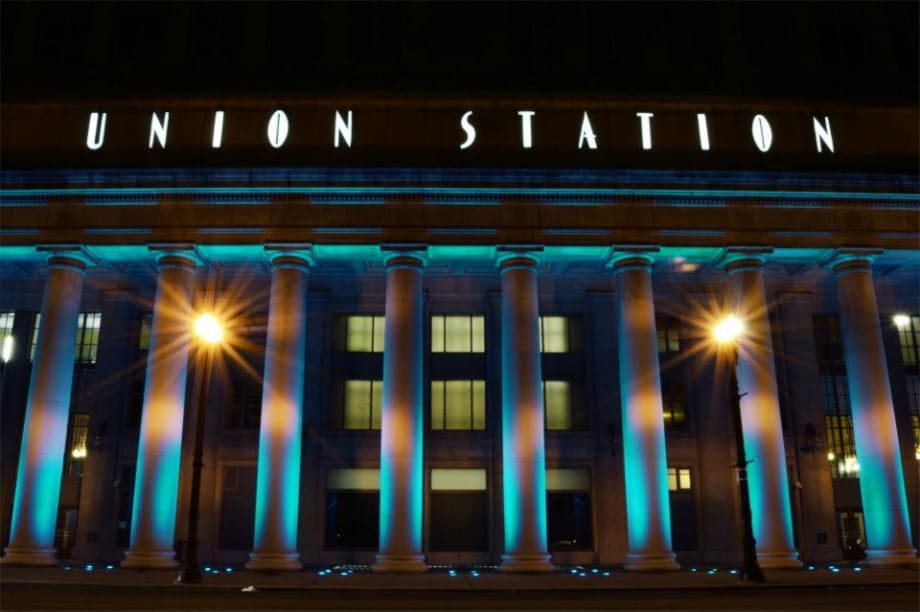
Photo: Chicago Union Station
3 min to read
Photo: Chicago Union Station
The City of Chicago’s ambitious plans to modernize and transform Chicago Union Station and the surrounding West Loop area received a major boost with the announcement that the U.S. Department of Transportation (USDOT) Build America Bureau and the City of Chicago are entering into an Emerging Projects Agreement (EmPA), under which Chicago can work closely with USDOT with the ultimate goal of seeking up to $1 billion in federal funding for the project.
The EmPA allows USDOT to offer enhanced technical assistance on complex, large scale projects seeking low-cost federal credit through the Build America Bureau’s innovative programs, including TIFIA (Transportation Infrastructure Finance and Innovation Act) Program and RRIF (Railroad Rehabilitation and Improvement Financing). TIFIA has provided more than $26 billion in credit assistance around the country, including loans for the CTA and Chicago’s acclaimed Riverwalk; RRIF has provided $5 billion in loans for projects around the country.
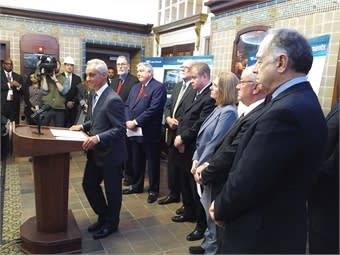
Chicago Mayor Rahm Emanuel speaking at the Union Station media event. Photo: Amtrak
The EmPA announcement comes as the City and the Chicago Department of Transportation (CDOT) are working with Amtrak, Metra, the RTA and the Illinois Department of Transportation on the design of near term improvements that will upgrade passenger capacity by renovating and expanding the concourse and platforms. Also addressed in a Master Plan process are service, safety/environmental, accessibility and mobility issues around the station.
Amtrak is also in the final stages of evaluating proposals for a Master Developer to lead the redevelopment of Union Station and surrounding Amtrak-owned property and air rights.
The Union Station Redevelopment plans envision a public-private partnership to implement both transportation-related improvements as well as transit-oriented developments surrounding the station. The three main goals are:
To expand and renovate the station to be an architecturally significant transportation terminal that both preserves and builds upon its existing architectural heritage.
To allow a growing number of passengers and other visitors to use the station facilities in the most efficient, safe, and pleasant manner possible.
To create a vibrant commercial center and civic asset that welcomes and serves travelers, neighborhood residents, and downtown workers alike, while further enhancing the economic vitality of the City of Chicago and the region.
Among the improvements that could be funded under the agreement are the following:
Renovation of the Canal Street Union Station Lobby.
Rehabilitation of the Great Hall skylight and dome structure.
Renovation and expansion of the Adams Street and Jackson Street entrances.
Expansion of the Union Station Concourse.
Widening of platforms.
Improvement of ADA accessibility throughout the station, including installation of an elevator at the Canal Street Headhouse.
Reconstruction of the Canal Street and Harrison Street viaducts.
Construction of pedestrian tunnels connecting Union Station to Metra’s Ogilvie Station and to the CTA Blue Line stop at Clinton Street.
Transit-oriented development, including commercial/residential development of the air rights over the Headhouse and commercial/office/retail uses surrounding Union Station.
Chicago Union Station (CUS) handles more than 300 trains per weekday carrying approximately 120,000 arriving and departing passengers, a level of passenger traffic that would rank it among the busiest airports in the nation.
CUS is a hub of the Amtrak national network, handling most of its long-distance trains, and more than 30 regional trains sponsored by state transportation departments. In addition to Amtrak service, Metra operates six commuter rail routes with 271 weekday arrivals or departures from Chicago Union Station. The station operates at or near capacity during peak periods, threatening its ability to sustain ridership and economic growth.
More New Mobility

From Hardware to Digital Partner: Luminator Charts Its Next Chapter
CEO Magnus Friberg discusses Luminator’s shift toward becoming a digital partner, the growing importance of software and interoperability, and how AI can help agencies improve operations and passenger experience.
Read More →
Biz Briefs: Alstom Lands Canadian Contract, LYT to Supply California TSP, and More
In METRO's latest installment, we take a look at recent news from Complete Coach Works, Beep, FlixBus, and more partnerships making headlines across the transportation sector.
Read More →
CharterUP’s Armir Harris on Technology, AI, and the Future of Group Mobility
In a recent episode of METROspectives, CharterUP Founder/CEO Armir Harris discussed the company’s evolution from an online charter bus marketplace into a technology platform supporting public- and private-sector mobility and much more.
Read More →
Jacksonville’s NAVI Project Charts a New Course for Autonomous Public Transportation
Through its NAVI program, JTA is showing how autonomous vehicles, intelligent infrastructure, and coordinated operations can work together to deliver everyday public transportation.
Read More →
Biz Briefs: Luminator Marks Milestone and More
From manufacturers and suppliers to transit agencies and motorcoach operators, these updates offer a snapshot of the projects, partnerships and business moves driving the industry forward.
Read More →
New Tricks for Old Bureaucracies: Joshua Schank on Making Transit Innovation Stick
Former LA Metro Chief Innovation Officer Joshua Schank discusses why good ideas aren't enough, how transit agencies can overcome resistance to change, and why today's challenges demand more innovation.
Read More →
How DART's GoPass Is Redefining Regional Mobility
Serving 14 transit agencies, GoPass simplifies multimodal travel by allowing riders to plan, pay for, and manage an entire trip through one app.
Read More →
Biz Briefs: OCTA Taps Clean Energy for Hydrogen Station, Stadler to Supply Via Rail Vehicles, and More
From manufacturers and suppliers to transit agencies and motorcoach operators, these updates offer a snapshot of the projects, partnerships and business moves driving the industry forward.
Read More →CharterUP Expands Into New Mobility and Autonomous Transportation
Vice President of New Mobility Stephen Joos discusses how CharterUP is leveraging its nationwide transportation network, technology platform, and autonomous vehicle partnerships to expand into workforce mobility, campus shuttles, and transit solutions.
Read More →
METRO Magazine Announces 2026 Innovative Solutions Awards Winners
Projects Recognized for Advancing Mobility Through Technology, Accessibility, Workforce Innovation, and Operational Excellence
Read More →