




Related: Metra seeks firm to manufacture up to 367 new railcars
Chicago's Metra hires ad agency to help increase ridership
Pulsar’s scope of work for Metra will include a customer segmentation study, market research, branding services, development of a strategic marketing plan and assistance implementing the plan.
February 29, 2016
Amtrak_Russ
2 min to read
Amtrak_Russ
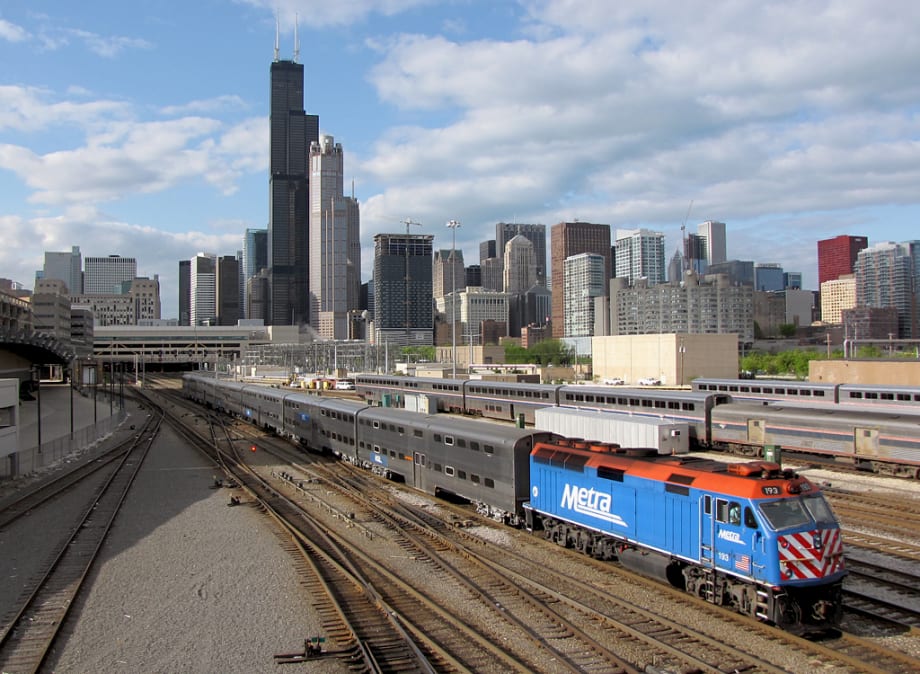
Chicago’s Metra Board of Directors unanimously approved a three-year, $4 million contract with Pulsar Advertising Inc. to serve as Metra’s new marketing and advertising agency of record.
Pulsar’s scope of work for Metra will include a customer segmentation study, market research, branding services, development of a strategic marketing plan and assistance implementing the plan.
“In a complete departure from its 30-year history, Metra has hired a new strategic advertising agency to revamp Metra’s marketing program. We believe that with a new approach, Metra has the potential to dramatically increase ridership,” said Metra Board Chairman Martin J. Oberman. “If successful, we will be able to meet many of Metra’s long-term financial needs and provide even better service to the metropolitan area. This is another example of how it’s a new day at Metra and I, for one, can’t wait to see what this new team comes up with.”
Pulsar is a full-service marketing agency that is nationally recognized for its work with transit agencies around the country, including the New York Metropolitan Transportation Authority, which encompasses both the Metro-North Railroad and Long Island Rail Road. Pulsar provides a wide range of expertise in strategy, planning, account management, creative development, branding, media buying and placement and implementation of campaigns. The agency is also a certified disadvantaged business enterprise firm.
Last fall, Metra issued a request for proposals for a marketing agency to partner with the commuter railroad on reimagining its brand and support Metra’s aspirational goal of acquiring 20,000 additional weekday passenger trips. Nine proposals were received and evaluated through a competitive process, with Pulsar emerging as the highest-ranked proposer. The $4 million contract value represents an annual increase in spending over the previous five years, but an overall decrease from marketing budgets prior to 2010.
“This is a good business decision for Metra because our ability to grow ridership has a direct impact on our bottom line and our goal to keep fares down,” said Metra Executive Director/CEO Don Orseno. “Pulsar has the expertise and strategic thinking we need to be able to help us get people out of their cars and onto our trains.”
Metra estimates that every new monthly pass customer has the potential to generate an average of $1,500 in ticket sales annually. With 5,000 new customers per year, the potential net impact to Metra’s budget would be an additional $7.5 million in fare revenue.
More Rail

New York MTA Advances Final Contract for Second Avenue Subway Expansion
Contract Four is the largest in the Second Avenue Subway Phase 2 project and includes construction of station infrastructure, tracks, and signals for the subway expansion, MTA officials said. Work on Contract Four will begin in 2027.
Read More →
San Diego MTS Breaks Monthly Trolley Ridership Record
Agency officials said July’s ridership indicates MTS’s continued recovery from the pandemic.
Read More →
Report Examines NJ TRANSIT Reliability, Funding Challenges
The Garden State Initiative analysis examines the roles of Amtrak infrastructure, fleet management, and agency operations while recommending a more performance-based approach to improving reliability.
Read More →
Stadler, CapMetro Sign Long-Term Rail Fleet Support Agreement
Beginning in 2027, Stadler will provide on-site technical expertise, spare parts support, training, and obsolescence management to help extend the reliability and longevity of CapMetro’s GTW fleet.
Read More →
Biz Briefs: Alstom Lands Canadian Contract, LYT to Supply California TSP, and More
In METRO's latest installment, we take a look at recent news from Complete Coach Works, Beep, FlixBus, and more partnerships making headlines across the transportation sector.
Read More →
CATS Gold Line Marks 5 Years of Service, 2.8M Passenger Trips
With a six-mile expansion planned, the Charlotte streetcar is positioned to connect more neighborhoods and major transit hubs across the region.
Read More →
Why Simulating Pedestrian Movement Has Become Essential for Modern Rail Stations
Pedestrian microsimulation is helping rail planners identify bottlenecks, test station designs, and prepare complex transit hubs for growing passenger volumes.
Read More →
Amtrak Begins Major Construction at New York’s Sunnyside Yard
The new maintenance facility will support Amtrak’s Airo trainsets while improving maintenance efficiency and turnaround times in New York.
Read More →
Chicago Leaders Unveil Plans for O’Hare Airport Express Train
The privately developed project would offer a 15-minute trip between downtown and O’Hare’s Terminal 2, with trains operating every 15 minutes on a dedicated track. The service would use battery-electric trains and three existing freight rail rights-of-way.
Read More →
OCTA Maps Out 30-Year Strategy to Protect Coastal Rail Corridor
The draft feasibility report identifies strategies to protect the coastal rail line for decades as the agency continues near-term stabilization and sand placement efforts.
Read More →