



Coalition calls on next President, Congress to fix transportation
Plan calls for investment in public transportation, high-speed and intercity rail, neighborhoods that are less car-dependent, more walkable and more affordable, and restoring the thousands of roads and bridges in failing condition across the U.S.

A coalition of policymakers, community and business leaders, activists and citizens issued a list of recommendations for the next President and Congress that calls for investment in public transportation and restoration of infrastructure.
The Transportation for America campaign (T4), which includes the North Carolina Public Interest Research Group (NCPIRG), unveiled, “Build for America: A Five-Point Plan to Get Our Economy Moving.”
“Americans are running on empty, with falling home values, rising gas prices and a lagging economy,” said Shelley Poticha, co-chair of T4 and president and CEO of Reconnecting America. “We’re here to say that we can start building a way out of this mess with a wise investment strategy.”
Build for America calls for investment in public transportation; high-speed and intercity rail; neighborhoods that are less car-dependent, more walkable and more affordable; and restoring the thousands of roads and bridges in failing condition across the United States, such as the Yadkin Bridge in eastern North Carolina.
Specifically, Transportation for America and its supporters are asking the next President and Congress to work together to:
1. Build to compete with China and Europe, by modernizing and expanding U.S. rail and transit networks to reduce oil dependence and connect the metro regions that are the engines of the modern economy.
2. Invest for a clean, green recovery through cleaner vehicles and new fuels, as well as the cleanest forms of transportation – modern public transit, walking and biking – and for energy-efficient, sustainable development.
3. Fix what's broken before building new roads and restore our crumbling highways, bridges and transit systems.
4. Stop wasteful spending and re-evaluate projects currently in the pipeline to eliminate those with little economic return that could deepen our oil dependence.
5. Save Americans money by providing more travel and housing options that are affordable and efficient, while helping people to avoid high gas costs and traffic congestion. Save taxpayer dollars by asking the private developers who reap real estate rewards from new rail stations and transit lines to contribute toward that service.
“This is a bold agenda, but tough times call for bold action,” said Ashley Chase, Public Interest Advocate for NCPIRG. “By reaching across the aisle to implement better transportation investments in our cities and communities and across our states, we’ll help meet the unprecedented demand for quality public transportation choices, maintain our current system and create jobs that put Americans back to work.”
For more information or to download the complete Build for America booklet, please visit BuildforAmerica.Org.
More Rail

Biz Briefs: RIPTA Unveils New Frontrunners, Clevland RTA Adds New Siemens, and More
In METRO's latest installment, we take a look at recent news from Siemens, Prevost, Dodge, and more partnerships making headlines across the transportation sector.
Read More →
CATS Gold Line Marks 5 Years of Service, 2.8M Passenger Trips
With a six-mile expansion planned, the Charlotte streetcar is positioned to connect more neighborhoods and major transit hubs across the region.
Read More →
Why Simulating Pedestrian Movement Has Become Essential for Modern Rail Stations
Pedestrian microsimulation is helping rail planners identify bottlenecks, test station designs, and prepare complex transit hubs for growing passenger volumes.
Read More →
Amtrak Begins Major Construction at New York’s Sunnyside Yard
The new maintenance facility will support Amtrak’s Airo trainsets while improving maintenance efficiency and turnaround times in New York.
Read More →
Chicago Leaders Unveil Plans for O’Hare Airport Express Train
The privately developed project would offer a 15-minute trip between downtown and O’Hare’s Terminal 2, with trains operating every 15 minutes on a dedicated track. The service would use battery-electric trains and three existing freight rail rights-of-way.
Read More →
OCTA Maps Out 30-Year Strategy to Protect Coastal Rail Corridor
The draft feasibility report identifies strategies to protect the coastal rail line for decades as the agency continues near-term stabilization and sand placement efforts.
Read More →
The Business Voice Behind Public Transportation
As chair of APTA’s Business Members Board of Governors, Ray Melleady explains how more than 850 business members are partnering with transit agencies to advance funding, innovation, and industry-wide collaboration.
Read More →
FRA Announces $5.3B in Rail Investments, Including $2B for Amtrak
Funding will support grade-crossing improvements, infrastructure upgrades, and new Amtrak equipment in 23 states.
Read More →
Finding the ‘Happy Medium’: Optimizing Maintenance Without Sacrificing Reliability
The key to maintenance optimization isn’t doing less work—it’s doing the right work at the right time on the right assets.
Read More →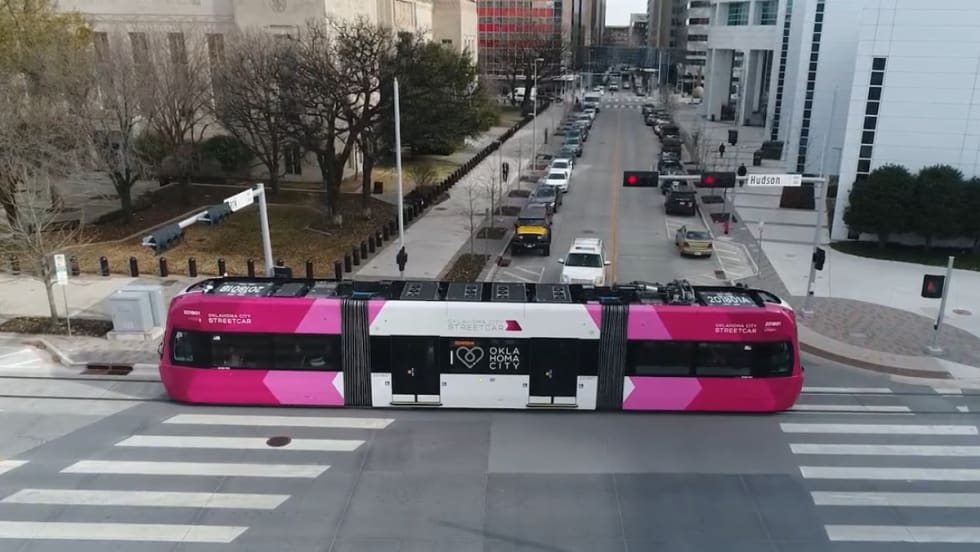
OKC Streetcar Makes Zero-Fare Service Permanent
Ridership increased an average of 71% compared with the same period a year earlier during the fare-free pilot.
Read More →