



DART's Pilot Program Tests Next-Gen Bus Shelters
The agency partnered with Tolar Manufacturing to create a shelter based on feedback previously gathered from DART bus riders.

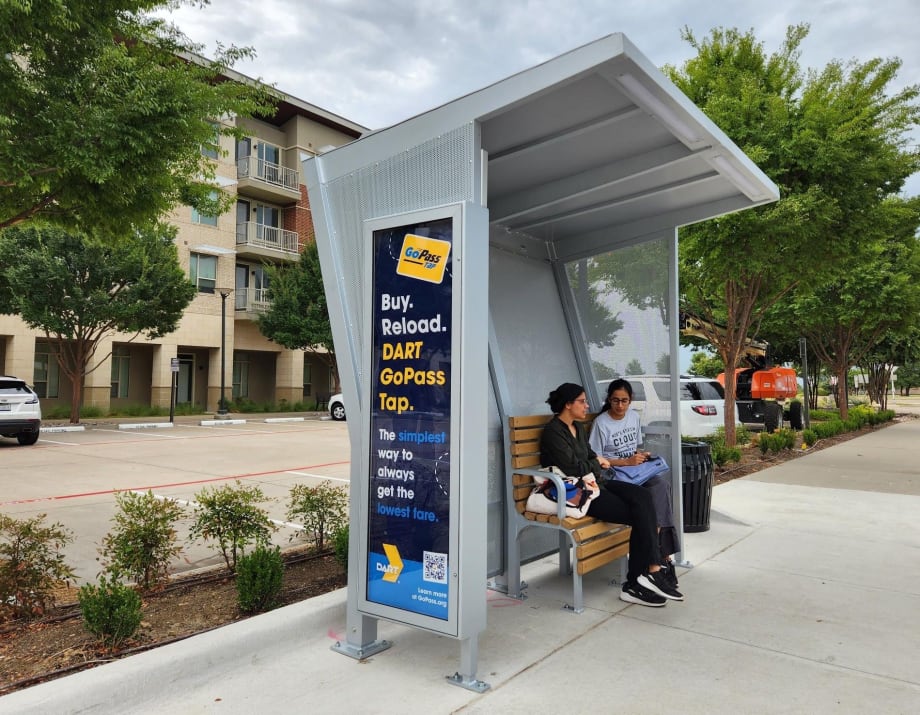
With ample coverage from the elements, seating for riders, increased lighting, and a digital passenger information display that provides real-time bus arrival information, the Next Generation Bus Shelters look to enhance the customer experience while modernizing DART’s bus service.
Photo: DART
Dallas DART finished installing three versions of the new bus shelter prototypes at five bus stop locations across four cities as part of a new pilot program.
DART partnered with Tolar Manufacturing to create a shelter based on feedback previously gathered from DART bus riders.
DART’s Customized Bus Shelters
The protypes include standard-width and slim-width shelters with benches, and a mini shelter that features seating for two.
DART surveyed bus riders in 2023, asking them what key amenities were most important to them and worked with architecture and urban planning students at the University of Texas at Arlington (UTA) to help design the new bus shelters.
Customer feedback determined more protection from the elements, improved lighting for safety and visibility, and real-time bus arrival information were top priorities for the new design.
UTA students used those details to create a concept shelter that earned the Texas Student Honor Award from the American Society of Landscape Architects in 2023, with DART utilizing those designs to partner with Tolar to deliver the modified versions that are being used in the pilot program.
“We’re looking to see how these shelters and all their new features are received by our riders,” said Brandi Stringer, director, mobility capital projects. “Our number one goal is to provide an amenity at our bus stops that riders love and adds to their experience when riding DART.”
The Bus Shelter Pilot
The pilot will run through November allowing DART to gather feedback from multiple stakeholders, including riders, and check the responsiveness of the shelters to North Texas weather and everyday use.
A final design is expected by the end of the year for Next Generation Bus Shelters, which will be used throughout the DART network.
With ample coverage from the elements, seating for riders, increased lighting, and a digital passenger information display that provides real-time bus arrival information, the Next Generation Bus Shelters look to enhance the customer experience while modernizing DART’s bus service.
DART also anticipates having new buses within its fleet by 2026.
DART will soon be releasing a survey asking riders at these bus stops for feedback on the pilot shelters.
In addition, DART will add or improve hundreds of bus stop pads across its service area and looks to have 100 new pads completed by the end of the fall.
More Technology

From Hardware to Digital Partner: Luminator Charts Its Next Chapter
CEO Magnus Friberg discusses Luminator’s shift toward becoming a digital partner, the growing importance of software and interoperability, and how AI can help agencies improve operations and passenger experience.
Read More →
Beyond the Checklist: A Structured Approach to Transit Maintenance
Reliability-Centered Maintenance helps transit agencies move beyond routine checklists to focus limited resources on the assets and failures that have the greatest impact on safety, reliability, and service.
Read More →
NJ TRANSIT Advances Bus Technology Upgrades Across Statewide Fleet
More than 1,500 buses now feature upgraded technology designed to improve arrival predictions and provide free Wi-Fi, with deployment expected to reach nearly 2,000 buses by the end of 2026.
Read More →

Building a Flexible Path to Transit Electrification
John Hroncich discusses BAE Systems’ modular and scalable approach, lessons learned from decades of real-world operations, and how agencies can identify electrification strategies that fit their fleets.
Read More →
Biz Briefs: Alstom Lands Canadian Contract, LYT to Supply California TSP, and More
In METRO's latest installment, we take a look at recent news from Complete Coach Works, Beep, FlixBus, and more partnerships making headlines across the transportation sector.
Read More →
From Legacy Silos to Conversational Intelligence
What if transit leaders could ask any operational question and get a trusted answer in seconds? Conversational AI is transforming how agencies use their data.
Read More →
USDOT Announces Rail Vehicle Replacement Grants, Chattanooga AV Shuttle Funding
More than $191 million in federal funding will help three transit agencies replace aging rail vehicles and support a new autonomous shuttle service in Chattanooga.
Read More →
Bus Tech Talk: Keeping Transit Technicians Ahead of the Technology Curve
LA Metro’s Obed Mejia discusses technician training, evolving maintenance technology, fleet replacement, and strategies for getting the most out of today’s transit fleets.
Read More →
Biz Briefs: RIPTA Unveils New Frontrunners, Clevland RTA Adds New Siemens, and More
In METRO's latest installment, we take a look at recent news from Siemens, Prevost, Dodge, and more partnerships making headlines across the transportation sector.
Read More →
Why Simulating Pedestrian Movement Has Become Essential for Modern Rail Stations
Pedestrian microsimulation is helping rail planners identify bottlenecks, test station designs, and prepare complex transit hubs for growing passenger volumes.
Read More →