



Despite Record Spending, U.S. Transport Still Favors New Roads, Study Says
A report released by the think tank Surface Transportation Policy Project (STPP) concludes that public transport is actually getting a smaller share of federal money, as states pour funds into building highways.

A report released by the think tank Surface Transportation Policy Project (STPP) concludes that public transport is actually getting a smaller share of federal money, as states pour funds into building highways. The findings are especially significant as Congress comes under mounting pressure to repeal part of the federal gas tax to help offset some of the recent spike in gasoline prices, which are nearing $2 per gallon in some parts of the country. In the last two years, the portion of federal spending on new roads grew 21% while spending on other transportation modes fell by 19%, the study found. This occurred as federal transportation funding reached a record level of $33 billion in one year, will likely climb by 9% in Fiscal Year 2001. Part of the reason for the shift is the more conservative make-up of Congress since 1995, some observers pointed out. However, another reason is that in the deal Congress struck with industry groups, all money collected by the federal gas tax that hasn’t been spoken for by mandatory spending levels for various programs goes for highways. Since the economy has been so good for so long, this so-called "revenue-aligned budget authority" (RABA) is now in the billions of dollars, and all of it must go to highways according to current federal law. The unprecedented RABA levels are helping some on Capitol Hill make their case for a gas tax roll-back: If so much money is in the kitty, we can afford to cut taxes, so the argument goes. Most Congressional leaders have disagreed so far. "Cutting 4.3 cents per gallon [the proposed tax cut] doesn’t do much for the real problem, which is a 50 cent increase in the price of gas," said Rep. Tom Petri, the Wisconsin Republican who is chairman of the House Transportation & Infrastructure’s subcommittee on surface transportation. Instead, he and others favor giving the president authority to use the Strategic Petroleum Reserve as a negotiating weapon to get oil-producing nations to increase their output. Transit groups have been reluctant to fight for a historic portion of the RABA. This is because they fear re-opening the Transportation Equity Act for the 21st Century (TEA 21), the 1998 law that gave public transport record funding¾ even though the percentage of the whole transport assistance pie has been lower than it was under ISTEA. In its study, called "Changing Direction: Federal Transportation Spending in the 1990s," the STPP performed a first-ever comprehensive analysis of the more than 360,000 federally funded transportation projects undertaken in the 1990s. The analysis shows that during the mid-1990s, state spending of federal funds expanded to support a wider variety of transportation options and boosted funding for road repair. But the report finds these trends reversed in the last two years as road building increased. The report cites polls that show people want travel choices beyond roads, as well as new research that indicates that road building is not an effective strategy for congestion relief. "The latest research shows that road building does not work to solve congestion," says Roy Kienitz, Executive Director of STPP. "Yet our analysis shows that a rush toward road-building is short-changing the type of projects that the public wants and that might really help people escape congestion entirely." The long-term trend of increasing attention to road repair also reversed in 1999, as the portion of federal funding for maintenance fell by 6%. Federal funding for building new highways and widening existing ones, grew from $5.8 billion in 1998 to almost $9 billion in 1999, garnering the largest share of new funding. Early in the 1990s, just after the landmark Intermodal Surface Transportation Efficiency Act (ISTEA) was passed in 1991, more money started going into transportation alternatives and road repair. Spending on public transportation almost doubled, from about $3 billion in 1990 to almost $6 billion in 1999. Funding for bike paths and lanes, sidewalks, and other facilities for walking and cycling exploded, growing from $7 million in 1990 to $222 million in 1999. The share of federal funds going to road repair grew from 39% in 1990 to 49% in 1998. These changes helped bring about a 15% increase in transit ridership and a marked improvement in road conditions. However, the STPP report also finds that most states continue to spend most of their "flexible" federal transportation dollars on roads, even though federal law has made it possible for communities to tailor that spending to any local transportation need. Less than 7% of this money has gone to funding buses, trains, bikeways, or sidewalks, even though polls and surveys show citizens want greater investment in transportation options, Kienitz contended. That has changed somewhat in the past year. Data compiled by the U.S. Department of Transportation showed that nearly a billion dollars was obligated to public transport in FY 1999, roughly double the figure in the previous year. In addition, the percentage of the total funds available to be "flexed" that were actually obligated also grew to transit, to 14% in FY 1999. "Too many state transportation officials are failing to use federal money to diversify our transportation portfolio," he added. "People across the country are asking for more choices in how to get around, but most of our money is still being spent in the same old way." To draw a picture of overall state spending patterns, the report divides the states into four categories according to how they spent their federal dollars over the decade. The four categories are "Behind the Times," "Offering Few Options," "Middle of the Road," and "Open to Change." The full STPP report, along with state fact sheets, is available on the web at www.transact.org.
More Management
FTA Opens $610 Million Funding Opportunity for Bus Infrastructure Projects
The latest Notice of Funding Opportunity provides transit agencies with funding for bus facilities, fleet modernization, and low- and no-emission vehicles, with applications due September 21.
Read More →
Biz Briefs: STV teams with Amtrak, Motorcoach Operators Boost Fleet and Land Contracts, and More
From manufacturers and suppliers to transit agencies and motorcoach operators, these updates offer a snapshot of the projects, partnerships and business moves driving the industry forward.
Read More →
Massachusetts Approves $530M to Strengthen MBTA Operations, Infrastructure
The funding package targets operating stability, capital improvements, and fare affordability, offering a model for agencies navigating long-term funding challenges.
Read More →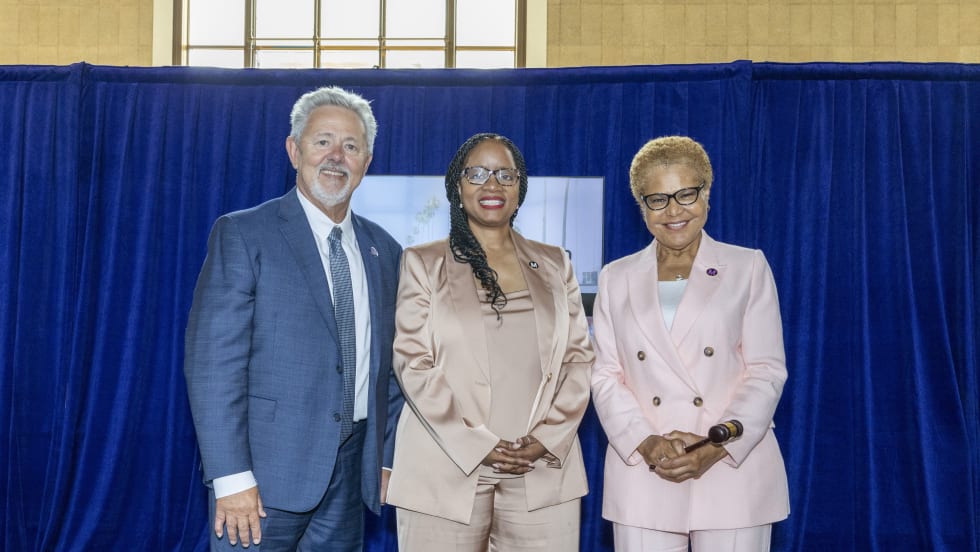
LA Metro Marks Banner Year, Sets Ambitious Goals for New Fiscal Year
Incoming LA Metro Board Chair and Los Angeles Mayor Karen Bass joined outgoing Board Chair Fernando Dutra and LA Metro CEO Stephanie Wiggins to review accomplishments from fiscal year 2026, which included the opening of new rail extensions, advancement of major transit projects, expanded safety programs, and new rider amenities.
Read More →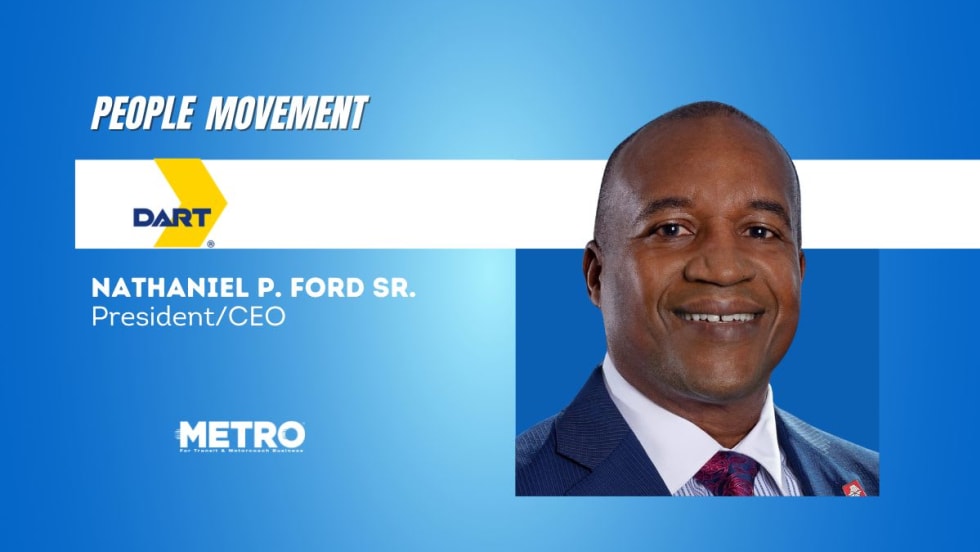
DART Taps Nathaniel P. Ford Sr. as Next President/CEO
Since 2012, Ford has served as the CEO of the Jacksonville Transportation Authority
Read More →
AC Transit’s Cecil Blandon on Building the Next Generation of Transit Maintenance Leaders
The agency’s maintenance chief discusses leadership, workforce development, zero-emission technology, and preparing technicians for the future of public transportation.
Read More →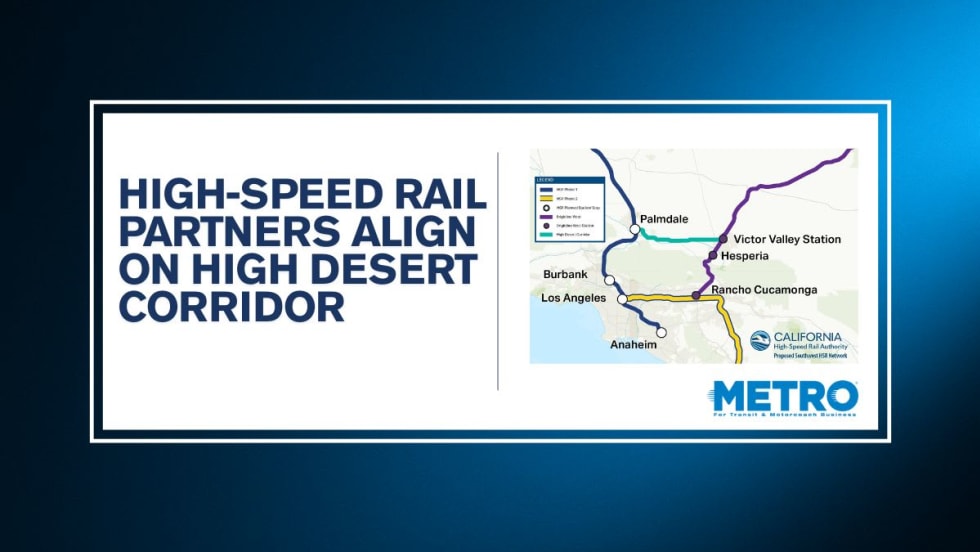
California High-Speed Rail Authority Signs MOU to Advance High Desert Corridor
The agreement deepens collaboration between the California High-Speed Rail Authority and the High Desert Corridor Joint Powers Agency, supporting design integration, cost savings, and faster delivery of a key Southern California rail link.
Read More →
Building the Next Generation of Transit Technology
In this edition of METROspectives, Luminator CEO Magnus Friberg discusses the company's transformation, the growing role of AI and software, and what's next for transit technology.
Read More →
How Data, Strategy, and Community Engagement Are Reshaping Transit
In this edition of METROspectives, strada360 CEO Steve Lassey discusses how transit agencies can better align planning with operations, leverage data to improve decision-making, and build public trust as they prepare for the future of mobility.
Read More →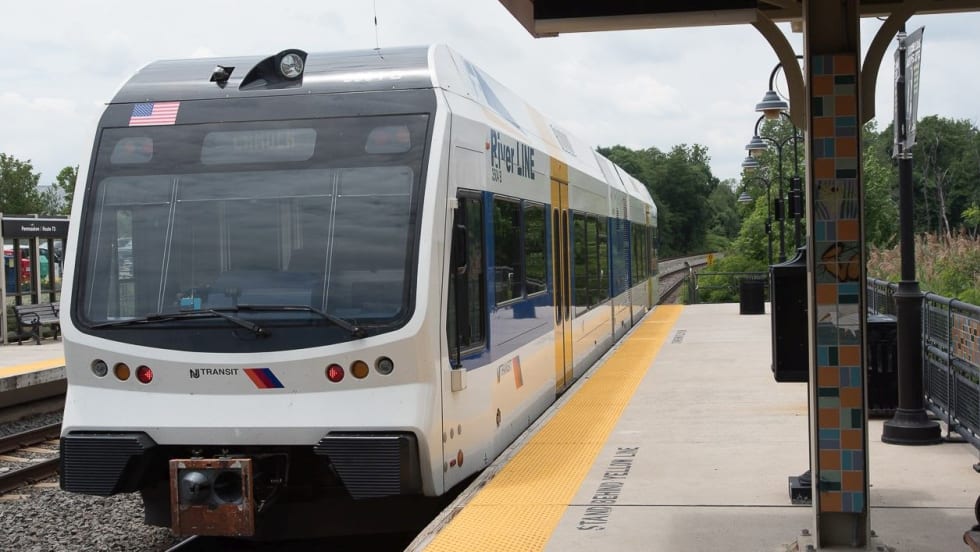
NJ TRANSIT Secures Capital Funding, Adopts FY2027 Budget
The budgets continue investments in infrastructure and equipment to maintain the system in a state of good repair and enhance the overall customer experience.
Read More →